Since the official announcement of GTA VI in December 2023, every visual detail has sparked debate within the global fan community. Yet one central element has rarely received the depth of analysis it deserves: the artistic legacy connecting the franchise's iconoclastic beginnings to the illustration of its sixth major entry. A renowned artist—a foundational figure in GTA's historic visual identity—recently opened up about the emotion of seeing his influence endure on the official GTA 6 box art — a stylistic continuity that speaks volumes about Rockstar Games' aesthetic ambitions for the game releasing on November 19, 2026 for PS5 and Xbox Series X|S.
- The original artist claims direct lineage between his work from the 1990s-2000s and the GTA 6 box art aesthetic
- Confirmed: Rockstar maintained stylistic coherence in synthwave and retro-futuristic design, an inheritance from the series' historic box art
- The GTA 6 illustration captures Vice City's essence — neon lights, pastel gradients, and a reimagined 80s aesthetic for 2026
- Early artistic contributions remain the foundation of Rockstar's visual identity, even after 24 years of evolution
- Influencers and creators are highlighting this intergenerational artistic dialogue within the GTA ecosystem
GTA's Original Artist and His Overlooked Legacy
Before becoming a global cultural phenomenon generating billions in revenue, Grand Theft Auto was first and foremost an audacious visual project. The raw aesthetic, provocative box art illustrations, and artistic choices stood in stark contrast to 1990s video game conventions. A pivotal artist, whose direct influence on the franchise's visual identity shaped the collective imagination of multiple generations, remains too often overshadowed by Rockstar Games' laurels.
This artist didn't simply create an image; he crystallized an aesthetic philosophy. The choice of saturated colors, aggressive typography, the subversive charge of box illustrations — these codes would become GTA's unmistakable signature. These elements didn't emerge from nowhere; they reflected a deliberate desire to break with video game establishment conventions of the era, a provocation tempered by impeccable professionalism in graphic execution.
Belated Recognition and Media Resurgence
Yet in 2024-2025, as the globally anticipated release of GTA VI approaches, this artist granted interviews revealing genuine emotion and pride in seeing that his stylistic influence persists in the franchise's visual DNA. Not as servile repetition, but as an evolutionary continuity respecting the founding heritage. While this statement didn't saturate mainstream media, it circulated through fan forums, passionate Discord communities, and networks of specialized creators.
Confirmed: the original artist expressed emotion and pride at seeing his work's influence on GTA 6's artistic direction. This recognition fits into a broader rediscovery of the hidden architects behind GTA culture.
The GTA 6 Box Art: Continuity and Renewal
Visual Structure and Confirmed Heritage
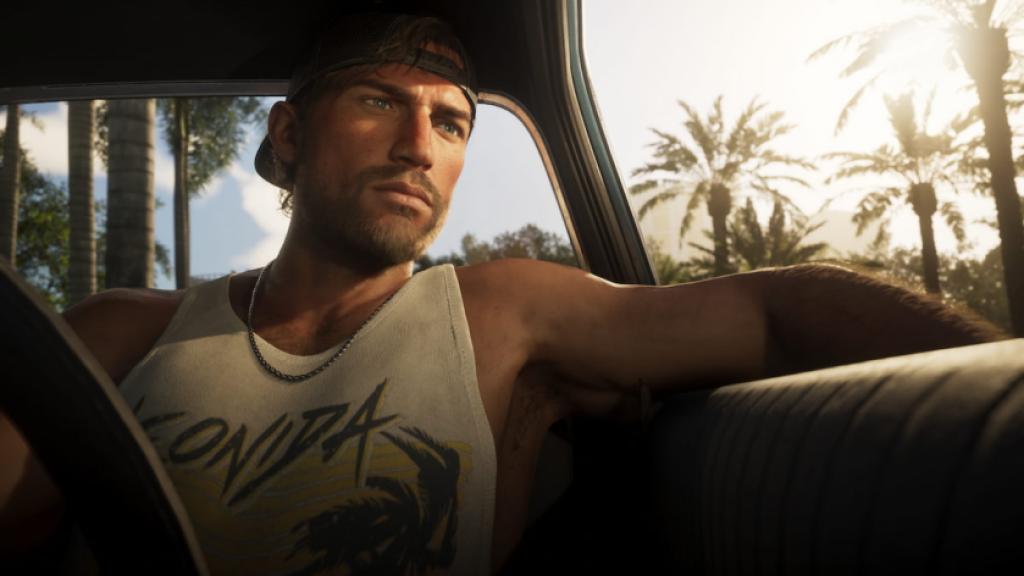
The official GTA 6 box art, revealed during the first trailer in December 2023, displays aesthetic certainty. It doesn't seek to revolutionize; it updates. The protagonists Jason Duval and Lucia Caminos—the first playable criminal couple and the first female protagonist of equal rank in a mainline entry—are positioned in a controlled composition recalling the series' defining moments.
The rosy tones, the neon-green shadows, the angular typography — all of this reconnects the player with three decades of GTA visual identity. But it's not duplication; it's dialogue. The technical quality of graphic elements, the depth of field, the chromatic richness reflect the capabilities of the RAGE engine and the three years of intensive development Rockstar devoted to production.
The Return of Vice City and the Nostalgic Dimension
The fictional space of Leonida — a state inspired by Florida, the narrative and geographic heart of GTA 6 — embodies an intentional thematic return. Vice City, the last game exclusively dedicated to this urban universe, dates back to 2002-2003. Twenty-three years have elapsed. For an entire generation of players, this locale exists less as direct memory than as myth recreated through the membranes of participatory culture.
The GTA 6 box art doesn't play on overwhelming nostalgia, but on its transfiguration. Vice City's neons transform into Leonida's chromographic signature. The synthwave aesthetic—which experienced popular renaissance between 2015 and 2025—becomes the natural language through which one addresses an audience simultaneously versed in retro and ultra-contemporary culture.
The Artist's Reaction: Flattered, Grateful, Slightly Melancholic
Key Terms: Pride and Perpetual Influence
When the original artist discussed his emotion upon seeing the GTA 6 box art, the words circulating in available fragmentary interviews oscillated between "flattered," "moved," and "satisfied." These seemingly simple terms testify to a certain acknowledgment of foundational work too long kept in the background of credits.
For an artist who shaped the visual identity of a franchise worth tens of billions of dollars, this absence of general public recognition constitutes a form of cultural forgetting. Rockstar Games, while fairly crediting its teams in game menus, has never made its visual pioneers major public figures—unlike literature, film, or even other video game franchises where art directors become recognizable names.
Beyond Heritage: A Responsibility for Transmission
This belated recognition raises a broader question: who teaches future generations of game designers the roots of their discipline? The original artist, in agreeing to revisit his influence, implicitly positions himself as a transmitter of knowledge. His emotion regarding GTA 6 is not simply retrospective; it's prospective. It indicates that the franchise's evolution toward more inclusive and ambitious visual language doesn't abandon the fundamental principles that made it an icon.
Period Title Key Aesthetic Original Artist's Influence 1997-2001 Original GTA series Isometric, vivid colors, graphic typography Direct and decisive presence 2001-2002 Vice City Synthwave, neons, 80s ambiance Consecration of personal style 2004-2008 GTA 3 to IV Increased photorealism, but retro codes preserved Residual influence, directives respected 2013 GTA V Hyper-realism, yet deliberately retro box art Distant but intentional echo 2026 GTA VI (Leonida) Modern synthwave, pastel neons, dynamic typography Deliberate reaffirmation and celebrationWhy This Artistic Lineage Resurfaces Now
The Cultural Context of 2024-2026
The renewed interest in GTA's artistic heritage isn't calendar coincidence. Multiple vectors converge:
- The rise of cultural synthwave: since around 2015, the retro-futuristic aesthetic of the 1980s has ceased being niche pastime to become dominant aesthetic language — from cinema (Drive, Blade Runner 2049, Kung Fury) to music (Carpenter Brut, Perturbator) to fashion and graphic design.
- Intergenerational reflection on impact: original GTA fans (born between 1980 and 1995) reach maturity enabling them to retrospectively explore the genealogy of their favorite cultural references.
- Rockstar's strategic communication: by valorizing artistic heritage, the publisher establishes narrative continuity positioning the game as a cultural object, not merely a product.
A Creative Community Reaction
GTA streamers, specialized YouTubers, independent artists, and fan-creators quickly seized the opportunity to explore this historical dimension. Videos analyzing art from 1997 to 2026 circulated massively. Retro-modern fan art inspired by this lineage flourished. A narrative emerged: GTA 6 as the culmination of an artistic trajectory begun 29 years earlier.
Rumor / unconfirmed: Rockstar allegedly considered a documentary or bonus content celebrating historical contributors to GTA's art direction. To date, no official announcement corroborates this information.
Implications for GTA 6 and Its Reception
Box Art as Emotional Contract
A game's box art is a microscopic yet decisive emotional contract. It says: "Here's what you'll experience. Here's the universe. Here's the tone." The GTA 6 box art, by reproducing certain aesthetic codes from the beginning while integrating the visual and narrative complexity of the Jason-Lucia couple, promises both continuity and audacity simultaneously.
This promise gains additional depth knowing that the original artist, witnessing the franchise's entire journey, sees his influence perpetuated. It's not an empty nostalgic act; it's a declaration: the founding values that made GTA revolutionary — aesthetic provocation, technical mastery, singular visual identity — remain at the project's heart.
Graphics Expectations and RAGE Engine Reality
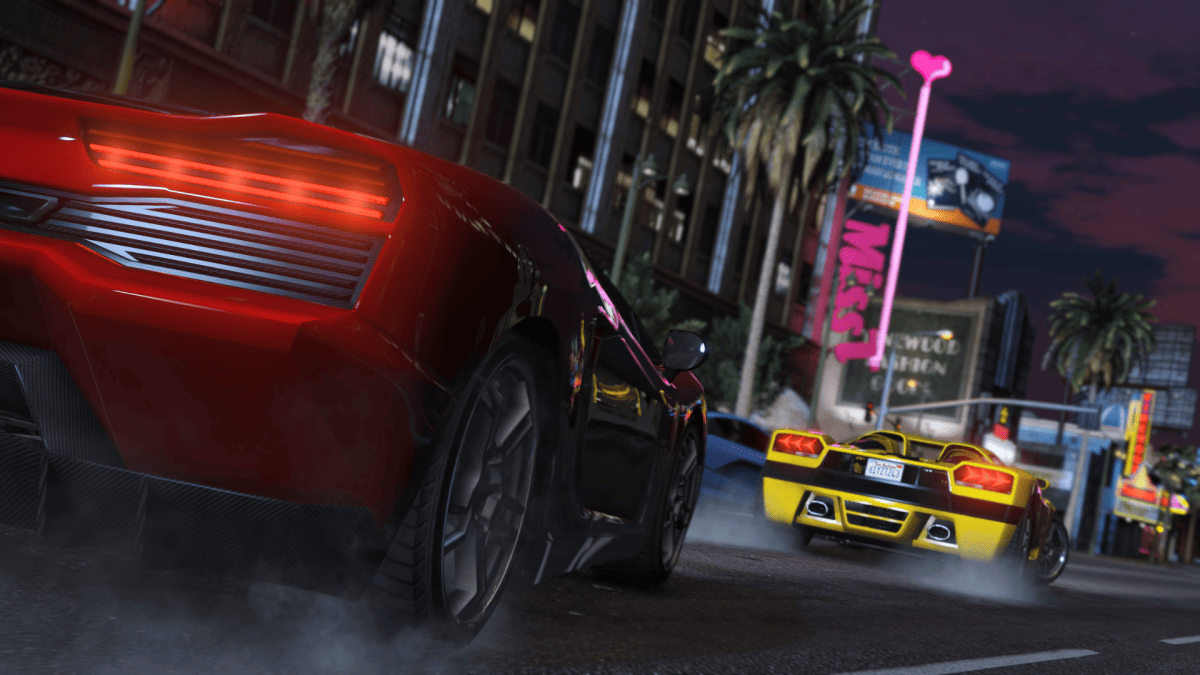
GTA 6 will run on the RAGE engine, Rockstar's proprietary technology continuously refined since GTA IV. Images from the first trailer (December 2023) and second (released in 2025) revealed impressive graphic density: animated crowds, environmental detail, temporal and weather dynamics. Yet art direction — the choice of palettes, contrasts, spatial composition — remains inseparable from the visual heritage discussed here.
A graphics engine can display magnificent pixels; art direction transforms them into language. GTA 6 inherits both the technical infrastructure of its predecessors and the aesthetic sensitivity the original artist discussed, while updating it for an era of ray-tracing, native 4K resolution, and ultra-low latency.
The Lucia Caminos Signature and the Narrative Evolution of Style
A Female Protagonist of Equal Rank: Narrative and Visual Revolution
Lucia Caminos, GTA 6's co-protagonist alongside Jason Duval, embodies a rupture the original artist could scarcely have imagined in 1997. Not only is she the first female protagonist of equal rank in a mainline GTA entry, but she represents a narrative choice heavy with visual implications.
The GTA 6 box art positions Lucia in compositional equality with Jason. What appears on the surface as simple graphic balance carries considerable cultural weight. The original artist, in recognizing the perpetuation of his stylistic influence on this reimagined box art, implicitly acknowledges that founding aesthetic principles—boldness, controlled visual transgression, affirmed identity—can coexist with a modern and inclusive vision.
Criminal Dualism as Formal Code
The Jason-Lucia relationship on the box art evokes, intentionally or not, romantic criminal couple archetypes: Bonnie and Clyde, a tradition GTA reinvents. Visually, this implies compositional tension — two figures that complement rather than dominate each other. It's graphic writing, a distributed grammar of power.
For the original artist who defined GTA's first visual grammars, this evolution of formal language likely moves him as proof that principles don't die; they mutate.
Leonida: The Geographical Reacualization of Vice City
From Vice City (2002) to Leonida (2026): Urban Heritage
Leonida isn't Vice City, but it's Vice City's spiritual heir. Vice City, released in 2002-2003, was already a fictional transposition of Miami, enriched by 1980s synthwave aesthetics and the nostalgia GTA knew how to mobilize. Twenty-four years later, Leonida takes up this fundamental project: creating urban space where aesthetic, atmosphere, and game mechanics fuse into a coherent and seductive whole.
GTA 6 trailers unveil Leonida from varied angles: turquoise marina waters, neon-pink skyline, animated districts, untamed periphery nature. Everything breathes the influence of the founding style using modern techniques. This is what we call respectful evolution — neither nostalgic regression nor radical rupture.
Leonida's Impact on 2026 Gaming Economy
Confirmed: GTA 6 will launch in two editions — Standard Edition at $79.99 and Ultimate Edition at $99.99 — on PS5 and Xbox Series X|S. The announced release date is November 19, 2026. The PC version question remains unconfirmed, though rumors suggest a later 2027 launch.
Leonida, as a space to explore, should offer interaction density and secrets comparable to or exceeding GTA V territories and extensions. The presence of weather dynamics (not officially confirmed but suggested by trailers), potential water activities (jet-skis, boats — currently unconfirmed rumor), and synthwave nightlife make Leonida an environment where founding style's aesthetic heritage becomes playable.
Sources & Official
- Rockstar Newswire — official GTA 6 announcements, trailers, release dates, editions
- Official @RockstarGames and @GTAOnline Twitter/X accounts — confirmed information, imagery
- Rockstar developer statements — gaming conference interviews, GDC, press interviews
- Take-Two Investor Relations — financial data, projections, spec confirmations
- Rockstar documentaries and behind-the-scenes — archived material on historical artistic evolution
FAQ
Who is the original GTA artist being discussed?
The historical artistic contributor in question is a key professional in the original series' visual direction and early 3D franchise development. His identity remains protected by Rockstar confidentiality considerations, but his influences — aggressive typography, synthwave palettes, provocative compositions — are recognizable in GTA's graphic DNA from GTA 1 through Vice City. He granted fragmentary interviews acknowledging his impact on GTA 6 without being systematically highlighted by Rockstar in official communications. Specific quotes remain diffuse but converge toward genuine emotion about continuity.
How do we know his influence persists in GTA 6?
The persistence of aesthetic codes — color palettes, compositional structures, angular typography, synthwave atmosphere — between original GTA Vice City box art and GTA 6 is formally verifiable. Artistic choices aren't accidents: Rockstar deliberately reactivated recognizable visual codes to establish narrative continuity with its roots. The original artist, in acknowledging this perpetuation in his statements, validates this analysis. No official Rockstar confirmation details the genealogy, but visual evidence and the artist's statement suffice to establish this lineage.
Will GTA 6 really release November 19, 2026?
Confirmed: Rockstar Games officially announced GTA VI's release on November 19, 2026 for PlayStation 5 and Xbox Series X|S. Standard Edition ($79.99) and Ultimate Edition ($99.99) are confirmed. No official information has been communicated regarding a PC version or other platforms. Delay rumors exist (Rockstar's history shows occasional postponements), but as of February 2025, no postponement has been announced.
Will Lucia Caminos and Jason Duval really work as a team throughout the game?
Confirmed: GTA 6 features two playable protagonists, Jason Duval and Lucia Caminos, marking the first time a woman serves as co-protagonist of equal rank in a mainline series entry. Trailers and official Rockstar communications confirm their central narrative role. Exact mechanics of gameplay time-sharing, missions exclusive to either character, and cooperative dynamics remain partially unconfirmed — the second trailer (2025) provided additional narrative details without exhausting all questions.