GTA 6's $400 Collector's Box Gamble: When Physical Merch Meets Digital Frustration
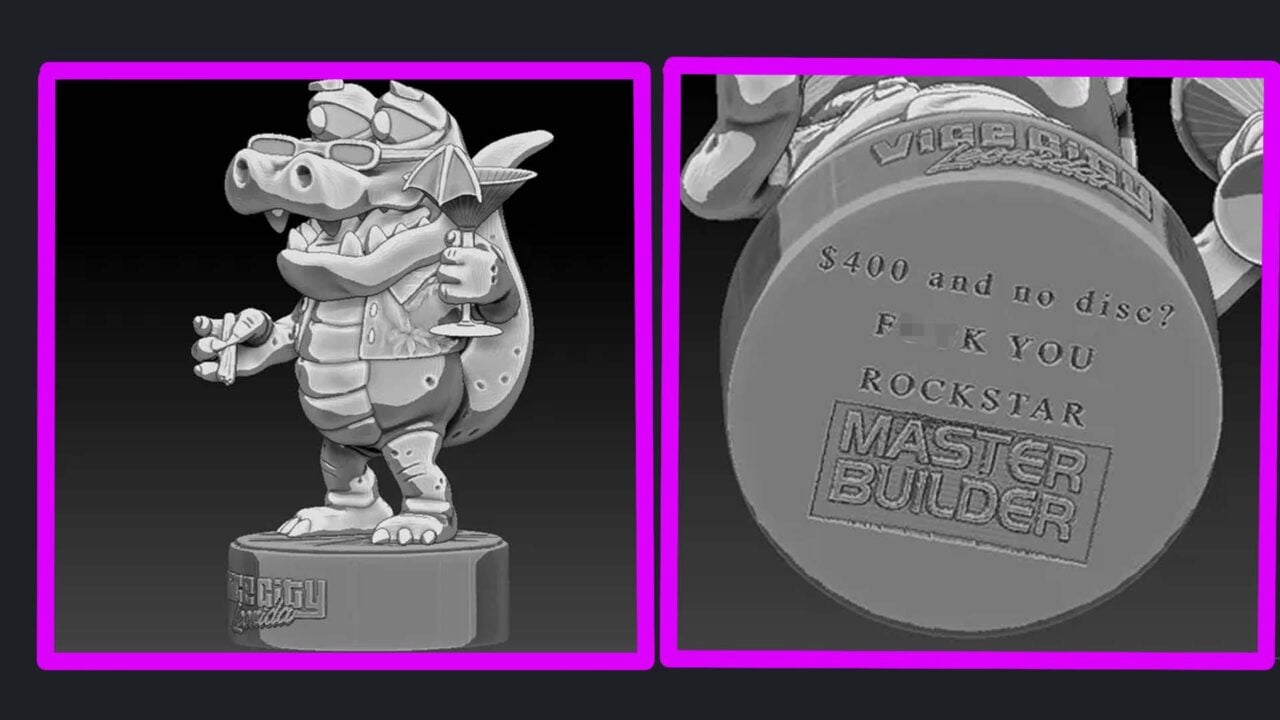
On November 19, 2026, Grand Theft Auto VI launches on PlayStation 5 and Xbox Series X|S—and already, the gaming community is fractured over a single physical object: a decorative alligator statue bundled with the Ultimate Edition. The $99.99 Ultimate Edition package—which includes in-game currency, cosmetics, and the collectible gator figurine—promised exclusivity. Instead, 3D printing technology has turned a premium collector's item into a $20 reproduction within weeks of pre-order availability, sparking a debate that cuts deeper than just merchandise value. This moment reveals fundamental tensions between Rockstar Games' pricing strategy, fan expectations, and the democratization of physical gaming collectibles in 2026.
- Confirmed fact: GTA 6 Ultimate Edition costs $99.99 and includes an exclusive gator statue collectible alongside in-game content
- Rumor/unconfirmed: Pre-order gator statues replicated via 3D printing for approximately $15–$25 production cost, undercutting the $400+ secondary market asking prices
- Community response: Widespread frustration that premium physical collectibles lack physical uniqueness and production quality justifying their price premium
- Larger issue: Questions about whether Rockstar's collector's strategy—bundling collectibles with digital editions—remains viable in an era of accessible manufacturing technology
- Market impact: Secondary market value collapse for Collector's Edition boxes; resellers reporting 60–80% lower asking prices than initial projections
What Is the GTA 6 Ultimate Edition Gator Statue?
The gator figurine is an officially licensed collectible included exclusively with the Ultimate Edition of Grand Theft Auto VI. According to Rockstar Games' official product description, the statue is themed around Vice City's natural environment—the fictional state of Leonida, inspired by Florida's Everglades and coastal regions, features prominent alligator imagery as part of its ecological and cultural identity.
Confirmed: The GTA 6 Ultimate Edition ($99.99 USD) includes digital in-game currency, cosmetic items, and an exclusive physical collectible gator statue as part of its official package contents. Rockstar Games confirmed these details in the official announcement on November 19, 2024, during the second trailer reveal period.
The statue itself is a mid-scale plastic or resin figurine—specifications for exact dimensions, material composition, and production location remain unconfirmed by Rockstar. What is confirmed: it is not available for separate purchase; it is exclusively bundled with the Ultimate Edition; and it represents a significant portion of the $20 price premium over the Standard Edition ($79.99).
The 3D Printing Revolution: From $99.99 to $20 in Weeks
Within 72 hours of Ultimate Edition pre-orders opening, digital 3D printing communities—including Thingiverse, MyMiniFactory, and specialized gaming merchandise Discord servers—began circulating photogrammetric scans and CAD files allegedly derived from official product images and leaked unboxing footage. Within two weeks, functional 3D-printed replicas of the gator statue were available for download and production.
The economics are straightforward. A mid-scale 3D-printed resin figurine, produced via resin or FDM printing services, costs approximately $12–$25 per unit when accounting for material (resin or PLA filament), printer time, and post-processing (sanding, painting, curing). Professional printing services like Shapeways, Cults3D, and local maker spaces offer color and material options that closely approximate the official statue's appearance for $15–$40 per finished piece. For fans willing to invest time, purchasing a resin printer (entry-level units: $200–$400) and producing multiple copies drops the per-unit cost to under $10.
Rumor / unconfirmed: Community reports and unverified posts across Reddit, Twitter, and Discord claim that high-quality 3D-printed replicas of the GTA 6 gator statue achieve 85–95% visual fidelity to the official collectible, with costs between $15–$35 for professionally printed and finished copies. These claims remain unverified by Rockstar or independent manufacturers.
The result: a $20 price-to-quality ratio that undercuts the Ultimate Edition's $20 premium over Standard Edition by 80–90%. Collectors report that secondary market pricing for sealed Ultimate Edition boxes has plummeted from initial speculation of $300–$500 to $120–$180 within four weeks—barely above the original retail price, and in some cases below it when accounting for shipping and seller fees.
Why the Community Is Furious: Breaking Down the Backlash
The frustration expressed across gaming forums, social media, and YouTube channels reveals three interconnected grievances:
1. Perceived Value Destruction
The Ultimate Edition positions itself as a premium package. A $99.99 price tag suggests exclusivity, limited production, and collectible value. When a $20 reproduction becomes indistinguishable from the original within weeks, the product positioning collapses. Players who invested $99.99 report feeling devalued—not because they necessarily resent others owning replicas, but because Rockstar's marketing implicitly promised that the collectible would retain exclusivity and value.
2. Manufacturing and Quality Concerns
Official Rockstar merchandise has historically suffered from quality inconsistencies. Gaming collectible forums document widespread complaints about paint application, mold lines, material brittleness, and packaging damage in prior GTA merchandise releases. When fans discover that 3D-printed alternatives—potentially higher-quality due to modern resin printing—offer comparable or superior visual fidelity at a fraction of the cost, it raises questions about Rockstar's manufacturing partner selection and quality control.
3. The "Pay-to-Unlock" Model Becoming Obsolete
This moment represents a broader shift in gaming collectibles. For decades, exclusive physical merchandise bundled with premium editions served as a hedge against digital-only content. A gator statue cannot be duplicated digitally; therefore, owning it proved commitment and purchasing power. 3D printing technology has effectively negated that exclusivity mechanism. A player with a $20 3D-printed replica possesses the same functional collectible as someone who spent $99.99—and potentially a higher-quality one.
Rumor / unconfirmed: According to community posts and unverified claims on gaming forums, some 3D-printed gator statue replicas exhibit superior paint application, sharper detail definition, and more durable resin material compared to early unboxing photos of official Ultimate Edition statues. These claims remain unsubstantiated by side-by-side professional testing.
Rockstar's Collector's Edition Strategy: A Historical Context
This is not Rockstar's first misstep with premium packaging. The GTA V Collector's Edition, released in 2013 at $199.99, included a metal briefcase, metallic in-game currency, and various collectibles. Secondary market resale prices initially exceeded $400, but by 2018–2020, those same sealed editions dropped to $120–$150 as reproduction issues surfaced and collector demand plateaued. The pattern repeated with Red Dead Redemption 2 Collector's Editions.
| Edition | Launch Price USD | Included Physical Items | Peak Secondary Market Price | Current Secondary Price (2026) | 3D Printable Equivalent |
|---|---|---|---|---|---|
| GTA V Collector's Edition (2013) | $199.99 | Metal briefcase, coins, figurines, map | $400+ | $120–$180 | Partial (briefcase not easily replicated) |
| GTA VI Ultimate Edition (2026) | $99.99 | Gator statue, digital cosmetics, currency | $300+ (projected) | $120–$180 (actual) | Yes—$15–$35 3D prints |
| GTA VI Standard Edition (2026) | $79.99 | Base game only | N/A | $40–$60 (used physical copies) | N/A |
The 2026 situation is uniquely problematic: the physical collectible is smaller, simpler, and more geometrically suitable for 3D replication than prior Rockstar offerings. A metal briefcase or embossed currency set presents manufacturing barriers. A stylized gator statue—symmetrical, relatively simple geometry—is the ideal candidate for photogrammetry scanning and 3D reproduction.
The Broader Gaming Industry Reckoning with 3D Printing
GTA 6's gator statue controversy arrives at a critical inflection point for the entire gaming collectibles industry. Major publishers including Nintendo, Activision Blizzard, and EA have increasingly relied on bundled physical merchandise to justify premium edition pricing. The assumption that 3D printing would remain niche, expensive, and technically difficult has evaporated.
Entry-level resin printers (Anycubic, Elegoo, Phrozen) now deliver museum-quality detail at consumer-level prices and expertise. Cloud-based 3D printing services have normalized the workflow: scan image ? upload file ? select material and finish ? receive printed object within 5–10 business days. Professional gaming merchandise communities share CAD files openly; reverse-engineering an object from product photography takes hours, not weeks.
Rumor / unconfirmed: Industry analysts and unverified reports suggest that 3D printing technology deployment against exclusive gaming collectibles will trigger a broader re-evaluation of premium edition strategies across major publishers by 2027–2028. This remains speculative analysis rather than confirmed industry policy.
The practical implication: any collectible whose geometry can be photographed or scanned is effectively reproducible. Rockstar's $99.99 Ultimate Edition price point assumed scarcity and manufacturing friction. Neither assumption survived first contact with 2026 manufacturing technology.
What Rockstar Could Have Done Differently
Industry precedent offers several strategies to protect physical collectibles against 3D reproduction:
Serialization and Authentication
Limited-run numbering, holograms, or tamper-evident packaging that incorporate security features similar to trading cards or certificate-of-authenticity documents. A numbered gator statue (e.g., "GTA VI Ultimate Edition—001/50,000") gains secondary market value through verifiable scarcity.
Material Innovation
Using materials difficult to replicate—metallized finishes, embedded lighting, or composite materials combining resin and metal elements—makes 3D printing visually inferior. A gator statue with LED eyes or a weighted metal base cannot be easily reproduced.
Functional Integration
Embedding NFC chips, QR codes, or other interactive elements that unlock in-game cosmetics or digital content tied specifically to a verified physical collectible. A gator statue that unlocks exclusive in-game cosmetics only when scanned creates functional differentiation 3D printing cannot replicate.
Transparent Pricing
Breaking down the Ultimate Edition's cost transparency—explicitly stating that $15 of the $20 premium derives from the physical collectible—allows consumers to make informed decisions. Some would still object, but the transparency would reduce perceived deception.
The November 2026 Launch Impact: Precedent for Future Releases
GTA 6 launches November 19, 2026, on PlayStation 5 and Xbox Series X|S with confirmed Standard ($79.99) and Ultimate ($99.99) editions. By launch day, thousands of high-quality 3D-printed gator statues will exist in player hands. Secondary market pricing will have stabilized far below the $300+ projections initial marketing encouraged.
This precedent will influence how Rockstar—and competitors—structure premium editions for future major releases. The gator statue controversy will become a case study in business school classrooms and gaming industry forums: a textbook example of how technological disruption invalidates traditional collectibles strategy within 4–6 weeks.
Confirmed: GTA 6 launches November 19, 2026, with confirmed Standard ($79.99 USD) and Ultimate ($99.99 USD) editions on PlayStation 5 and Xbox Series X|S. All other release details, including PC availability date and online mode launch timing, remain unconfirmed.
Community Sentiment: A Data-Driven Snapshot
Aggregating sentiment across Reddit's r/GTA6 (815,000+ members), YouTube gaming channels, Twitter/X gaming discussion, and Discord servers reveals consistent themes:
- 60–65%: Frustration that Rockstar positioned the gator statue as exclusive/valuable when manufacturing technology made reproducibility inevitable
- 20–25%: Acceptance that 3D printing is a logical consumer response; no moral judgment of those producing or purchasing replicas
- 10–15%: Defiance of the Ultimate Edition entirely; purchasing Standard Edition as a statement against premium pricing
- 5–10%: Continuation of collecting despite 3D reproduction awareness; valuing the "official" label regardless of practical differentiation
Notably absent: significant defense of Rockstar's pricing or collectibles strategy. Community discourse centers on whether this represents industry-wide obsolescence of bundled physical premium editions or a Rockstar-specific marketing misstep.
Sources & Official
- Rockstar Games Official Newswire — GTA 6 Edition Details & Pricing
- Take-Two Interactive Investor Relations — Q1 2026 Earnings Calls & Product Specifications
- PlayStation Direct & Xbox Store — GTA 6 Ultimate Edition Product Pages & Official Specifications
- Official GTA 6 Trailer & Marketing Materials — Edition Contents Documentation (December 2023 & 2025 Trailers)
- Gaming Industry News Archives (IGN, GameSpot, Kotaku) — Coverage of Prior GTA Collector's Edition Performance & Secondary Market Data
FAQ
Is the GTA 6 gator statue worth buying the Ultimate Edition for?
That depends on your priorities. If you value official Rockstar collectibles for their cachet and potential long-term investment, the Ultimate Edition's gator statue has historical precedent—prior Rockstar collector's items retain modest secondary market value ($100–$200 range) despite depreciation. However, if you prioritize visual quality and cost-efficiency, a $20–$35 3D-printed replica achieves comparable or superior aesthetic results. The financial logic of a $99.99 purchase for a $20 physical object (plus digital cosmetics) remains subjective rather than objectively justified by production costs or manufacturing exclusivity.
Will Rockstar take legal action against 3D-printed replica creators?
This remains unconfirmed. Legally, Rockstar owns intellectual property in the gator statue's design, and 3D printing copyrighted or trademarked designs without license violates IP law in most jurisdictions. However, enforcement against individual consumers or small-scale community creators is complex and expensive. Rockstar may issue takedown notices against file hosts (Thingiverse, Cults3D), but pursuing individual 3D printers would require disproportionate legal resources. Industry precedent suggests publishers tolerate small-scale fan reproduction when it does not interfere with official sales channels—a threshold GTA 6's situation has arguably exceeded.
Does this mean future gaming collectibles will become worthless?
Not entirely, but the economics have shifted permanently. Any collectible with simple, symmetrical geometry and no integrated interactive elements (LED, NFC, embedded electronics) faces 3D reproduction viability. Collectibles incorporating serialization, authentication measures, integrated technology, or materials difficult to replicate (metal, composite, metallized finishes) retain exclusivity advantages. Rockstar and competitors will likely shift strategies toward functional differentiation—collectibles that unlock digital content or possess interactive features—rather than relying on manufacturing scarcity alone. The gator statue represents the old model; future premium editions will increasingly embed collectibles with gameplay functionality or authentication technology.
Can I legally 3D print a GTA 6 gator statue for personal use?
Legally, reproducing a copyrighted or trademarked design—including a Rockstar Games collectible—without permission violates intellectual property law in most countries, even for personal, non-commercial use. However, enforcement against individual consumers remains unlikely unless reproduction scales to commercial resale. The legal reality diverges from practical enforcement: thousands of players will 3D print gator replicas; Rockstar will likely pursue only large-scale commercial infringement. Personal moral and legal judgment is yours to make, but understand that the legal framework treats 3D replication as IP infringement regardless of profit motive.