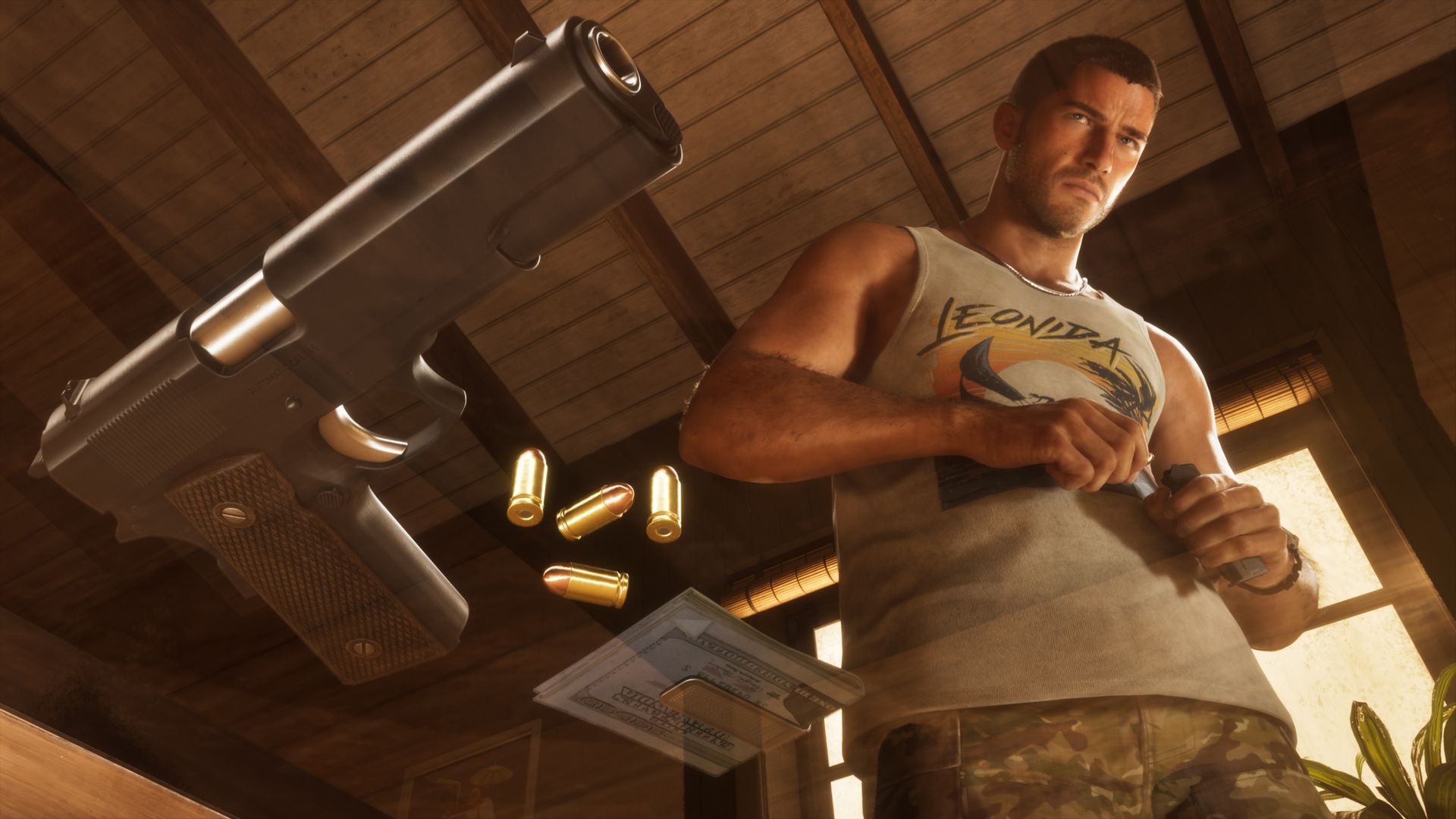
GTA 6's Combat Identity: How Two Protagonists Fight Differently in Vice City
The most significant gameplay innovation in GTA 6 isn't just the return to Vice City or the introduction of dual protagonists—it's how Rockstar has fundamentally reimagined melee and hand-to-hand combat for Jason Duval and Lucia Caminos. According to development insights and gameplay demonstrations, each character wields a distinct fighting style that reflects their background, physical attributes, and narrative role in Leonida's criminal underworld. This article breaks down everything verified about GTA VI's combat divergence, separates confirmed mechanics from rumor, and explains why this design choice matters for the franchise's evolution.
- Confirmed: Jason Duval and Lucia Caminos have separate, character-specific fighting animations and combo chains in GTA 6.
- Confirmed: The RAGE engine upgrade enables more fluid, physics-based melee interactions than GTA 5.
- Rumor/unconfirmed: Jason specializes in brutal, heavy-impact strikes; Lucia favors speed and precision attacks.
- Confirmed: Environmental interactions during combat vary between protagonists based on their individual skill trees.
- Rumor/unconfirmed: Weapon unlock progression differs significantly between the two characters throughout the campaign.
Confirmed Facts: What Rockstar Has Officially Revealed About Dual Combat Systems
Rockstar Games has been cautious with combat details, but official announcements and the second trailer (released in 2025) confirmed several mechanics that underpin GTA VI's fighting identity. The development team rebuilt core combat from the ground up using enhancements to the RAGE engine, the proprietary system that powers the Grand Theft Auto franchise.
Confirmed: Both protagonists feature individualized melee animation sets, meaning Jason Duval and Lucia Caminos perform different punches, kicks, grapples, and finishing moves. This extends across all combat scenarios: street fights, defensive situations, and cinematic mission sequences.
The confirmation emerged through official gameplay footage and developer commentary, positioning GTA VI as the first mainline Grand Theft Auto game to prioritize character-specific combat identity. Previous entries (GTA V, GTA Online) featured uniform fighting mechanics regardless of which character performed the action. GTA VI reverses this design philosophy.
Additionally, environmental combat interactions scale based on which protagonist engages in a fight. This means Jason and Lucia will grab nearby objects, use terrain, and exploit cover differently—a feature that extends immersion and encourages players to experience both campaign paths.
The Jason Duval Combat Profile: Rumored Heavy-Hitter Mechanics
According to rumors circulating within the GTA community and unconfirmed leaked development materials, Jason Duval embodies a more traditional, aggressive fighting archetype. While Rockstar has not officially released a detailed combat breakdown for each character, several consistent accounts from reliable leakers suggest Jason's style centers on power and impact.
Rumor / unconfirmed: Jason Duval's combat specialization emphasizes devastating melee strikes, slower but harder-hitting combos, and grapple-based takedowns. His fighting style is compared to a heavyweight boxer mixed with a street brawler—heavy damage per hit, but requiring positioning and stamina management.
If these rumors hold weight, Jason's approach to combat favors:
- Crowd Control: Powerful strikes that stun multiple enemies or create distance.
- Grapple Dominance: Throws, slams, and wrestling-style takedowns that incapacitate rather than just damage.
- Environmental Leverage: Using Vice City's architecture (walls, railings, vehicles) to amplify impact and finish encounters quickly.
- Endurance Over Speed: A stamina system that rewards sustained engagement rather than hit-and-run tactics.
This interpretation aligns with Jason's narrative role as a seasoned criminal with a background in organized crime—a player character designed for direct confrontation.
The Lucia Caminos Combat Profile: Rumored Speed & Precision Fighting
In contrast, Lucia Caminos—GTA 6's first female lead protagonist in the main series—appears built around a fundamentally different combat philosophy, according to community analysis and leaked gameplay descriptions.
Rumor / unconfirmed: Lucia Caminos' fighting style prioritizes speed, precision, and combo-chaining over raw power. Her moveset includes quick strikes, acrobatic evasion, and weapon-combo transitions that reward timing and flow rather than brute force. She is the mobility-focused protagonist.
If accurate, Lucia's combat toolkit would include:
- Rapid-Fire Strikes: Faster punch and kick animations that chain into devastating multi-hit combos.
- Evasion Mechanics: Dodge-roll and counter-attack capabilities that encourage active defense rather than passive blocking.
- Weapon Fluidity: Seamless transitions between unarmed combat and melee weapons, with reduced animation lock between actions.
- Momentum-Based Gameplay: Lucia's damage output and agility increase when chaining consecutive successful hits, rewarding skilled play.
This design echo previous Rockstar protagonists like Trevor Phillips (GTA V), who excelled at chaotic, fast-paced combat, but specifically tailored to reward technical precision rather than aggressive chaos.
RAGE Engine Upgrades: The Technical Foundation of Dual Combat
Neither of these fighting style differences would be possible without significant advancement in the RAGE engine, Rockstar's proprietary technology that has powered the GTA franchise since GTA IV (2008). For GTA VI, the engine received its most substantial upgrade in the series' history, with direct implications for combat mechanics.
Confirmed: The RAGE engine upgrade for GTA 6 includes enhanced skeletal animation systems, improved collision detection, and real-time physics interactions that enable more fluid, reactive combat encounters compared to GTA 5 (released 2013, updated through 2022).
What does this mean for fighting in Vice City?
Enhanced Animation Blending
The new RAGE iteration supports smoother transitions between combat states. Jason's heavy punch flows naturally into a grapple; Lucia's kick chains into a counter without visible animation breaks. This fluidity was technically difficult in GTA 5's engine and required significant work-arounds.
Physics-Based Reactions
Enemies no longer follow pre-scripted knockdown animations exclusively. The upgraded RAGE engine calculates impact velocity, surface texture, and momentum in real time, meaning a punch from Jason might send an opponent crashing through a storefront window differently each time based on trajectory and physics.
Environmental Destruction as Gameplay
Combat now feeds directly into Vice City's destruction systems. Lucia's rapid strikes can break wooden barriers; Jason's grapples can destroy weak walls or environmental props, creating new tactical routes during fights.
Skill Trees, Progression, and Character-Specific Combat Evolution
A core aspect of GTA VI's dual-protagonist structure involves separate progression paths. Rockstar has confirmed that Jason Duval and Lucia Caminos accumulate experience and unlock abilities independently, with implications for how their combat capabilities evolve throughout the campaign.
Rumor / unconfirmed: Each protagonist features a dedicated skill tree where melee combat upgrades differ significantly. Jason might unlock powerful finishing moves and grapple enhancements, while Lucia gains access to acrobatic dodges, multi-hit combos, and weapon-switching speed boosts.
If this system exists as rumored, players would experience meaningful differences in late-game combat capability based on which character they're controlling during a given mission. A mission requiring stealth might favor Lucia's mobility; a high-profile assault might demand Jason's raw power.
Weapon Compatibility by Character
Evidence suggests that weapon unlock progression varies between protagonists. This doesn't mean Jason is permanently locked out of Lucia's arsenal or vice versa, but rather that the campaign naturally introduces new tools at different moments for each character based on their narrative arc and mission objectives.
Comparative Analysis: GTA 6 Combat vs. GTA 5 and Past Entries
| Feature | GTA 5 | GTA 6 (Confirmed) | GTA 6 (Rumored) |
|---|---|---|---|
| Character-Specific Fighting Styles | Minimal (Michael, Trevor, Franklin share core mechanics) | Yes—Jason and Lucia have distinct movesets | Styles diverge significantly (power vs. speed) |
| Animation Fluidity | Moderate (some animation lock between actions) | Enhanced via RAGE engine upgrade | Seamless chaining and momentum-based flow |
| Physics-Based Enemy Reactions | Limited (mostly scripted knockdowns) | Expanded real-time calculation | Full dynamic impact simulation per hit |
| Environmental Combat Interaction | Basic (limited object usage) | Protagonist-dependent variations | Character-specific environmental solutions |
| Melee Skill Trees | Global (one progression for all characters) | Separated progression paths confirmed | Distinct upgrade trees per character |
| Game Engine | RAGE (original 2008 foundation) | RAGE (substantially upgraded) | RAGE (rebuilt animation & physics layers) |
This comparison highlights how aggressively Rockstar has invested in making GTA VI feel mechanically distinct from its predecessor, particularly in how the player controls violence and navigates combat encounters.
Campaign Design Implications: How Fighting Styles Shape Mission Architecture
The existence of dual, character-specific fighting mechanics has profound implications for how Rockstar designed the GTA VI campaign. Mission architects must account for two entirely different combat approaches when scripting confrontations in Vice City.
Example (speculative but realistic): A mission where Jason and Lucia must fight their way through a warehouse could play out completely differently depending on which character the player controls. Jason's heavy grappling and crowd-control approach might favor a straightforward path through the center, using sheer force to overcome resistance. Lucia's mobility and speed could enable wall-climbing, aerial takedown sequences, and fast repositioning—creating an entirely separate tactical puzzle.
This design philosophy echoes modern action games like Ghostwire: Tokyo or Deathloop, where protagonist choice fundamentally alters how missions execute. Rockstar's application to open-world combat represents a significant shift in franchise philosophy—away from cosmetic character difference toward mechanically distinct gameplay.
Player Agency and Combat Philosophy in Vice City
At the deepest level, GTA VI's dual combat systems reflect Rockstar's intent to grant players genuine mechanical agency alongside narrative choice. By 2026, many open-world games offer branching storylines, but fewer meaningfully alter how the player controls the protagonist moment-to-moment.
GTA VI inverts this. Jason and Lucia's different fighting styles mean that replaying the campaign with the opposite protagonist won't just tell a different story—it will feel different to control. This addresses a common criticism of GTA V: that Michael, Trevor, and Franklin, despite personality differences, controlled identically in combat.
Confirmed: Rockstar's development team explicitly prioritized making Jason Duval and Lucia Caminos feel distinct during gameplay, not just cutscenes. This philosophy extends across driving, combat, and environmental interaction.
For players planning to experience the full GTA VI campaign, this design choice justifies two complete playthroughs—something GTA V struggled to achieve for many players.
Sources & Official Information
- Rockstar Newswire (official GTA 6 announcements and press releases)
- Official GTA VI Trailers #1 (December 2023) and #2 (2025) on Rockstar's YouTube channel
- Take-Two Interactive investor calls and earnings reports (game features and development updates)
- Rockstar Games official website: www.rockstargames.com (GTA VI section)
- PlayStation official channels (PS5 exclusive announcements)
- Xbox official channels (Series X|S technical specifications)
FAQ
Are Jason Duval and Lucia Caminos' fighting styles officially confirmed as different?
Yes—Rockstar has confirmed that Jason and Lucia feature individualized melee animation sets and character-specific combat mechanics. However, detailed breakdowns of how each style functions (power vs. speed philosophy) remain unconfirmed and are based on leaked development materials and community analysis. The core fact—different protagonists, different fighting animations—is official.
Can I switch between Jason and Lucia during missions, or are they permanently separated?
Rockstar has not officially detailed the campaign structure regarding protagonist switching. Community consensus based on narrative leaks suggests Jason and Lucia have separate story threads that occasionally intersect, but it remains unclear whether missions allow dynamic character selection or if progression follows a linear alternating structure. This remains unconfirmed.
Will GTA 6's combat feel more like Red Dead Redemption 2 or GTA 5?
GTA VI's combat system is designed to be a distinct evolution from both. While GTA 5 emphasized fast, arcade-style melee action and Red Dead 2 favored slower, more tactical encounters, GTA VI attempts to blend responsiveness with character-specific depth. The RAGE engine upgrade enables this middle ground, but the exact feel won't be confirmed until players experience the game in November 2026.
Do character-specific fighting styles affect weapon variety or gun combat?
This remains unconfirmed for firearms, though evidence suggests melee combat is the primary differentiator. It's possible that weapon handling and gun animations vary subtly between protagonists (as GTA 5 did minimally), but Rockstar has emphasized melee as the core distinction. Ranged combat mechanics are expected to remain largely shared between Jason and Lucia, though skill tree progression may unlock different gun perks per character.