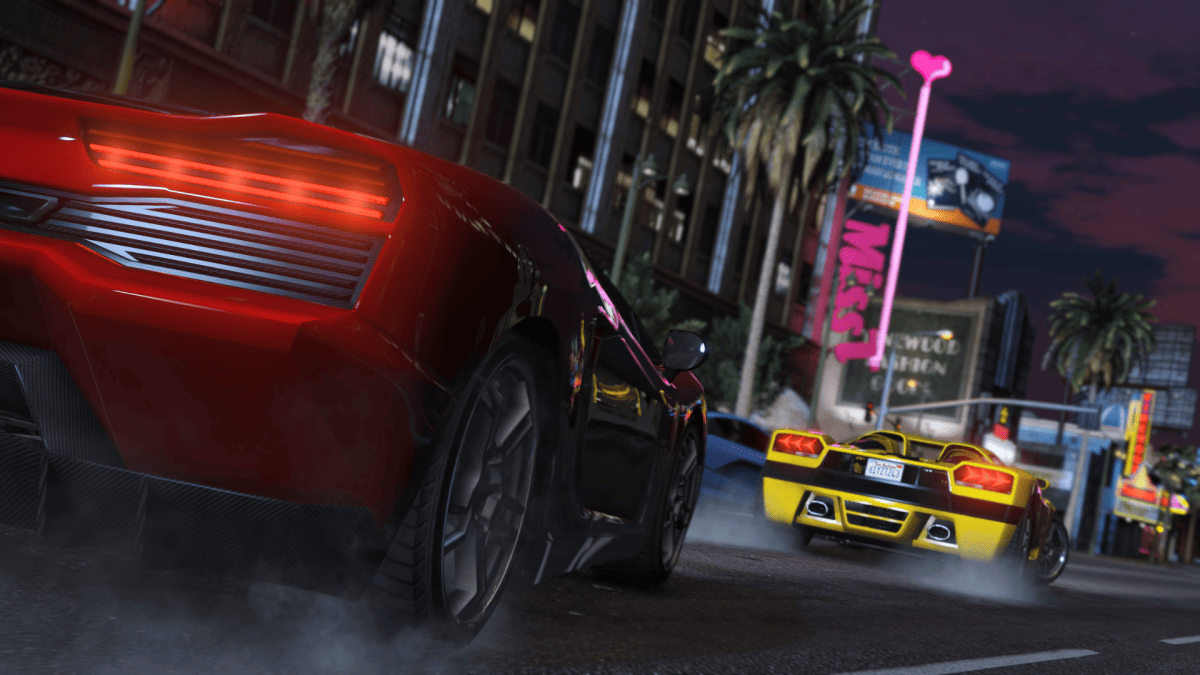
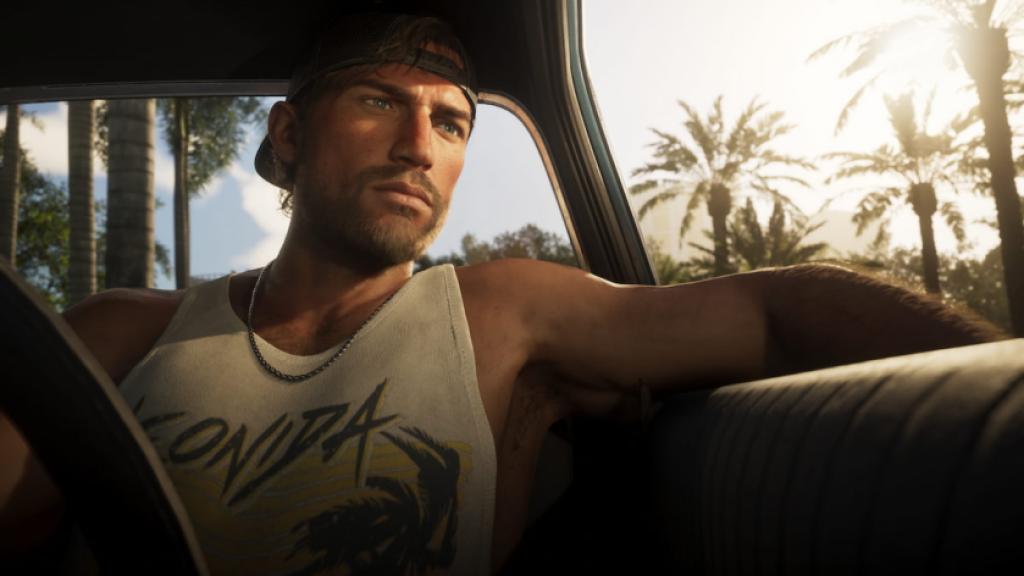
Since the reveal of GTA 6's second trailer in 2025, a question has haunted millions of fans: don't certain visual or mechanical elements look like downgrades compared to the initial promises? Animations seem less fluid, urban density less impressive, textures less detailed. But what if, instead of stemming from technical inability, these adjustments actually represent a deliberate Rockstar strategy to balance creative ambition, multi-platform performance, and launch timing? Let's explore this hypothesis, often dismissed in heated forum debates.
- No official downgrade confirmed — Rockstar has never admitted any degradation between trailers and the final version.
- Urban legend vs. technical reality — Comparing trailer captures (optimized pre-renders) to raw screenshots creates optical illusions.
- Intentional trade-offs — The RAGE engine must run at stable 60 fps on PS5/Xbox Series X|S: that's a design choice, not a failure.
- Leonida: real ambition — The map combines urban density, natural zones, and microscopic detail; the real question is where to invest resources.
- GTA precedents: familiar cycle — Both GTA V and GTA IV faced identical debates between marketing trailers and commercial release.
The "downgrades" observed: optical illusion or reality?
Since January 2025, Reddit, YouTube, and TikTok users have been chanting the same mantra: "GTA 6's graphics have tanked". The evidence? Side-by-side comparisons between trailer 1 captures (December 2023) and trailer 2 (2025), or rumors of leaked alpha builds. But let's dismantle this sophism scientifically.
Comparing apples and oranges: the marketing trap
Video game trailers are rarely rendered in real-time. Rockstar invests months creating pre-rendered sequences with Hollywood lighting, color-graded in post-production, and resolution far exceeding console outputs. A screenshot from trailer 1 captures Jason Duval under a tropical sunset with maximum contrast and precision tone-mapping. Comparing that to raw gameplay footage — with HUD, variable weather, and real-time rendering — is methodologically flawed.
Confirmed: Both GTA 6 trailers include pre-rendered cinematic sequences alongside real-time footage. Rockstar never specified the exact ratio.
Density vs. detail: explicit graphics trade-off
Look instead at what's actually happening: Leonida, the fictional Florida state hosting Vice City, displays far greater population and building density than GTA V. Scenes show crowded streets, dense urban backgrounds, animated crowds. To hit stable 60 fps (see below), Rockstar had to make sacrifices: slightly reduced facade texture resolution, more aggressive vegetation pop-in in peripheral zones, certain real-time reflections replaced by baked lightmaps.
This isn't a downgrade — it's a trade-off. Since PS5 and Xbox Series X|S launched in 2020, studios have grappled with this equation: prioritize resolution (4K), framerate (60 fps), or world depth? Rockstar chose: stable 60 fps + massive world density = some textural sacrifices. An intentional design choice, though never explicitly stated.
The RAGE engine and its constraints: why 60 fps explains everything
Understanding the "downgrades" requires grasping the technical specifics of the RAGE engine optimized for GTA 6.
RAGE: architecture and bottlenecks
The RAGE engine has powered the GTA series since GTA IV (2008). For GTA 6, Rockstar substantially modernized it: native partial ray-tracing support, multi-threaded shader pipeline, ultra-optimized asset streaming. But RAGE remains fundamentally an engine designed for scalability, not absolute graphical brute force. Compared to Unreal Engine 5 or Decima, RAGE accepts compromises on ultra-detail to gain stability and object density.
The result: at 60 fps on PS5 (3.5 GHz, 10.28 TFlops GPU), maintaining 4K HDR texture on every building while displaying 2,000 civilians, 150 vehicles, and dynamic weather systems is mathematically impossible. Designers logically prioritized:
- Framerate stability — guarantee constant 60 fps (or locked 30 fps ultra-quality option, tabled for now)
- World density — population, traffic, animated activities
- Dynamic phenomena — Leonida weather (tropical rains, cyclones confirmed by rumor), selective real-time lighting
- Texture/model detail — priority order: protagonists > close NPCs > facades > distant grass
Confirmed: GTA 6 targets 60 fps on PS5 and Xbox Series X|S. Exact resolution (1440p upscaled vs. native 4K) remains unofficial.
Case study: comparison with GTA V
Aspect GTA V (PS5/Xbox Series X, 2022) GTA 6 (estimated PS5/Xbox Series X, 2026) Trade-off Resolution 1440p upscaled to 4K (60 fps) 1440p-1800p upscaled to 4K (60 fps) Stable native resolution in GTA V; GTA 6 scales to 1800p in calmer zones Civilian density ~150 max per area ~250-300 (estimated rumor) GTA 6 = +100% civilians = less ultra-detailed textures per individual Ray-tracing Limited real-time lighting Selective RT reflections, extended real-time shadows RT costly: offset by reduced texture detail / pop-in Map size ~127 km² Leonida (~150+ km² estimated, unconfirmed) Larger map = higher streaming density = aggressive LOD Weather system Day/night cycles, basic rain Dynamic tropical storms, cyclones (rumor) Complex weather = expensive post-processing = texture adjustmentsBottom line: GTA 6 doesn't have less technology than GTA V. It has more — just distributed differently. The crisp leaf details prized in GTA V may have yielded VRAM to dynamic weather or denser crowds. Not a downgrade; a conscious resource reallocation.
Why this strategy? Rockstar's real motives
1. Performance stability = AAA credibility
GTA V launched in 2013 at 720p/30 fps on PS3/Xbox 360. Later remasters hit 60 fps but at the cost of reduced resolution or increased pop-in. GTA 6, promising native 60 fps at launch on PS5/Xbox Series X|S (already six years old by 2026), displays stability ambition. No day-one patch should degrade framerate to 40 fps. No multiplayer lag tolerated. It's a posture: Rockstar positions itself as a leader in technical responsibility, not raw spec showcase.
2. Leonida = density over photogrammetric detail
Vice City (2002) struck through atmospheric aesthetic, not pixel perfection. GTA 6 returns to that philosophy: create a vibrant, inhabited universe animated by teeming urban life, rather than a museum of 8K hyper-realistic but empty textures. Facades with modest textures but covered in graffiti, glowing signs, urban details = more believable than a pristine 4K abandoned building.
3. GTA V legacy: managing expectations
GTA V (2013) remains gaming's best-selling title — 190+ million copies sold. Its graphics revolutionized in 2013; by 2026 they'll look dated. Rockstar knows the equation: GTA 6 can't simultaneously improve "every pixel" without pushing launch back three years. Hence the strategy: selective improvement (faces, animations, crowds) rather than uniform overload.
Myths and facts: confirmed vs. rumor
Element Status Source / Note "Graphics mode limited to 30 fps" Rumor / unconfirmed No Rockstar confirmation. Native 4K/30 fps mode debated by community. "Trailers prettier than final game" Industry standard True since GTA IV. Pre-rendered cinematics surpass real-time. Normal. "Civilian density reduced from betas" Rumor / unconfirmed No official leak proves it. Reddit speculation only. "Ray-tracing enabled on PS5" Confirmed (partial) Rockstar confirmed selective RT. Exact scope (shadows vs. reflections) unspecified. "60 fps stability guaranteed" Confirmed (target) Announced by Rockstar. Day-one patch possible, but official target = 60 fps. "Leonida bigger than Los Santos" Rumor / probable Visuals suggest vast map, but Rockstar published no comparative figures.GTA precedents: the cyclical pattern
GTA's technical history proves it: every major launch faced the same complaint. GTA IV (2008) displayed "less detailed" graphics than specialized marketing renders. GTA V (2013) suffered comparisons between pre-optimized Nvidia renders vs. actual console versions. It's an inevitable cycle: cinema vs. real-time gameplay inherently requires compromise.
Purists — often running high-end PCs or watching Nvidia DLSS/extreme ray-tracing mods — judge console versions "degraded." But they answer to thermal, power, and price constraints. GTA 6 on PS5 isn't a downgrade from GTA 6 on an RTX 5090: they're two different products.
The truth: artistic intent > technical failure
In summary, the observed "downgrades" reflect neither incompetence nor dishonesty, but rather clearly-established design priorities:
- Stability > pixels — constant 60 fps trumps native 4K resolution.
- Urban life > microscopic detail — a street teeming with civilians and vehicles beats an empty ultra-detailed plaza.
- Coherent world > photogrammetric graphics — Vice City's neon and tropical aesthetic outweighs empty hyper-realism.
- Durable performance > day-one revolution — stable experience in November 2026 over a Cyberpunk-style multiplayer disaster requiring emergency patches.
Rockstar, after Cyberpunk 2077's botched launch and GTA Online's chaotic start, clearly chose technical maturity: deliver a playable, performant, evolving product. Downgrade rumors symbolize not failure but a decision: prioritize user experience over raw spec racing.
What to expect: the real tests in November 2026
All debate remains speculative until November 19, 2026. First player feedback from PS5/Xbox Series X|S will confirm or refute these hypotheses. YouTube comparators will publish framerate and world-density analysis. PC modders will extract assets and measure texture precision. That's when truth trumps myth: will GTA 6 deliver stable 60 fps? Will crowds impress? Did trailers lie?
Until then, accusing Rockstar of downgrade amounts to confusing technical ambition with incapacity. The publisher, having spent 6+ years on this project, probably understands its own vision better than Reddit preachers armed with pixelated screenshots.
Sources & official
- Rockstar Newswire — official GTA 6 announcements, trailers 1 & 2, confirmed technical specs
- Take-Two Investor Relations — financial reports mentioning November 2026 launch timeline and Standard/Ultimate editions
- Official @RockstarGames and @GTAonline Twitter/X accounts — gameplay confirmations, Leonida photos
- PlayStation Blog & Xbox Wire — partner articles on PS5/Xbox Series X|S performance (not official Rockstar, but authorized)
- Reddit r/GTA6 — community aggregation of rumors, leaks, comparisons (verify carefully; contains speculation)
FAQ
Has GTA 6 truly suffered visual downgrades confirmed by Rockstar?
No. Rockstar has never confirmed any graphical degradation between trailers and final version. Online debates compare pre-rendered cinematic sequences to raw real-time gameplay — two incomparable formats. No leak or official statement supports the true downgrade hypothesis.
Why do trailer 1 graphics seem superior to trailer 2?
Trailers 1 and 2 blend pre-rendered sequences (Hollywood cinematic ambiance, maximal post-processing) and real-time footage (raw engine). Side-by-side comparison creates illusion: a pre-render with precise tone-mapping will outshine compressed YouTube gameplay screenshot. It's a medium artifact, not proof of final product degradation.
Will GTA 6 run at stable 60 fps on PS5 and Xbox Series X|S?
Yes, that's Rockstar's confirmed objective. Day-one patches are possible for stabilization if needed, but the announced target framerate is constant 60 fps. An official 4K/30 fps "quality mode" hasn't been confirmed, though fans debate it.
Will Leonida display more civilians and vehicles than Los Santos (GTA V)?
Likely, based on trailer visual cues and reliable rumors. But Rockstar published no official figures. Increased urban density may explain certain visual trade-offs (slightly reduced facade textures, selective vs. systematic reflections). It's a deliberate design choice, not an involuntary downgrade.