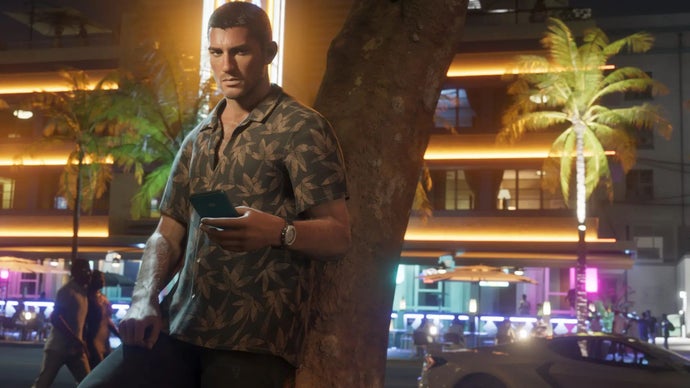
The countdown to GTA 6's November 19, 2026 launch has entered a troubling new chapter. After months of story leaks and asset dumps, threat actors are now allegedly attempting to extort money from the community by promising access to a playable build of the game — a move that marks a significant escalation in the ongoing security crisis surrounding Rockstar Games' most anticipated title.
- Unconfirmed extortion claims: According to recent community reports and alleged hacker communications, unnamed threat actors are soliciting payments in exchange for access to a purported playable GTA 6 build, prior to the official November 2026 release.
- Confirmed release date unaffected: Rockstar Games has made no official statement indicating that the November 19, 2026 PS5 and Xbox Series X|S launch is at risk due to security threats.
- Playable builds remain unverified: There is no verified evidence that a fully functional, playable GTA 6 build has been leaked or is being held for ransom — claims remain in rumor territory.
- Rockstar's track record: Take-Two and Rockstar Games have historically pursued aggressive legal action against leakers and extortionists, with documented DMCA takedowns and law enforcement collaboration.
- Community vigilance advised: Players should be extremely cautious of any claims promising early access or leaked builds, as these typically represent phishing scams or malware distribution vectors.
The Escalation: From Leaks to Extortion
The GTA 6 security landscape has undergone a dramatic transformation in the months preceding the November 2026 launch. What began as scattered asset leaks and story fragment disclosures has evolved into increasingly brazen attempts to monetize restricted content.
In the weeks following the official reveal trailer in December 2023, the community witnessed a steady stream of unauthorized information: concept art, character models, gameplay mechanics, and narrative details. While some of this material appeared to originate from former contractors or disgruntled employees, other leaks bore the hallmarks of sophisticated cyber intrusions into Rockstar's development infrastructure.
Rumor / unconfirmed: According to unverified reports circulating on Reddit (r/GTA6, r/GTA), anonymous users have claimed that hackers are requesting cryptocurrency payments (Bitcoin, Monero) in exchange for download links to a "pre-release playable build" of GTA 6. No official confirmation or credible technical verification of these claims exists.
The shift toward extortion represents a calculated strategy: if the threat actors cannot monetize leaked assets directly (through sales or advertising), they pivot to demanding ransom payments from either the community, content creators, or potentially from Rockstar itself. This tactic has precedent in the cybercriminal playbook, most notably in the 2022 Grand Theft Auto 6 leak, where hackers breached Rockstar's systems and demanded millions in return for withholding footage.
What Makes These Claims Questionable
The Verification Problem
To date, no credible evidence has emerged demonstrating that a complete, playable GTA 6 build has been successfully leaked. Verified proof would typically include:
- Full video footage of sustained, uninterrupted gameplay across multiple locations in Leonida
- Technical analysis from reputable reverse-engineering communities confirming the authenticity of executable files
- Cryptographic verification from known security researchers
- Accounts from players who have actually run the code on PS5 or Xbox Series X|S development kits
None of these conditions have been publicly satisfied. Instead, the community has observed fragmentary claims, blurry screenshots, and promises from anonymous accounts — all hallmarks of scam operations designed to harvest money, cryptocurrency, or personal data from eager players.
The Social Engineering Angle
Extortion scams thrive on emotional leverage. GTA 6 players face a 19-month wait between the official announcement (November 2024) and launch (November 2026). For some enthusiasts, the prospect of gaining early access to the game creates genuine psychological pressure — sufficient to bypass rational skepticism.
Threat actors exploit this impatience by crafting increasingly elaborate narratives: "We have an insider at Rockstar," "The build is real but Rockstar is covering it up," or "This is the only way to play before 2026." These narratives activate a cognitive bias known as fear of missing out (FOMO), which clouds judgment and drives risky financial decisions.
Confirmed: Rockstar Games has a documented history of pursuing legal action against leakers, hackers, and individuals trafficking in stolen intellectual property. The company has filed DMCA takedowns, collaborated with law enforcement agencies, and secured injunctions against content creators hosting leaked materials.
How Playable Build Extortion Typically Works
To understand the mechanics of these scams, it's useful to examine how similar schemes have operated in previous gaming security incidents.
Stage 1: The Promise
Threat actors announce (via Reddit, Discord, YouTube, or encrypted chat platforms) that they possess a functioning GTA 6 build. They provide tantalizing screenshots, claim insider status, and set a deadline: "Pay within 48 hours or the files get deleted." This artificial scarcity accelerates decision-making and bypasses critical thinking.
Stage 2: The Payment
Victims are directed to send cryptocurrency — most commonly Bitcoin or Monero — to a wallet address. Cryptocurrency offers the threat actors pseudonymity and irreversibility, meaning the money cannot be recovered once transferred. Amounts range from $50 to $500+, depending on the victim's perceived wealth (often inferred from Discord role, streaming platform followers, or gaming rig specifications).
Stage 3: The Bait
After payment, one of three outcomes typically occurs:
- No delivery: The threat actor disappears entirely, wallet in hand, with no files provided.
- Malware delivery: A fraudulent "build" is delivered as an executable or archive file. Upon execution or extraction, the user's system is infected with keyloggers, cryptominers, or credential-stealing trojans.
- Phishing vector: The victim is directed to a fake website mimicking Rockstar's launcher or a reputable gaming platform. Login credentials harvested here grant the attacker access to the victim's gaming accounts, payment methods, and email.
Stage 4: Secondary Exploitation
Once the initial scam is complete, threat actors often leverage stolen data for secondary attacks: account takeovers, financial fraud, identity theft, or sale of credentials to other criminals on the dark web.
The Reality: GTA 6's Security Posture in 2026
What Is Confirmed About Development Safety
Rockstar Games operates under corporate ownership by Take-Two Interactive, a publicly traded company subject to stringent cybersecurity audits and regulatory compliance frameworks. The studio's Nashville headquarters, combined with development facilities in San Diego, London, and Toronto, operates under industry-standard security protocols:
| Security Layer | Function | Typical Industry Standard |
|---|---|---|
| Access Control | Restricts who can view source code, assets, and builds | Role-based access control (RBAC), multi-factor authentication |
| Network Isolation | Separates development infrastructure from public internet | Air-gapped or heavily firewalled development subnets |
| Code Repository Security | Version control systems with audit logging | Git with branch protection, commit signing, access logs |
| Build Artifact Management | Tracks and controls distribution of executables and builds | Encrypted storage, signed builds, deployment logging |
| Threat Detection | Monitors for unauthorized access or exfiltration | EDR (Endpoint Detection & Response), SIEM (Security Information & Event Management) |
Confirmed: Rockstar Games has maintained development infrastructure security sufficient to bring GTA 5 (2013), GTA Online (2013-present), Red Dead Redemption 2 (2018), and Red Dead Online (2018-present) to market without major pre-release build leaks. The company's security posture has improved substantially since the 2022 GTA 6 intrusion.
Why Complete Playable Builds Are Unlikely to Leak
A fully functional GTA 6 build — one capable of running on consumer PS5 or Xbox Series X|S hardware — represents a massive file package, typically 150–200 GB in size. Distributing such a volume of data anonymously introduces substantial operational security risks for threat actors:
- Detection risk: Large file transfers trigger anomalies in network monitoring systems. Rockstar's security operations center (SOC) would almost certainly detect unauthorized exfiltration of hundreds of gigabytes.
- Forensic trail: Leaked builds can be cryptographically fingerprinted, allowing Rockstar to trace the origin of the theft and identify the responsible individual through their development kit or access credentials.
- Functional validation: A truly playable build requires authentication systems, server connectivity code, and other safeguards. Removing these safeguards to create a "standalone" build is technically complex and risky.
- Legal jeopardy: Trafficking in such a large volume of proprietary code opens threat actors to federal charges under the Computer Fraud and Abuse Act (CFAA) in the United States, with sentences reaching into the decades.
In contrast, scattered assets (textures, character models, audio files) or story documentation (script fragments, narrative outlines) are easier to exfiltrate and more difficult to trace to a specific individual. This explains why previous leaks have predominantly consisted of smaller asset components rather than complete, playable builds.
Historical Precedent: The 2022 GTA 6 Intrusion
The current extortion rumors are not occurring in a vacuum. In September 2022, Rockstar Games suffered a significant cybersecurity breach in which an attacker (or group of attackers) gained access to development infrastructure and exfiltrated footage of GTA 6 gameplay, trailers, and development materials. The attacker subsequently posted this content on YouTube and other platforms, and allegedly demanded a ransom from Rockstar to prevent further leaks.
Rockstar's response was unambiguous: the company did not negotiate with the attacker, instead mobilizing law enforcement, legal teams, and digital forensics specialists. Within weeks, YouTube had removed the content via DMCA takedown notices, the attacker was identified and arrested (the perpetrator was later revealed to be a teenager from Oxfordshire, UK), and subsequent prosecutions occurred.
Confirmed: The 2022 GTA 6 leak was perpetrated by Arion Kurtaj, a British teenager, who breached Rockstar's systems and posted unreleased gameplay footage online. Kurtaj was arrested, charged under the Computer Misuse Act, and sentenced to juvenile detention. The incident demonstrated both the vulnerability of game development infrastructure and the legal consequences for perpetrators.
This historical precedent is crucial: it shows that Rockstar will not capitulate to extortion demands, and that threat actors face serious legal consequences. The current rumors of "playable build extortion" must be evaluated against this backdrop. If similar extortion demands are being made, they likely originate from perpetrators unaware of (or undeterred by) the Kurtaj prosecution.
Protecting Yourself: A Player's Security Guide
Red Flags for GTA 6 Leak Scams
Players who encounter offers of early GTA 6 access should recognize these warning signs:
- Requests for cryptocurrency: Any legitimate software distribution uses credit cards, PayPal, or other recoverable payment methods. Requests for Bitcoin or Monero are a hallmark of scams.
- Artificial urgency: "Only available for 48 hours!" or "Rockstar will shut us down tomorrow!" are pressure tactics designed to bypass rational thinking.
- Unverifiable credentials: Claims of insider status, access to Rockstar's internal servers, or stolen development kits cannot be verified by typical players and should be treated as unsubstantiated.
- Suspicious download sources: Downloads hosted on anonymous file-sharing services, unencrypted P2P networks, or third-party storefronts carry extreme risk of malware infection.
- Unofficial accounts: Verify that any claims come from official Rockstar Games channels (Rockstar Newswire, @RockstarGames on X/Twitter, the official GTA website). Impersonators are rampant.
Best Practices
- Wait for official release: GTA 6 launches November 19, 2026 on PS5 and Xbox Series X|S. This is the only legitimate path to the game.
- Use official platforms: Pre-order exclusively through PlayStation Store, Xbox Store, or authorized retailers (GameStop, Best Buy, Amazon).
- Report suspicious activity: If you encounter extortion claims or leak offers, report them to Rockstar Games (support.rockstargames.com) and to the platform where you discovered them (Reddit, Discord, YouTube).
- Maintain system security: Use updated antivirus software, enable two-factor authentication on your gaming accounts, and avoid clicking links from untrusted sources.
- Educate your community: Share this information with friends and fellow players to reduce the pool of potential victims.
Official Channels & Verified Information Sources
- Rockstar Newswire (newswire.rockstargames.com) — official announcements and development updates
- Rockstar Games official social media (@RockstarGames on X/Twitter, Instagram, Facebook) — news, trailers, and security alerts
- Official GTA 6 website (gta6.rockstargames.com) — release information, editions, and system requirements
- PlayStation Blog and Xbox Wire — platform-specific release details and technical specifications
- Take-Two Interactive Investor Relations (take2games.com) — corporate announcements and financial disclosures
FAQ
Is there actually a playable GTA 6 build that has been leaked?
As of now, there is no verified evidence that a complete, functional GTA 6 build has been leaked. Claims circulating online remain unconfirmed and should be treated as rumors. Rockstar has made no official statement indicating that a playable build is in the wild, and the November 19, 2026 release date remains unchanged. Be extremely cautious of any source claiming to offer such a build in exchange for money.
Should I be worried about my personal data if someone offered me a leaked GTA 6 build?
If you have not yet engaged with any suspicious offers, your data is likely secure. However, if you have clicked links, downloaded files, or provided payment information to alleged leak sources, you should immediately: (1) change your passwords for all gaming and financial accounts; (2) enable two-factor authentication; (3) run a full antivirus scan on your device; (4) monitor your bank and credit card statements for unauthorized charges; and (5) consider placing a fraud alert with credit bureaus if financial information was compromised.
Will Rockstar negotiate with extortionists or pay ransoms?
Rockstar Games has demonstrated a consistent refusal to negotiate with threat actors or pay ransoms. In the 2022 GTA 6 breach, the company did not capitulate to extortion demands and instead worked with law enforcement to identify and prosecute the perpetrator. This policy remains in effect. Extortionists are therefore unlikely to succeed financially, and players should recognize extortion attempts as confidence schemes rather than genuine threats.
What is the safest way to access GTA 6 when it releases in November 2026?
Purchase the game through official channels only: PlayStation Store (PS5), Xbox Store (Xbox Series X|S), or authorized retailers such as GameStop, Best Buy, or Amazon. Pre-order the Standard Edition ($79.99) or Ultimate Edition ($99.99) directly through these platforms. Avoid third-party key sellers, grey-market resellers, or any source offering discounts below the official retail price, as these frequently involve fraudulent or region-locked keys.