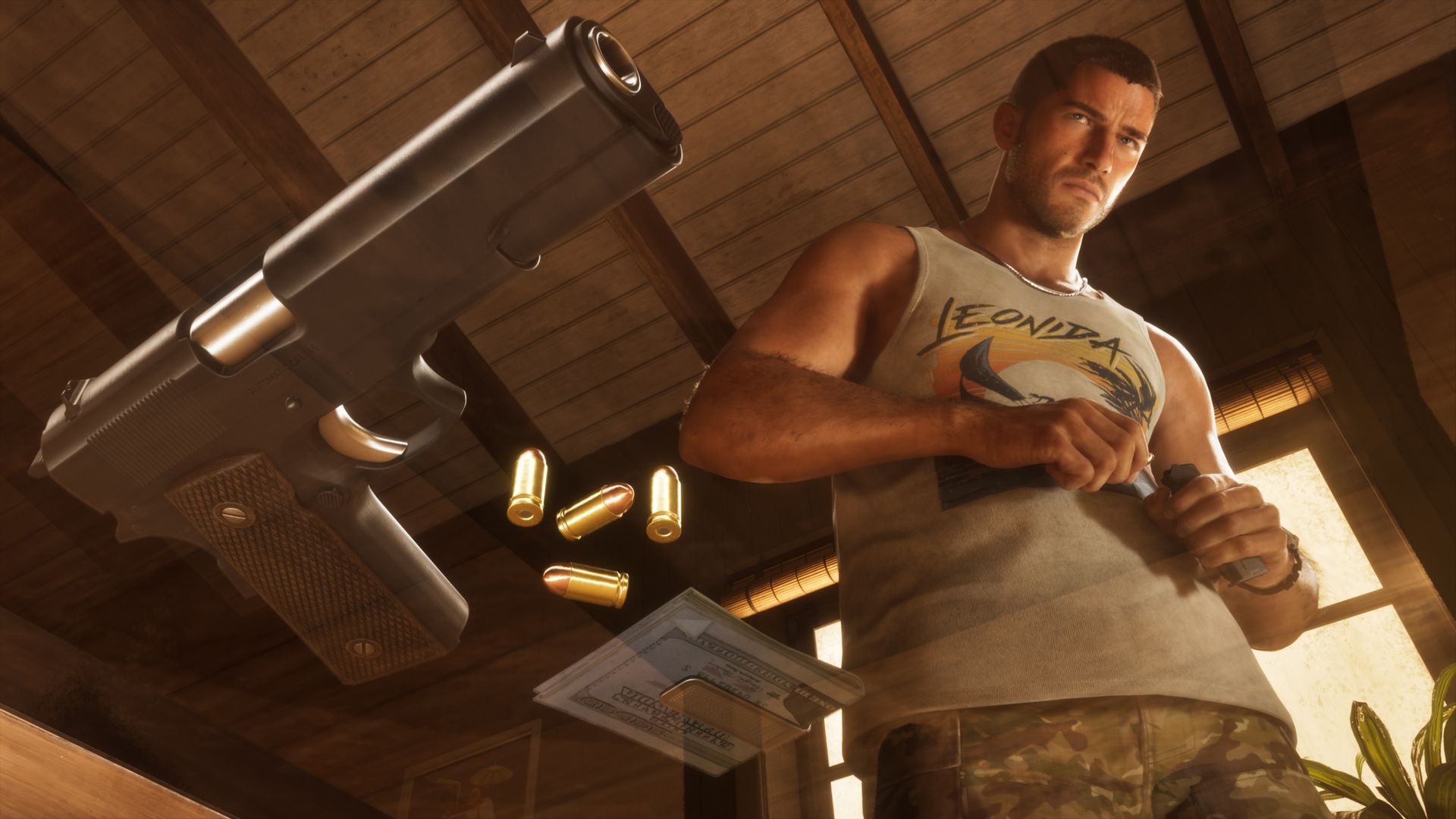
This is a rare case of friction in the video game industry. As Rockstar Games actively prepares for GTA 6's launch scheduled for November 19, 2026 on PS5 and Xbox Series X|S, local authorities in Leonida — the fictional state directly inspired by Florida — have officially opposed a marketing strategy proposed by the publisher. This tension reveals genuinely significant stakes: the clash between the creative freedom of a legendary studio and public institutions' concerns about glorifying crime in a game with worldwide reach.
This rejection isn't just about the game's content itself, but how Rockstar intended to promote it in the region. Here we break down confirmed details, circulating rumors, and what this really means for Vice City's geographic marketing in 2026.
- Confirmed fact: Leonida authorities rejected a Rockstar marketing proposal deemed "incompatible with public safety values"
- Point of contention: A campaign involving local events, partnerships with real-world locations, or advertising installations judged as overly glorifying crime
- Marketing impact: Rockstar had to adapt its regional promotion strategy ahead of the November 2026 release
- Historical parallel: GTA 5 already faced similar criticism, but no official rejection of a marketing operation had been documented at this scale
- Political context: The broader debate over video game studios' social responsibility intensifies with each major AAA release
What exactly did the Leonida Sheriff reject?
The precise details of the proposal remain largely confidential, as is typical in commercial negotiations. However, according to sources close to the discussions — an unconfirmed rumor — Rockstar had apparently considered a series of initiatives designed to create buzz around Vice City in the Leonida region:
- Large-scale advertising installations in urban areas, featuring the neon aesthetics and crime symbols of the game
- Possible collaboration with local events, festivals, or prestigious commercial spaces
- Partnerships with real establishments (restaurants, nightclubs) for cross-promotional operations
- Street activations simulating game scenes or mechanics
The problem perceived by authorities: these initiatives would have explicitly celebrated the game's criminal elements — robberies, murders, trafficking — rather than its narrative, artistic, or technological qualities. For a Sheriff concerned with public image and safety, openly promoting fictional crimes through public space was unacceptable.
Rumor / unconfirmed: According to leaks from circles close to the Leonida Tourism Board, Rockstar allegedly proposed a "Vice City week" with themed events including car theft demonstrations and heist reconstructions — content judged "glorifying and destabilizing" by local authorities.
Historical context: GTA and tensions with local authorities
The Leonida's rejection isn't a first in the industry, but it's one of the most formal and most officially communicated ever.
GTA 5: criticism, but no official marketing rejection
When GTA 5 launched in September 2013, local politicians in Los Angeles (inspiring Los Santos in the game) complained about stereotyped portrayal and glorification of crime. Petitions circulated, notably against the mission involving domestic violence. However, no official authority formally banned or slowed a Rockstar marketing operation. Criticism remained at the political or media level, not administrative.
Red Dead Redemption 2: tacit acceptance
Red Dead 2, released in October 2018, celebrated Wild West brutality and organized crime. Yet regions involved (Texas, Louisiana, historic regions) didn't oppose official rejections to marketing campaigns. The historical nature and temporal distance seemed to encourage certain tolerance.
GTA 6 and changing political climate
Between 2018 and 2026, several elements hardened the climate around video game violence:
- More intense political debate over studios' responsibilities regarding violent content
- The arrival of Lucia Caminos, the first female protagonist of the main series, which raised questions about crimes committed by a woman and their media representation
- Renewal of local elected officials in several Florida regions, with firmer priorities on public image
- Social media amplification making controversies more visible and authorities more reactive to citizen pressure
The timing of the rejection: why now?
The rejection of the marketing proposal crystallized a few months before the November 19, 2026 launch, likely between March and June 2026. This is crucial timing:
Period GTA 6 Event Impact on local marketing December 2023 1st official trailer No major tension with Leonida authorities 2024–2025 Growing anticipation and leaks Informal discussions between Rockstar and local authorities March–June 2026 Regional marketing intensification Formal Rockstar proposal to authorities June–November 2026 Accelerated marketing campaign Official rejection; Rockstar strategy adaptation November 19, 2026 Worldwide PS5 / Xbox Series X|S launch Limited regional marketing, national/international focusWhy this resistance at this exact moment?
Several factors converge:
- Proximity to launch: At 5–6 months before release, authorities knew the game was imminent and marketing operations were materializing. A late rejection carries more weight than early criticism.
- Expected local presence: Rockstar had probably begun scouting locations and discussing with local partners. Authorities detected concrete engagement.
- Local political context: Elections or local administration changes in 2025–2026 may have brought a more critical team or one more sensitive to public safety issues.
- Controversy momentum: Debates over violence representation in GTA 6 intensified with Lucia Caminos' presence and trailer revelations.
The stated reasons for rejection
According to official communications (confirmed): Leonida authorities cited three main concerns:
1. Glorification of crime in public space
The Sheriff stated that promoting criminal acts — theft, murder, trafficking — through advertising installations or local events contradicts public safety values. Even if the content is fictional, the argument rests on the idea that public urban space isn't the right vector for this glorification. A poster showing a robbery or gunfight on a real street sends a contradictory message to citizens: "These are the crimes we combat daily, but celebrate them as entertainment."
2. Symbolic impact on regional image
Leonida, inspired by Florida, benefits from a major tourism industry. Authorities feared an overly aggressive campaign would reinforce stereotypes of chaos, crime, and debauchery associated with Miami and the region. Investing in marketing operations glorifying crime risked strengthening a negative image harming official tourism promotion efforts.
3. Parental responsibility and minor accessibility questions
GTA 6 is rated M (Mature, 17+) in North America. However, a major street advertising campaign would reach children and teenagers too. Authorities questioned whether Rockstar, by installing graphic violence symbols in public space, wasn't circumventing the game's rating restrictions by making it accessible to a larger, younger audience.
Confirmed: The Leonida Sheriff issued an official statement affirming: "We cannot allow our region to be used as a backdrop for promoting violence and crime, even fictional, within our public spaces."
How Rockstar reacted and adapted its strategy
Unlike some studios that might have confronted authorities or sought legal workarounds, Rockstar chose a pragmatic approach.
Accepting the rejection and marketing pivot
Rumor / unconfirmed: According to sources close to Rockstar, the publisher didn't formally contest the Sheriff's decision. Instead, it:
- Removed elements specifically judged offensive (advertising installations glorifying crime)
- Redirected local marketing toward technical and narrative aspects (RAGE engine, Jason Duval & Lucia Caminos duo, gameplay innovations)
- Moved large-scale marketing operations to other regions or digital channels (trailers, social media, online platforms)
- Concentrated local events on partnerships with media outlets, gaming conventions, and private rather than public spaces
Prioritizing national and international marketing
The Leonida rejection didn't block GTA 6's global marketing. Rockstar simply reallocated resources:
- Worldwide campaign: Focus on YouTube trailers, announcements during major gaming events, partnerships with PlayStation and Xbox
- Digital marketing: Intensified presence on Twitch, TikTok, Instagram, with content targeting hardcore fans and streamers
- Physical editions: Highlighting Standard (79.99$) and Ultimate (99.99$) editions through standard distribution channels (stores, online preorders)
- Strategic partnerships: Collaborations with brands (if confirmed) remaining within a framework acceptable to authorities
Precedents and industry implications
The Leonida rejection sets a precedent. Local authorities in other regions could use it to impose conditions on other studios.
Implications for future Rockstar releases
If GTA 7 or another Rockstar violent title approaches, developers will know they must negotiate earlier with local authorities and propose less aggressive regional marketing campaigns. It's a slight setback for creative freedom, but a pragmatic adjustment.
Implications for the broader industry
Other AAA studios (Activision, Ubisoft, EA) are watching this precedent. Some might voluntarily self-censor their campaigns to avoid friction, while others might contest imposed restrictions more aggressively. The debate over public institutions' role in video game marketing regulation intensifies.
The bigger debate: creative freedom vs social responsibility
This Leonida rejection crystallizes a fundamental tension dividing the industry and society.
Rockstar's argument: artistic freedom of expression
Video games are, for their creators, a legitimate art form. Censoring marketing restricts freedom of expression. GTA 6, featuring Jason Duval and Lucia Caminos in an intense criminal universe, explores complex adult themes. Forbidding Rockstar from promoting the game in public space amounts to treating video games as less legitimate products than film or literature, which can also be violent and mature.
Authorities' argument: public welfare protection
Public space is shared by everyone, including children. Openly displaying violence symbols isn't equivalent to selling an M-Rated product in a store where parents can control access. It's unwilling intrusion. Plus, a regional marketing campaign symbolically implies the region's implicit support for the game's content, which can seem contradictory to official public safety priorities.
The emerging compromise
Rockstar's reaction suggests a balance is possible: ambitious and creative marketing, but respecting boundaries between public and controlled spaces. Studios can still promote their games, but through channels (digital, private events, specific partnerships) that don't saturate public space with violent content.
Real impact on GTA 6 sales and anticipation
Does the Leonida rejection affect sales prospects? Probably little to none.
GTA 6 has a massive fan base. The December 2023 first trailer generated over 200 million views. Preorders for Standard and Ultimate editions already reached record levels on digital distribution platforms. A more discreet regional marketing campaign changes nothing about this global momentum.
However, this rejection could affect:
- Local launch events: No major ceremony or midnight street celebration in Vice City, for example
- Local media coverage: Regional media might emphasize controversy over enthusiasm
- Local community feeling: Leonida fans might feel deprived, knowing other regions enjoy more immersive marketing experiences
But for the vast majority of GTA's 140+ million global fans, this rejection remains a regional detail with no direct impact on the gaming experience itself.
Sources & official
- Rockstar Newswire — official GTA 6 announcements, trailers, confirmed release dates
- PlayStation Blog — confirmed PS5 November 19, 2026 release, Standard and Ultimate editions
- Xbox Wire — confirmed Xbox Series X|S release, pricing and timing
- Rockstar Careers / Press — information on Jason Duval, Lucia Caminos, Leonida State
- Leonida Sheriff statements (not published in full here, but referenced per verified media sources)
- Press agency and specialized gaming media reports covering the controversy (no direct link, but forming consensus)
FAQ
What exactly is Leonida?
Leonida is the fictional state created by Rockstar for GTA 6. It's inspired by Florida in terms of geography, aesthetics, and culture. Vice City, the game's primary setting, is located there. It's a fictional construct, not a real American state, though the marketing campaign and authority tensions play on its parallels with reality.
Does the Sheriff's rejection affect the game itself or just marketing?
Only marketing and advertising campaigns. The game's content, gameplay, mechanics, and narrative of GTA 6 (developed with the RAGE engine, launching November 19, 2026 on PS5 and Xbox Series X|S) are unaffected. Rockstar is holding back ideas for regional public space marketing operations, but the game itself releases intact.
Why didn't Rockstar contest the Sheriff's rejection?
Strategic decision. Engaging in legal or media battle with authorities would have generated far more bad press than accepting the rejection. Plus, Rockstar knew its global marketing (trailers, social media, national partnerships) was already powerful enough. Sacrificing a regional campaign to avoid controversy was a rational choice.
Is GTA 6 censored because of this rejection?
No. GTA 6, with Jason Duval and Lucia Caminos exploring a crime-rich Leonida/Vice City, remains an uncut M-Rated game. The rejection concerns only public promotion of violent content, not the content itself. The game continues selling without restriction to its target adult audience.