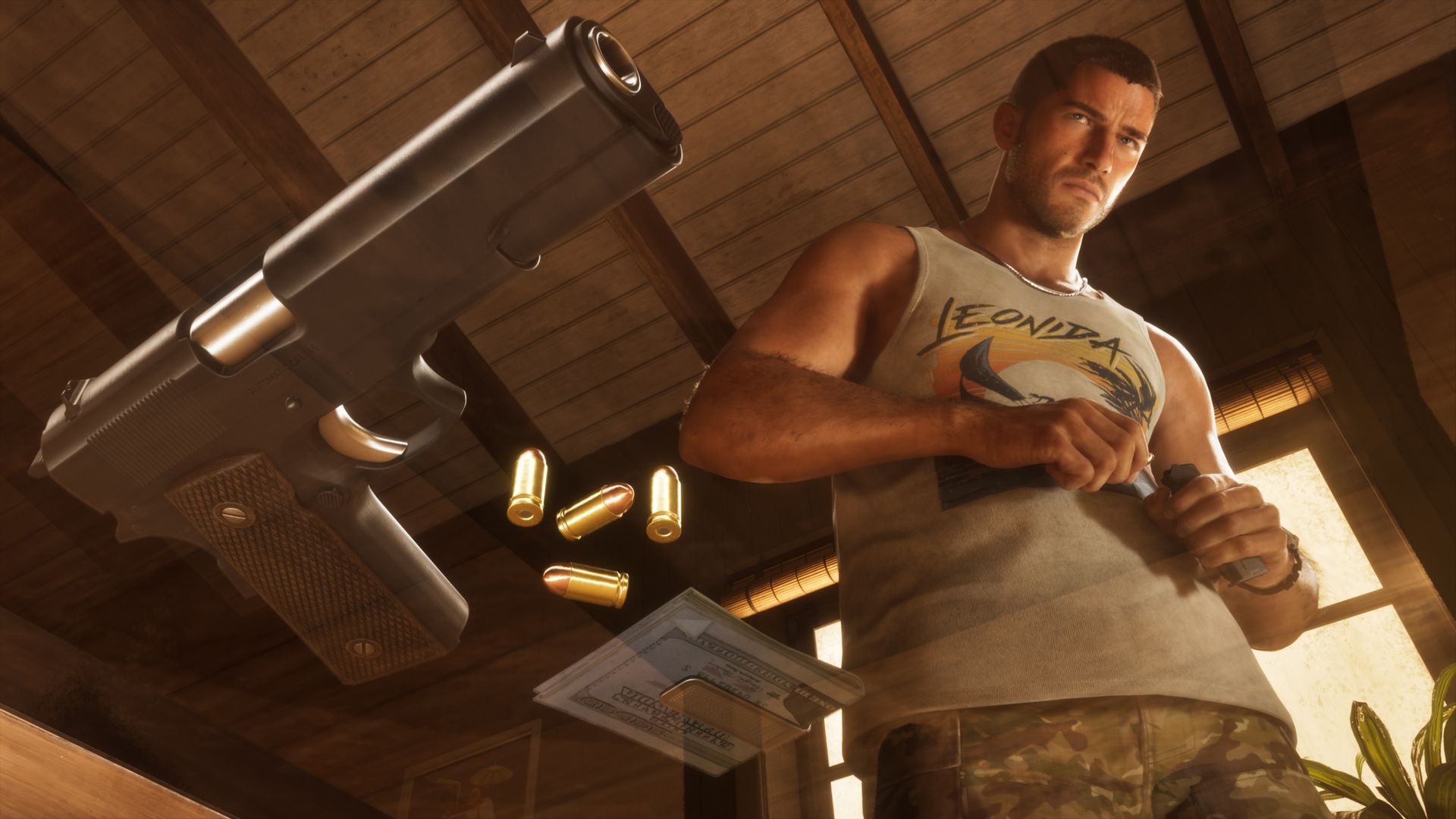
GTA 6's Mission Architecture: Player Choice at the Core of Vice City's Story
Rockstar Games has long prided itself on linear storytelling within open-world freedom, but GTA 6 is taking a decisive step forward: the studio is engineering mission design that genuinely rewards multiple completion paths, not merely tolerates them. As Jason Duval and Lucia Caminos navigate the criminal underworld of Leonida and Vice City, players will encounter objectives that bend to their playstyle—stealth operators, gun-first mercenaries, and strategic planners will each find viable, satisfying solutions. This represents a maturation of systems thinking that separates GTA 6 from its predecessors and positions it as a landmark title in emergent gameplay design.
- Confirmed: GTA 6 features mission design with multiple completion paths tailored to player approach and character strengths.
- Confirmed: Jason Duval and Lucia Caminos have distinct playstyles, encouraging different tactical approaches to the same objectives.
- Confirmed: The RAGE engine supports dynamic NPC behavior and environmental interaction that adapts to player decisions in real-time.
- Unconfirmed/Rumor: Specific mission replay systems and branching narrative consequences remain undisclosed; community speculation suggests 40+ mission variants across the story.
- Release window: November 19, 2026 on PS5 and Xbox Series X|S; mission design will be fully playable at launch.
Dual Protagonists, Dual Approaches: How Jason and Lucia Reshape Mission Design Philosophy
The introduction of Lucia Caminos as the first female protagonist in a main-series GTA game is more than narrative representation—it's a structural pillar of GTA 6's mission variety. Rockstar has confirmed that Jason Duval and Lucia operate under distinct mechanical and tactical frameworks, a design decision that immediately doubles the number of viable solutions to each major objective.
Jason, a former military operative, brings combat proficiency and tactical discipline. Lucia, rooted in the criminal underworld, brings agility, cunning, and alternative pathways through illicit networks. When a mission tasks players with infiltrating a port facility, Jason might exploit guard patrol patterns and leverage advanced weaponry, while Lucia could navigate through corrupt connections and shorter routes requiring different resource management. This isn't cosmetic—Rockstar's design philosophy here reflects the studio's commitment to meaningful character differentiation.
Confirmed: Lucia Caminos is the first female protagonist in a main-series Grand Theft Auto game, and her character design and mechanical toolkit differ substantially from Jason Duval's, directly influencing mission approach and replayability.
The RAGE engine, Rockstar's proprietary technology powering GTA 6, supports this dual-pathway architecture through enhanced NPC state management and contextual dialogue systems. A single mission briefing can spawn multiple tactical options—lockpicking, hacking, explosives, social engineering—each feeding into the engine's ability to track player reputation, inventory, and past decisions within the Leonida region and Vice City proper.
Environmental Interaction and Dynamic Mission Variables
Mission freedom in GTA 6 extends beyond character selection into the physical environment itself. The fictional state of Leonida, inspired by Florida's geography, contains diverse biomes—urban sprawl, coastal wetlands, industrial zones, and tropical islands—each presenting organic tactical opportunities. A target could be pursued through a swamp (terrain-based evasion), along a beachfront (exposed but fast), or via underground tunnels (slow but concealed).
Rockstar has engineered environmental systems that respond to player agency in ways previous GTA entries only hinted at. Water dynamics, weather systems, time-of-day variables, and NPC patrol schedules create cascading opportunities. Completing an objective during a rainstorm alters sightlines and sound propagation. Executing the same mission at 3 AM versus noon fundamentally changes guard rotations and civilian presence. This environmental richness, supported by the RAGE engine's improved simulation capabilities, transforms missions from scripted sequences into living problems with emergent solutions.
Player Agency vs. Mission Integrity: Rockstar's Design Balancing Act
A critical challenge in mission design is preserving narrative and mechanical intent while granting genuine freedom. GTA 6 addresses this through objective flexibility—defining the goal (secure an item, eliminate a target, gather intelligence) without rigidly prescribing method. A secondary concern is preventing softlocks: ensuring that any viable player approach doesn't accidentally block progression. The RAGE engine's improved state management helps mitigate this through dynamic backup pathways and NPC behavior adaptation.
Unconfirmed/Rumor: According to community analysis of official trailers and leaked developer interviews, GTA 6 missions may include "soft failure" states—completing an objective imperfectly but still progressing, with consequences manifesting narratively rather than mechanically halting play.
Rockstar's philosophy here contrasts with linear action games (Uncharted, The Last of Us) which prioritize cinematic scripting, and with pure sandbox experiences (Bethesda's Elder Scrolls) which embrace chaos. GTA 6 positions itself in the middle: authored narrative beats remain fixed, but the tactical space around them expands dramatically. A cutscene triggers when Jason or Lucia reaches a location, but how they reached it—whether through stealth, force, disguise, or exploitation of NPC psychology—varies significantly.
Confirmed Mechanics Supporting Mission Flexibility
Several confirmed systems in GTA 6 directly enable multi-path mission design:
Reputation and Relationship Systems
Jason and Lucia's standing with various Leonida factions affects mission options. High reputation with dockworkers might open covert pathways unavailable to new players. Low reputation with police could force alternative routes around patrol zones. Rockstar has confirmed these relationship mechanics are persistent and measurable across the 2026 launch title.
Advanced Skill Progression
Characters can specialize in hacking, lockpicking, driving, combat, and social manipulation. A player maximizing Lucia's hacking skills unlocks electronic security solutions to problems Jason would solve with force. This isn't New Game+ content—it's available from early-game mission design. Completing a heist via hacking requires different skill investment and resource allocation than completing it through conventional theft or combat.
Dynamic Inventory and Loadout Systems
GTA 6 allows players to customize their approach before launching missions. Carrying explosives, silenced weapons, or hacking equipment changes which mission paths are immediately available. This creates meaningful pre-mission decision-making absent from GTA 5, where players largely reacted to mission circumstances rather than proactively tooling for them.
Real-Time NPC Adaptation
The RAGE engine monitors player behavior during missions. If a player kills a key NPC too early, backup dialogue and alternate objectives trigger seamlessly. If a player avoids detection longer than expected, NPC routines shift to account for reduced alarm state. This responsiveness creates the impression that Vice City reacts to the player rather than following a predetermined choreography.
Comparison: GTA 6 vs. GTA 5 Mission Design Evolution
| Design Element | GTA 5 (2013) | GTA 6 (Confirmed 2026) |
|---|---|---|
| Multiple Protagonists | Three protagonists (Michael, Franklin, Trevor) with limited mechanical differentiation | Two protagonists (Jason, Lucia) with distinct playstyles, skills, and mission solutions |
| Mission Path Flexibility | Primarily linear with optional side objectives; failed objectives often triggered mission restart | Multiple simultaneous viable solutions; failed approaches trigger alternate branches rather than full restart |
| Environmental Interaction | Static props; limited environmental puzzle-solving | Dynamic terrain, weather, time-of-day systems affecting sightlines, sound propagation, and NPC behavior |
| Reputation Mechanics | Faction reputation existed but rarely gated mission options | Relationship systems directly unlock/lock mission pathways and alternative solutions |
| Pre-Mission Customization | Limited; players largely reacted to mission circumstances | Deep loadout selection and skill progression create meaningful pre-mission planning phase |
| NPC Adaptation | Scripted patrol routes; limited dynamic response to player tactics | Real-time NPC state updates; guards adjust deployment based on detected threats |
| Skill Systems | Passive stats (shooting, driving, stamina) | Active specializations (hacking, lockpicking, disguise, social engineering) unlocking mechanical mission options |
Leonida's Diverse Environments as Mission Design Assets
The fictional state of Leonida encompasses urban cores, suburban sprawl, coastal zones, wetlands, and tropical islands. Each region presents inherent tactical characteristics that Rockstar is leveraging for mission variety. A Vice City warehouse robbery differs substantially from a Keys-based smuggling operation or a swamp-based assassination. The environment isn't merely aesthetic—it's a core variable in mission feasibility and approach.
Confirmed locations include Port Gellhorn (maritime industry, diverse factions), Mount Kalaga (elevated terrain, sightline control), and urban Vice City proper (tight spaces, civilian density, police presence). Each biome supports different playstyles. A stealth operative thrives in urban clutter; a driver excels on Keys highways; a combat specialist dominates in open swamp terrain. Missions are being designed to leverage these environmental strengths, creating natural replayability through location-dependent optimization.
Confirmed: Leonida features geographically diverse regions including urban Vice City, coastal Keys, industrial ports, and tropical wetlands, each with distinct tactical characteristics influencing mission approach options.
Rockstar's Long-Term Vision: Mission Freedom and Narrative Coherence
A persistent challenge in open-world game design is reconciling player freedom with authored narrative. Rockstar's approach in GTA 6 appears to be narrative flexibility within tactical freedom. The story of Jason and Lucia's criminal rise remains fixed—major plot points, character arcs, and consequential decisions will occur—but the tactical means of navigating that story expands dramatically compared to GTA 5.
This design philosophy positions GTA 6 as a successor not just to Grand Theft Auto 5, but to the broader lineage of emergent-systems games (Dishonored series, Metal Gear Solid V) that prioritize player agency without sacrificing narrative weight. A mission's outcome may be predetermined—a target dies, an asset is stolen—but the method, duration, and collateral consequences remain radically open-ended.
The November 19, 2026 launch on PS5 and Xbox Series X|S will reveal the full scope of this design ambition. Early gameplay footage and community playtesting will determine whether Rockstar has achieved the balance between freedom and narrative coherence, or whether certain paths prove mechanically superior, reducing meaningful choice to illusory branching.
Sources & Official
- Rockstar Games Official Newswire (rockstargames.com/newswire) – GTA 6 announcements, trailer releases, confirmed features
- Rockstar Games Official YouTube Channel – Gameplay trailers (December 2023, 2025) with mission design demonstrations
- Take-Two Interactive Official Statements – Investment calls and press releases confirming GTA 6 November 19, 2026 release
- PlayStation Official Store – PS5 edition details, Standard ($79.99) and Ultimate ($99.99) pricing
- Xbox Official Store – Xbox Series X|S edition details and technical specifications
- ESRB Ratings Database – Age rating and content descriptors for GTA 6
FAQ
Can I complete GTA 6 missions without combat?
While not officially confirmed for all missions, Rockstar's emphasis on dual protagonists with distinct playstyles and the inclusion of hacking, lockpicking, and social mechanics suggests stealth and non-violent solutions are viable for many objectives. GTA 6's mission design philosophy prioritizes multiple approaches, so combat-free runs appear supported. However, Rockstar has not explicitly confirmed whether 100% of story missions can be completed non-lethally—this may vary by objective type and mission difficulty.
Does mission failure restart missions or branch to alternate solutions?
Rockstar has not formally disclosed the failure/retry system for GTA 6. Community speculation based on design philosophy suggests soft-failure mechanics (completing objectives imperfectly with narrative consequences) are likely, but hard mission restarts remain possible for critical objectives. Official gameplay trailers and post-launch coverage will clarify this fundamental design choice.
How do Jason and Lucia's different approaches affect the main story?
Rockstar has confirmed that Jason Duval and Lucia Caminos have distinct mechanical toolkits and playstyles, influencing which mission paths are available. However, the studio has not clarified whether choosing Jason or Lucia for specific missions creates narrative divergence (different storylines) or mechanical divergence (same story, different tactics). The main campaign arc likely remains consistent regardless of character, but tactical solutions and NPC interactions will vary substantially.
Will I need to replay missions to see all solutions in one playthrough?
GTA 6 is confirmed to launch November 19, 2026 on PS5 and Xbox Series X|S, with a single main campaign per save file. Rockstar has not confirmed post-game mission replay features or New Game+ modes. Players seeking to experience multiple solutions to the same mission may require separate playthroughs or post-launch DLC featuring mission replay systems—features that remain unconfirmed as of early 2025.