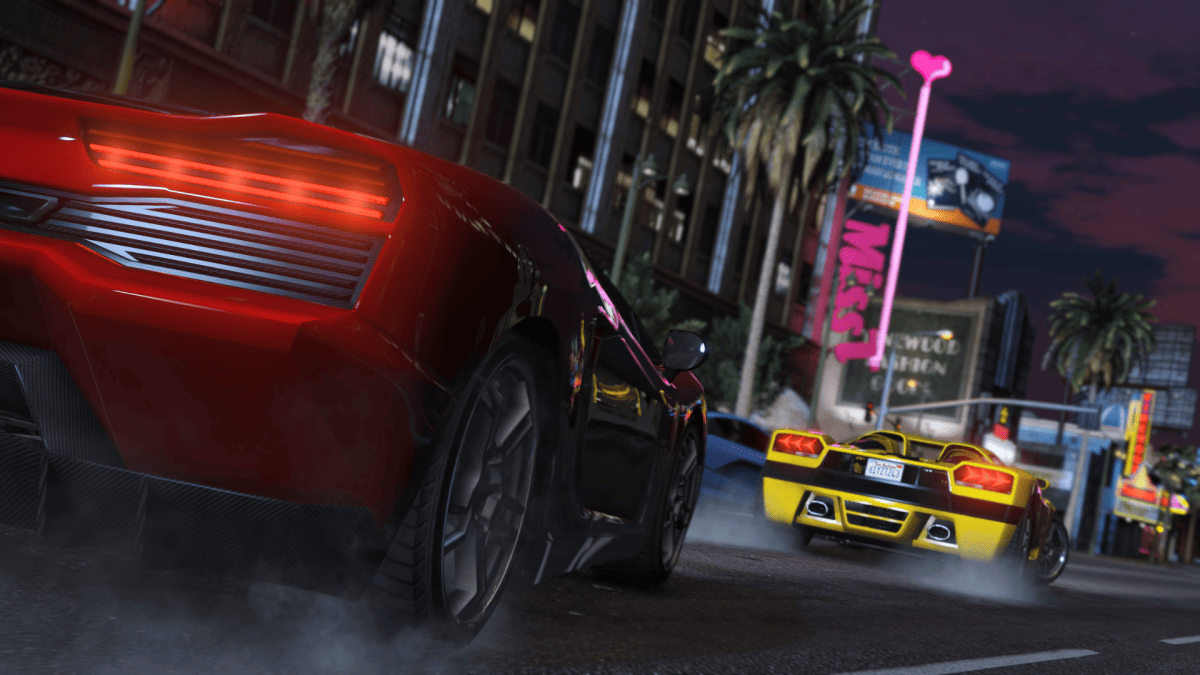
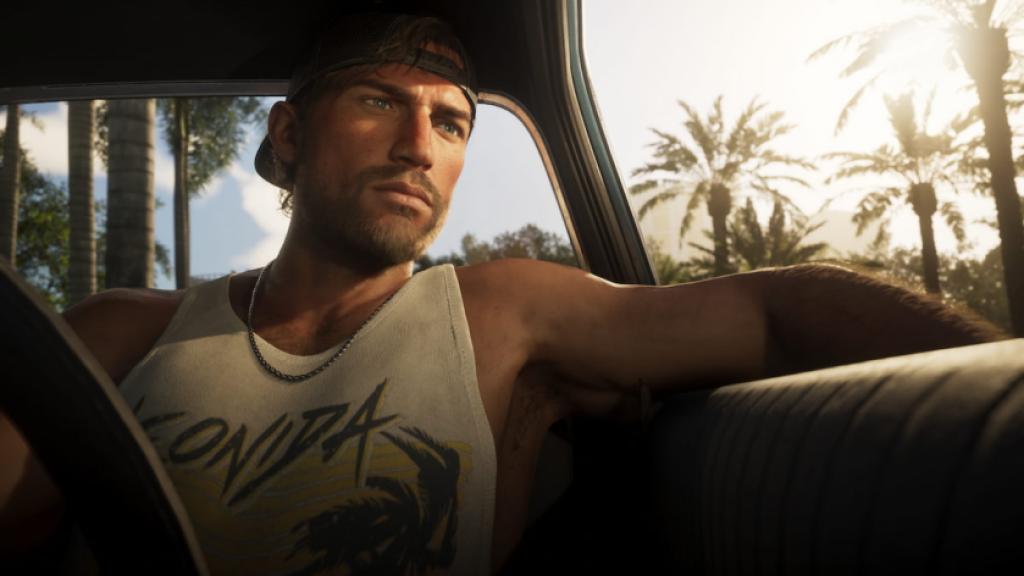
GTA 6 isn't just an anticipated game — it's an unprecedented phenomenon in interactive entertainment history. Since the official December 2023 announcement, anticipation has crystallized around a November 19, 2026 release on PS5 and Xbox Series X|S, generating a cultural momentum rarely observed. But why does this sixth installment shatter every expectation threshold set before it? It's not a matter of viral marketing or nostalgia: it's a convergence of seven structural factors that make GTA 6 the most crucial gaming event of this decade.
- 8-year interval since GTA 5 (2013): the longest wait ever imposed on franchise fans
- Lucia Caminos: the series' first playable female protagonist, a historic narrative breakthrough
- Leonida and Vice City: return to a mythic universe with unprecedented scope and new immersive density
- Rockstar's cultural dominance: legitimacy built over 25 years of innovations that redefine each generation
- Video game market saturation: GTA 6 becomes the unifying event in a fragmented industry
- Strategically spaced trailers (December 2023, 2025) maintaining calibrated narrative tension
- Balance between revelation and mystery: Rockstar masters the dosage between legitimate excitement and information retention
Exponential anticipation: 13 years since the franchise's last major reinvention
GTA 5 launched in September 2013 — nearly thirteen years ago. To contextualize this temporal stretch: when GTA 5 dropped, iPhones didn't have smooth touchscreens, YouTube's algorithm only recommended random content, and VR headsets existed only as prototypes. Players who discovered Michael, Trevor, and Franklin in Rockstar's Los Santos are now parents themselves.
Over these 13 years, the video game industry transformed entirely. Games-as-a-service exploded, graphics engines multiplied tenfold, interactive storytelling gained sophistication, and player expectations redefined what an ambitious game should be. GTA 5 remains one of the three most profitable games ever (with $6 billion in cumulative revenue), creating a unique cultural vacuum: no competitor capable of channeling this anticipation.
Compare other franchises: The Elder Scrolls Online, Diablo IV, Baldur's Gate 3 — all important, but none carried the weight of 13 compressed years of waiting in a single release. GTA 6 thus embodies the resolution of an unprecedented collective frustration period.
Lucia Caminos: the narrative breakthrough reinventing the formula
For the first time in 25 years and six main games, Rockstar places a woman at the center of the narrative as a playable protagonist. Lucia Caminos is confirmed by official trailers: she appears alongside Jason Duval as one of two central narrative perspectives in GTA 6. This decision isn't cosmetic — it redefines the franchise's narrative proposition.
Confirmed: Lucia Caminos is the first playable female protagonist in the main GTA series (spinoffs like Chinatown Wars and GTA Liberty City Stories explored other approaches, but never at the core of the narrative like this).
Why does this generate such intensity? Because the GTA franchise is historically anchored in a hyper-masculine, androcentric vision of urban crime — a convention that even Red Dead Redemption 2 didn't completely subvert despite its nuanced writing. Lucia represents not merely diversification, but an acknowledgment that crime storytelling can explore feminine perspectives without abandoning the violent, transgressive DNA of the series.
Gaming demographics confirm this decision: women now represent 48% of the global player base. More fundamentally, female gamers seek heroines with narrative weight, not supporting characters. Lucia Caminos, side by side with Jason, embodies this evolution — she's not a accessory, she's a driving force in the narrative.
Leonida and the Vice City myth: architected nostalgia
Vice City — the universe of GTA Vice City (2003), one of gaming's most beloved chapters — marked an entire generation. Its synthwave Miami, iconic radio stations (V-Rock, Wave 103), pink and turquoise neons, motorcycles and convertibles, defined an 1980s phantasmagoria that persists 22 years after release.
The return to this universe, reinterpreted through Leonida — a fictional state inspired by contemporary Florida — creates unique alchemy: nostalgia doesn't oppose innovation, it nourishes it. Rockstar isn't naively resurrecting Miami; it's reinventing it through 2025 RAGE technology, calibrated engine physics, and interaction density the 2000s couldn't support.
The trailers (December 2023 and 2025) reveal a visually stunning Leonida: colonial architecture, tropical palms, elevated highways, coastal neighborhoods, and chromatic saturation echoing synthwave aesthetics without falling into pastiche. It's Christopher Nolan applied to video game Miami — familiar yet alien; past yet contemporary.
Rockstar's cultural dominance: 25 years of accumulated legitimacy
Between GTA 3 (2001) and GTA 6 (2026), Rockstar Games never lost its position as creative leader. Certainly, other studios produced masterpieces (Naughty Dog, FromSoftware, CD Projekt Red), but none maintained such consistent dominance in the open-world action-adventure format. Red Dead Redemption 2 (2018) demonstrated Rockstar could further refine narrative immersion by rejecting modern design efficiency conventions.
Franchise Years Covered Number of Main Entries Estimated Cultural Impact GTA 1997–2026 (29 years) 6 (+ spinoffs) Defined urban crime gaming for 3 generations Red Dead 2010–2018 (8 years) 2 Revolutionized narrative immersion and animation Elder Scrolls 1994–2023 (29 years) 5 main Defined open-world RPG, wait > 11 years for TES 6 Fallout 1997–2023 (26 years) 5 main Influenced post-apocalyptic genre, wait > 7 yearsThis legitimacy creates justified expectation: when Rockstar announces a game, gaming ipso facto enters mainstream culture. GTA 6 isn't merely a gaming event — it's a cultural event comparable to Marvel film releases or major artist album drops.
Industry fragmentation and GTA 6's unifying role
In 2026, the video game industry is fragmented into niches: Battle Royale (Fortnite, Apex), MOBA (League of Legends, DOTA 2), Survival (Rust, DayZ), hardcore RPG (Elden Ring, Dark Souls), revolutionary Indie (Hades, Stardew Valley), Games-as-a-Service (Destiny 2, Final Fantasy XIV). No single title possesses the unifying capacity GTA 5 had in 2013 — a game even non-gamers knew, playable for 500+ hours without exhausting content.
GTA 6 represents an anomaly: it's the only 2026 title capable of channeling simultaneous interest from hardcore gamers, casual players, parents, content creators, and mainstream media. Nothing else plays in this category. No competitor. No service game absorbing cultural attention. GTA 6 becomes not merely a game, but a gathering event.
Strategically spaced trailers: marketing as narrative
- December 2023: First official trailer revealing Lucia, Jason, Leonida, and the promise of a new era
- 2025 (exact date unconfirmed): Second trailer deepening Vice City, environments, and narrative mechanics
- 2026 (to anticipate): Possible additional trailers, gameplay footage, multiplayer presentation per Rockstar strategy
This cadence isn't random. Rockstar learned from GTA 5 that anticipation is a narrative tool. Each trailer isn't massive revelation — it's calibrated disclosure leaving community speculation, debate, and content creation intact. The 18-month span between first and second trailers (December 2023 – 2025) maintains long-term narrative tension: sufficient space for hype regulation, but brief enough it never extinguishes.
Confirmed: The first GTA 6 trailer published December 2023 on official Rockstar Games channels. A second trailer confirmed for 2025 (exact date not yet revealed by Rockstar Games).
This strategy radically contrasts modern marketing: instead of revealing everything upfront (as service games do), Rockstar conceals more than it shows. This creates deliberate void that leaks, theories, and fan speculation fill — consenting community participation in anticipation construction.
Mystery and revelation balance: maintaining tension
Rockstar masters a delicate art: revealing enough to justify hype, concealing enough to sustain mystery. Both trailers confirmed:
- The protagonists (Lucia and Jason)
- The universe (Leonida, Vice City return)
- Release date (November 19, 2026 on PS5 and Xbox Series X|S)
- Editions (Standard $79.99 and Ultimate $99.99)
- Enhanced RAGE engine
- Certain iconic radio stations (V-Rock confirmed)
What remains completely mysterious:
- Exact narrative structure and playtime length
- Specific gameplay mechanics (car theft rumors, heist modes, customization)
- PC release date (not officially confirmed)
- Multiplayer content (composition, modes, launch schedule)
- Detailed Leonida map and secret zones
- Vehicles beyond visual snippets
- Major supporting characters and narrative roles
This revelation/mystery ratio perfectly calibrates community speculation maximization. Fans possess sufficient data for solid theories, insufficient for complete experience prediction. Daily, YouTube content, Reddit threads, and articles decrypt trailer pixels — free marketing participation generating unmatched organic virality.
2026's economic and cultural conditions: perfect timing
GTA 6 arrives when multiple cultural factors converge:
1. PS5 and Xbox Series X|S console maturity: Launched 2020, these machines peak technical capacity toward November 2026. Rockstar fully exploits power without launch-era compromises. Most impressive games release late-generation.
2. Live service fatigue: Games-as-a-service saturation generated appetite for complete, finished narrative experiences, not fragmented ones. GTA 6, despite multiplayer elements, remains primarily a told story.
3. 80s aesthetic return in pop culture: From Stranger Things to Cyberpunk 2077, synthwave surges back. Leonida perfectly inserts into contemporary taste, creating immediate cultural resonance.
4. Streaming platform consolidation: By 2026, most gamers follow GTA 6 via Twitch, YouTube Gaming, TikTok — even non-players. Viewership becomes equally important as direct participation.
Comparison with previously most-anticipated games
Game Announcement Release Wait (months) Anticipation Criteria GTA 6 December 2023 November 19, 2026 35 months 13-year interval since GTA 5, revolutionary Lucia, immersive Leonida The Elder Scrolls VI June 2018 (tease) Unannounced (estimated 2026-2027) >100 months Wait > 11 years since Skyrim, immersive RPG expected, no details Cyberpunk 2077 January 2013 December 10, 2020 94 months CD Projekt hype, technological promises, catastrophic launch Half-Life 3 Never announced Never released 19+ years Urban legend, expectation without official confirmationGTA 6 distinguishes itself: unlike Elder Scrolls VI (still vague), Cyberpunk 2077 (over-promised), or Half-Life 3 (phantom), it benefits from precise official announcements, concrete trailers, and irrefutable dates. Anticipation isn't speculative — Rockstar itself structures it.
Community as multiplier force
Social networks and streaming platforms transform private anticipation into collective event. A Twitch streamer reacting to GTA 6 trailer simultaneously reaches 100,000 viewers. A TikTok creator theorizing about Lucia Caminos generates millions of views. Dedicated subreddits (r/GTA6) spawn hundreds daily posts analyzing every detail.
Rumor / unconfirmed: Some reports suggest r/GTA6 reached unprecedented engagement levels comparable to largest franchises (Star Wars, Marvel), but Rockstar or Reddit haven't officially validated these figures.
This community multiplication creates feedback loops: growing hype generates content, attracting new participants, exploding hype. GTA 6 becomes self-perpetuating phenomenon.
Editions and commercial stakes
Edition Price (USD) Confirmed Content Format Standard $79.99 Complete GTA 6 game PS5, Xbox Series X|S, Digital/Physical Ultimate $99.99 Game + multiplayer bonus content (details undisclosed) PS5, Xbox Series X|S, Digital/PhysicalConfirmed: Two official editions (Standard $79.99 and Ultimate $99.99) announced by Rockstar Games. The Ultimate includes multiplayer-related bonus content, but precise details remain confidential.
Aggressive pricing ($79.99 base versus standard $69.99) reveals Take-Two's absolute confidence in commercial potential. No other 2026 game dares demand premium surcharge — hallmark of a title without competitor.
Overcome obstacles: how Rockstar built this anticipation
Before GTA 6, Rockstar faced major challenges: persistent GTA Online criticism (aggressive microtransactions), endless GTA 5 wait, crunch culture accusations, and evolved cultural sensibilities regarding violence and female representation.
Rockstar responded on three fronts:
- Lucia Caminos: Direct response to representation and narrative diversity demands
- Calendar transparency: Official date (November 19, 2026) reducing toxic uncertainty
- Nostalgic attachment: Leonida reinvents Vice City, reconciling innovation and heritage
Each decision mitigates potential concern while reinforcing anticipation.
Why no other game can rival this anticipation
In November 2026, other major titles likely release (annual sports games, inevitable sequels, revolutionary indies). But none assembles conditions making GTA 6 unique phenomenon:
- 13-year wait: No other AAA title sustained audience this duration
- Revolutionary protagonist: Lucia redefines franchise narrative expectations
- Franchise cultural dominance: GTA ranks among gaming's three greatest franchises
- Rockstar legend: 25 years creative and commercial reliability
- Maintained mystery: Sufficient reveals exciting, sufficient secrets enable speculation
No competitor matches this (Elder Scrolls VI remaining vague, no orthogonal release strategy rivaling Rockstar's precision, no protagonist innovation approaching Lucia's narrative weight). GTA 6 crystallizes unprecedented convergence: franchise legacy, narrative revolution, technical maturity, cultural timing, and community readiness. It's structurally impossible to replicate this specific alignment of factors. The mathematics of gaming hype simply don't accommodate competitors in this space — at least not until 2026 and beyond.