Rockstar's Honest Confession: The GTA 6 Knowledge Problem
In a rare moment of candor, a senior Rockstar Games developer revealed a striking truth about Grand Theft Auto VI: the game has grown so vast and intricate that no single member of the development team possesses complete knowledge of every system, mechanic, and feature. This admission cuts to the heart of what makes GTA 6 such an unprecedented production challenge—and offers a window into why November 19, 2026 represents a monumental moment in interactive entertainment.
- Scale Crisis: GTA 6's complexity has outgrown individual comprehension; specialization is now mandatory across Rockstar's departments.
- Team Structure: Development is compartmentalized into subsystems (AI, physics, audio, narrative), each requiring deep technical expertise.
- Quality Assurance Nightmare: Testing a game where no single QA lead knows all interactions creates emergent risks and unexpected bugs.
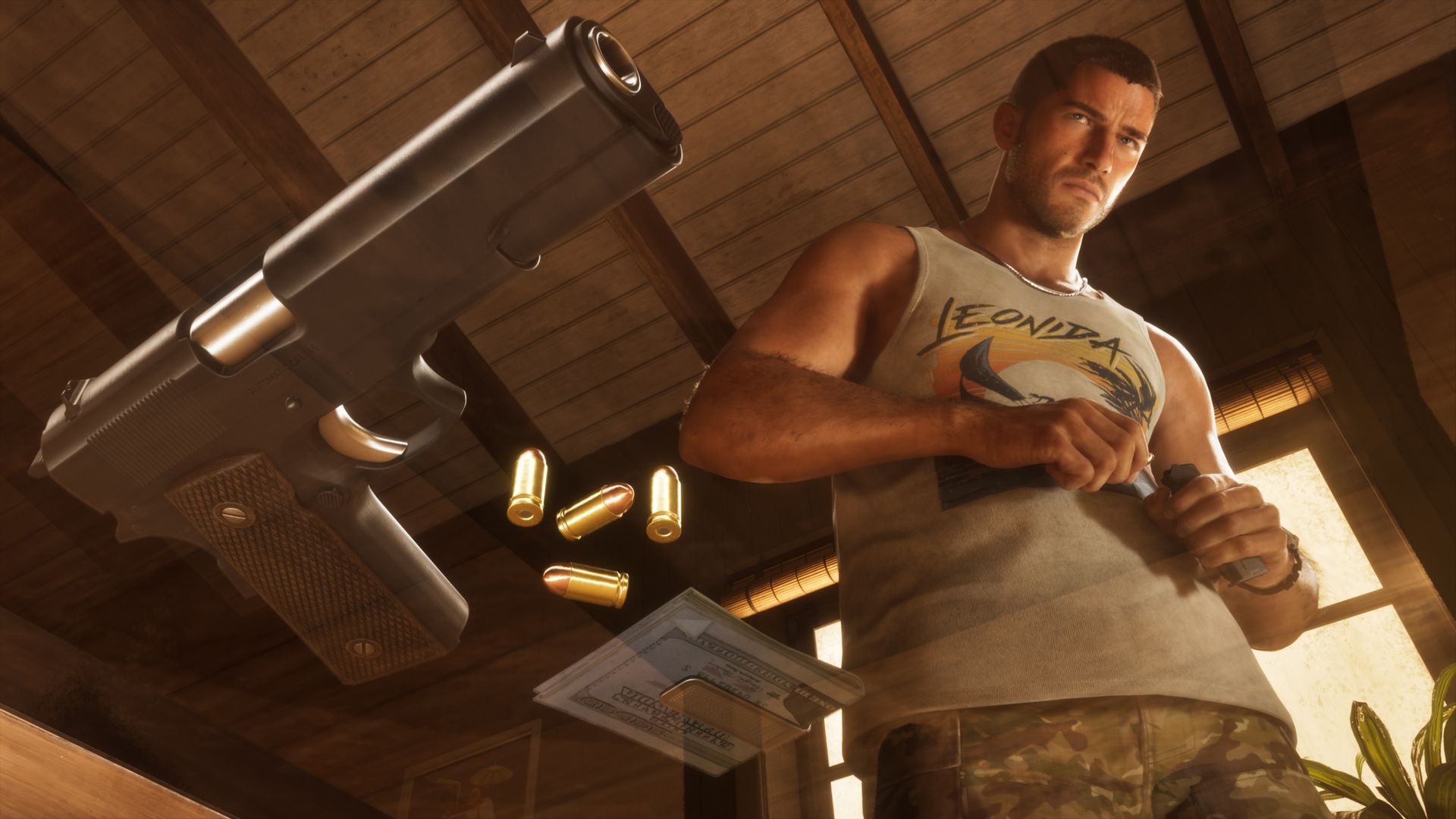
- Creative Collaboration: The dual-protagonist story with Jason Duval and Lucia Caminos demands seamless integration across separate narrative pipelines.
- Launch Risk: This knowledge fragmentation explains why delays remain possible and why post-launch patches will likely be substantial.
What Does "Nobody Knows All of It" Actually Mean?
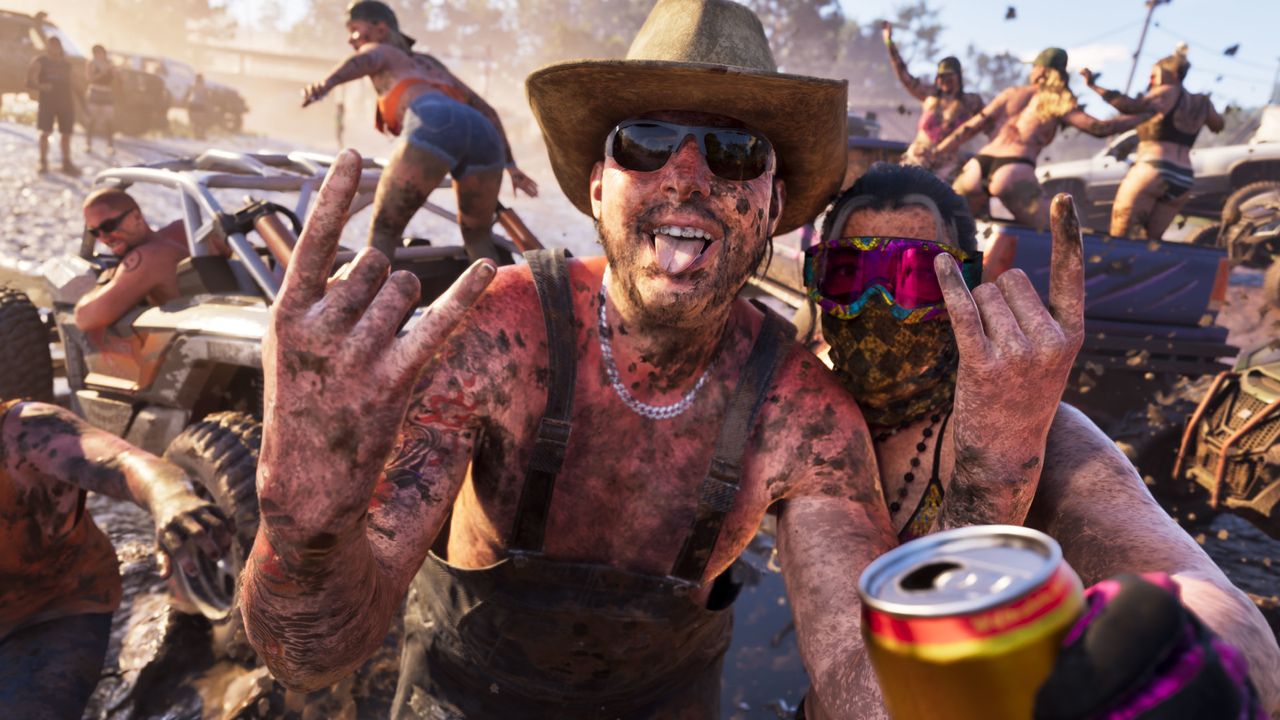
The developer's statement wasn't hyperbole—it reflects a structural reality of modern AAA game development. Confirmed: GTA 6 is built on the RAGE engine, Rockstar's proprietary technology that has powered Grand Theft Auto V, Grand Theft Auto Online, and Red Dead Redemption 2. The engine itself comprises millions of lines of code. When you layer interactive systems, environmental detail, character AI, physics simulation, mission scripting, and procedural generation across an open world inspired by Florida's Leonida state—which includes tropical Keys, bayous, swamps, and urban Vice City sprawl—the total feature matrix becomes astronomically complex.
Each department operates with tunnel vision by necessity:
- Narrative: Jason and Lucia's story arcs, side missions, NPC dialogue trees, radio content.
- World Design: Geography, building interiors, hidden locations, environmental storytelling across Leonida.
- AI & Behavior: NPC routines, police response systems, gang dynamics, traffic patterns.
- Physics & Vehicles: Confirmed radio stations like V-Rock require vehicle damage models, handling, collision systems.
- Audio & Music: Dialogue recording, voice acting integration, radio station curation.
- Art & Animation: Character models, weapon animation, environmental assets across tropical, urban, and rural zones.
- QA & Testing: Bug detection, balance testing, exploit discovery.
Confirmed: GTA 6 will launch November 19, 2026 on PlayStation 5 and Xbox Series X|S in Standard ($79.99) and Ultimate ($99.99) editions. These are official Rockstar facts.
The Knowledge Fragmentation Problem in Game Development
What Rockstar's developer disclosed is not unique to GTA 6, but the scale magnifies it. Consider the numbers: GTA V (2013) shipped with roughly 100+ hours of content. Red Dead Redemption 2 (2018) nearly doubled that with over 200 hours of story, side content, and exploration. GTA 6, according to community analysis and developer hints, is projected to dwarf both predecessors in raw feature density.
Rumor / unconfirmed: industry insiders suggest GTA 6's playable map could be 1.5× to 2× larger than GTA V's, with dramatically increased vertical complexity, interior spaces, and interactive systems. Leonida's ecosystem reportedly includes wildlife (unconfirmed details suggest alligators, tropical birds, and aquatic fauna), weather systems, dynamic day-night cycles tied to NPC schedules, and emergent AI behavior that Rockstar has been pioneering since Red Dead 2.
When systems grow this interdependent, knowledge becomes compartmentalized by necessity. A physics programmer optimizing vehicle suspension doesn't need to understand every radio station track. A dialogue writer doesn't need to know exact spawn mechanics for police units. A level designer doesn't need to comprehend the entire narrative arc of Lucia Caminos' character journey (confirmed as GTA's first female main protagonist). This division of labor is efficient—until integration breaks down.
How Specialization Creates Integration Risk
The dark side of this compartmentalization is systemic risk. When Team A ships a feature that Team B wasn't fully aware of, or when an update to the physics engine cascades through animation systems in unexpected ways, the entire game can become unstable. This is why GTA VI's November 2026 release date, confirmed by Rockstar's official announcement on November 19, 2024, carries inherent uncertainty. The game isn't just large—it's a Jenga tower where every engineer is moving a different block.
Real-world examples from GTA 5 illustrate this problem:
- Vehicle physics patches sometimes broke animations, causing characters to clip through vehicles.
- NPC AI updates occasionally created traffic jams or spawning cascades that froze open-world sections.
- Mission scripting bugs could trap players in infinite loops if dialogue triggers fired in the wrong order.
GTA 6, with its dual-protagonist system (Jason Duval and Lucia Caminos), adds another layer: two separate narrative pipelines must sync with shared world systems. If Lucia's mission triggers a police response that Jason's AI wasn't prepared for, or if a world event in one story path corrupts save data across another, players face showstopping problems.
Rumor / unconfirmed: some sources within the GTA community suggest Rockstar underwent massive crunch periods in 2024-2025 to consolidate knowledge across departments and create unified system documentation. This would be typical for a project this large, but exact details remain unverified.
Comparison: GTA 6 vs. Previous Rockstar Titans
| Game | Release Year | Estimated Map Size | Story Hours | Developer Team Size (Approx) | Engine | Platform Scope |
|---|---|---|---|---|---|---|
| GTA V | 2013 | 127 km² | 80–100 hrs | ~400–500 | RAGE (V1) | PS3, Xbox 360, PS4, Xbox One, PC |
| Red Dead 2 | 2018 | ~75 km² (denser) | 200+ hrs | ~600–800 | RAGE (V2) | PS4, Xbox One, PC |
| GTA 6 (Confirmed) | 2026 | TBD (est. 150–180 km²) | TBD (est. 150–200+ hrs) | ~1,000+ | RAGE (V3 evolved) | PS5, Xbox Series X|S (PC TBD) |
The table above illustrates the scaling problem. Each generation roughly doubles the team size and feature complexity. GTA 6's developer team is likely Rockstar's largest ever, making knowledge consolidation exponentially harder. Red Dead Redemption 2's director, Dan Houser, famously admitted in interviews that even he couldn't know every detail of his own game by launch. If that was true for Red Dead 2, GTA 6—a project built while Red Dead 2 was still generating live-service revenue—faces an even steeper challenge.
What This Means for Game Quality & Stability
Rockstar's honesty about the knowledge gap is both reassuring and concerning. On one hand, it suggests transparency about development realities. On the other, it implies that GTA 6 will almost certainly ship with edge-case bugs, exploits, and system interactions that nobody at Rockstar anticipated.
Historical precedent supports this expectation:
- GTA V Launch (September 2013): Multiple game-breaking exploits within the first week; money glitches that persisted for months; mission-breaking bugs in specific quest chains.
- Red Dead 2 Launch (October 2018): Performance issues on base PS4 and Xbox One; mission triggers that could soft-lock players; physics engine exploits that allowed players to clip through the map.
- GTA Online (2013–Present): Still discovering exploits and balance issues after 12+ years, despite constant patching.
Confirmed: GTA 6 will launch on PS5 and Xbox Series X|S on November 19, 2026. PC and mobile platforms have not been confirmed by Rockstar.
For GTA 6, expect a similar trajectory: Day 1 launch will be a commercial and cultural event, but technical stability will improve incrementally through patches. The dual-protagonist system (Jason Duval and Lucia Caminos) and Leonida's three distinct biomes (tropical Keys, swamps, urban Vice City) create exponentially more interaction permutations than previous games.
The Positive Side: Emergent Complexity & Player Discovery
However, there's an unintended silver lining to this knowledge fragmentation. When systems are built in isolation and then integrated, unexpected emergent behavior often results—the kind that makes games feel alive and unpredictable. Some of gaming's most memorable moments come from systems interacting in ways developers didn't explicitly engineer.
Example from GTA V: Players discovered that shooting a car's fuel tank during traffic could cause a chain-reaction explosion that felt dramatically scripted but was entirely emergent. No Rockstar designer coded that moment; the physics engine, collision system, and fire effect system simply collided in an unplanned way.
GTA 6, with its vastly more complex systems and larger team, will likely spawn hundreds of similar moments. The knowledge gap isn't just a risk—it's a seed bed for player-generated content, viral videos, and emergent storytelling that keep games alive long after launch.
Timeline: How GTA 6 Reached This Scale
- 2013: GTA V launches; Red Dead Redemption development begins in parallel.
- 2018: Red Dead Redemption 2 launches; lessons learned about team coordination, complexity management.
- 2019–2020: GTA VI pre-production; Rockstar commits to dual-protagonist design with Jason Duval and Lucia Caminos (unconfirmed exact timeline).
- 2021–2023: Full production ramp-up; multiple development studios coordinate; technical debt and knowledge management become critical.
- December 5, 2023: First official trailer released; confirms RAGE engine, Vice City return, Leonida setting, dual protagonists.
- 2024: Second trailer released (2025 window confirmed); Rockstar consolidates teams, creates unified system documentation.
- November 19, 2024: Official release date announced: November 19, 2026.
- 2025–2026: Final optimization, integration testing, knowledge consolidation across all departments.
- November 19, 2026: Launch day; the largest video game production ever attempted ships.
Sources & Official
- Rockstar Games Newswire (official announcements, trailer releases, game information)
- Take-Two Interactive official investor relations (confirmed financial guidance, release dates)
- GTA VI official website (Rockstar.com)
- PlayStation Blog (PS5 exclusive content confirmations, technical specs)
- Xbox Wire (Xbox Series X|S confirmations, Game Pass speculation)
FAQ
Will GTA 6 be buggy at launch because the team doesn't know all of it?
Likely yes, but with important caveats. Every major open-world game ships with bugs and exploits. Rockstar's transparency about knowledge gaps suggests they're aware of this risk and planning accordingly. The developer's admission indicates they've accepted some instability as inevitable and are probably building launch with a robust day-one patch and live-service update roadmap. This is industry standard for games of this scope.
How does the dual-protagonist system (Jason Duval and Lucia Caminos) make this knowledge problem worse?
Two separate narrative pipelines must run on shared world systems. If a mission in Jason's story triggers world events that Lucia's dialogue wasn't prepared for, or if save data gets corrupted during perspective switches, it creates exponential testing complexity. Rockstar likely has separate narrative teams that coordinate through middle-management layers, which itself is a knowledge-coordination bottleneck.
When will GTA 6 release on PC?
Unconfirmed: Rockstar has not officially announced a PC release date. Historically, GTA games arrive on console first (8–24 months later on PC). Based on this pattern, expect a PC launch sometime in 2027–2028, but this is not official. The November 19, 2026 date applies only to PlayStation 5 and Xbox Series X|S.
Is Leonida bigger than GTA V's map?
Rumor / unconfirmed: Community analysis and leaked footage suggest Leonida is larger than GTA V's map, but Rockstar has not confirmed exact dimensions. What is confirmed: Leonida includes tropical Keys, bayous, swamps, and urban Vice City zones, creating more environmental variety than GTA V's relatively uniform Los Santos desert and urban area.