Introduction: Two Generations of Digital Crime Freedom
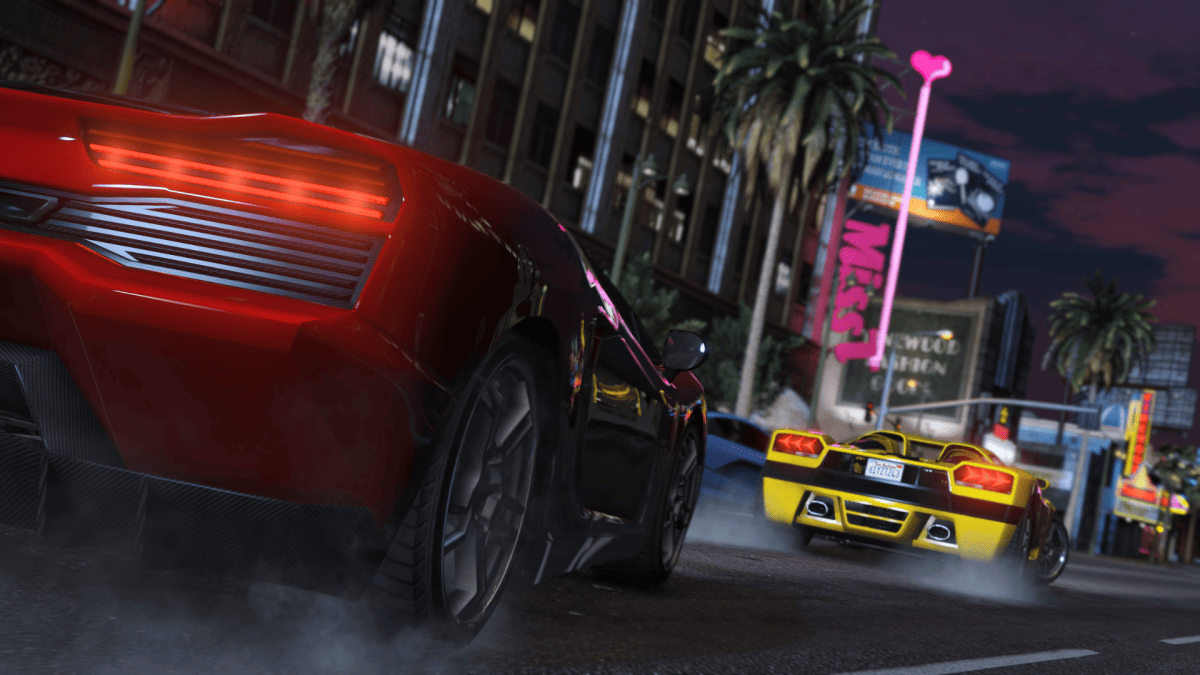
Thirteen years. That's the gap separating the launch of GTA V in September 2013 from the announced release of GTA 6 on November 19, 2026. Thirteen years during which the video game industry underwent radical transformation: ray-tracing, generative AI, haptic controllers, ultra-fast SSDs. Rockstar Games has had time to reimagine its masterpiece, sharpen its proprietary RAGE engine, and construct a new digital Mecca of organized crime.
But comparing GTA 6 to GTA 5 isn't just about measuring frame rates or resolution. It's about interrogating the very philosophy of the sandbox: how has gaming evolved? What remains of the raw freedom of 2013? And most importantly, what does this new generation truly deliver beyond dazzling pixels?
This article decodes eight key dimensions of this confrontation between two gaming monuments. From confirmed revolutions to substantiated rumors, through narrative choices that redefine the franchise.
1. The Dual Protagonists: Lucia Caminos Game-Changer for GTA 6
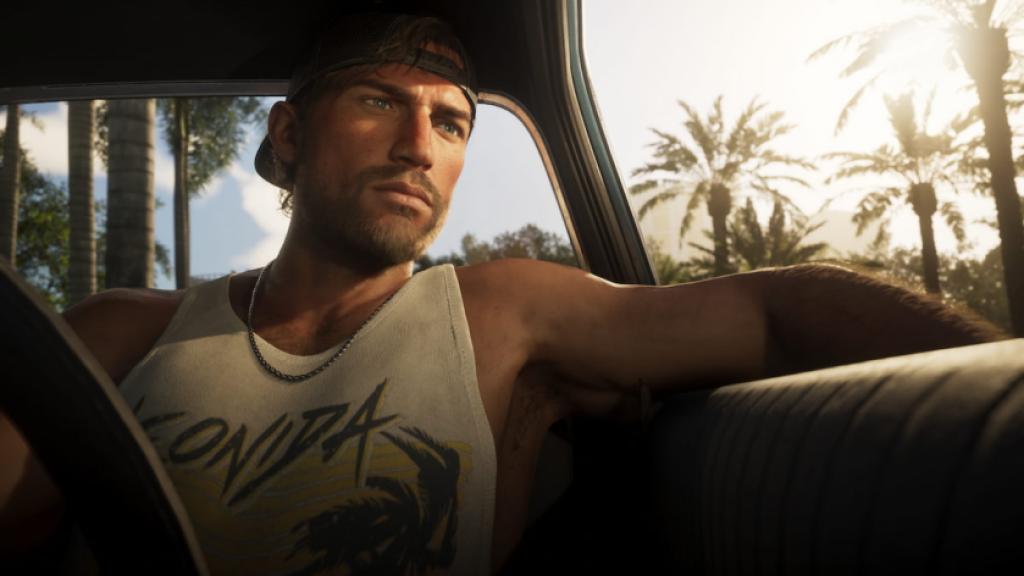
Here's the most revolutionary shift between GTA 5 and GTA 6: for the first time in a mainline entry, Rockstar places a woman in a position of playable and narratively central protagonist. Lucia Caminos isn't an assistant or secondary sidekick. She's co-equal to Jason Duval, the other playable hero.
GTA 5 already offered three protagonists (Michael, Trevor, Franklin), but the game remained fundamentally centered on men. Solo missions rarely featured female characters as primary drivers. GTA 6 flips this dynamic: Lucia is a high-stakes criminal with her own narrative arc and personal motivations. According to confirmed information, she and Jason form a modernized Bonnie and Clyde duo, where each brings their strength to the story.
This impacts game design itself. We can anticipate:
- Missions that play out differently depending on which protagonist you're controlling
- Enhanced narrative richness thanks to two opposing perspectives
- Amplified RP (role-play) potential for future online servers
- Gameplay diversity that was impossible with a single hero
Compared to GTA 5, this represents cultural rupture. GTA 5 clung to a classical Hollywood model; GTA 6 embraces modernity where gender is no longer a barrier to protagonist status.
2. RAGE Engine Evolution: From 2013 to 2026
Rockstar's RAGE engine powered GTA 5, Red Dead Redemption 2, and their respective multiplayer iterations for over a decade. It was remarkably stable architecture, yet imprisoned by certain limitations: visible LOD (level of detail) pop-in, significant memory load, often crude pathfinding AI.
For GTA 6, Rockstar announced a radically modernized RAGE (still proprietary, but entirely new). Rumors converge on several improvements:
Note: The following technical details aren't officially confirmed, but reflect consensus from reliable leaks and community technical analysis.
Enhanced ray-tracing (unconfirmed, but highly probable): GTA 5 already struggles with ray-tracing without catastrophic slowdown. GTA 6, built specifically for PS5/Xbox Series X, should natively integrate dynamic reflections, indirect lighting, and real-time shadows. Vice City at night, with neon reflected off water, becomes infinitely more immersive.
Superior crowd AI: GTA 5 generates believable NPCs through procedural systems. GTA 6 could push this ceiling with more complex AI routines, dynamic interactions, and denser urban demographics. Rumors mention enhanced capacity to simulate daily life across different hours.
Seamless loading: PS5 and Xbox Series X's SSD architecture eliminates traditional loading screens. GTA 6 should exploit this power for fluid transitions, instant fast-travel, and continuous map exploitability without interruptions.
Frame rate: The 30 fps vs 60 fps debate rages in the community. GTA 5 on PS4 ran at 30 fps; GTA 5 on PS5 (upscaled) offers 60 fps in performance mode. GTA 6 should deliver multiple modes (fidelity at 30 fps high-resolution, performance at 60 fps, possibly an in-between option), though nothing's official yet.
3. Leonida and Vice City: A Legendary Map Reimagined
GTA 5 stretched across approximately 127 km² of explorable terrain (including ocean). That was colossal in 2013; impressive in 2024; potentially limited by 2026. Rumors suggest Leonida, the fictional state encompassing the new Vice City, could reach 150 to 170 km², though this remains unconfirmed.
More important than raw size: detail density. Official trailers reveal a radically renewed 2026 Vice City:
- Hybrid architecture: 1980s art-deco style coexists with 2020s urban modernity. Pink and turquoise skyscrapers stand beside frosted glass towers.
- Thematic ecosystems: beyond Vice City proper, you glimpse varied biomes (marshes, coastal zones, industrial districts) that diversify exploration.
- Explorable interiors: GTA 5 limited accessible interiors. GTA 6 seems to expand this scope, allowing entry into more buildings, cafés, establishments.
- Reinvented side activities: leak reports mention diverse mini-games, sports, leisure pursuits that make the world feel less empty between main missions.
Compared to GTA 5, where Los Santos was already densely packed, Leonida targets superior vertical depth: less empty space, more places to discover, a sense of a truly inhabited world.
4. Narrative and Mission Structure: Questioning Narrative Freedom
GTA 5 revolutionized open-world storytelling by offering three intertwined protagonists, with solo missions and collective heists. The game balanced movement freedom with firm narrative direction. You could get lost in Los Santos, but you had to follow Michael, Trevor, and Franklin's storyline.
GTA 6, with Jason and Lucia, appears to continue this strategy while amplifying it. Available clues (trailers, indirect interviews) suggest:
- Multi-branching scenarios: certain missions could play out differently depending on which protagonist is active. Lucia approaches a heist differently than Jason.
- Growing narrative influence: your choices in side-missions could affect main quest conditions, like Red Dead Redemption 2.
- Modernized heists: robberies, the franchise signature, would theoretically be more complex with more variables and branching decisions.
- Online integration: GTA 5's GTA Online was almost a separate game. GTA 6 could weave smoother continuity between story mode and multiplayer, according to speculation.
Unconfirmed: rumors also mention the possibility of playing certain missions in story-mode co-op (Jason and Lucia together), but this remains speculative.
5. The Sound Ecosystem and Radio Stations: V-Rock Makes Its Return
GTA 5 featured 15 thematic radio stations, from KUSH (hip-hop) to Radio Mirrorpark (electronic indie). It was a complete musical ecosystem with hosts, parody ads, and atmosphere partially generated by audio content.
GTA 6 confirms the return of V-Rock, the legendary rock/metal station from Vice City 2002. It's a decision laden with nostalgia, but meaningful: a radio that accompanied adventures in the original Vice City reclaims narrative weight. In 2026, V-Rock isn't the rebellious youth station of the 1980s anymore—it's matured, accumulated influences and memories. This creates powerful emotional continuity.
Compared to GTA 5, where radio stations were creative containers without much narrative involvement, GTA 6 seems to elevate stations to active world players. Trailers show gameplay moments accompanied by V-Rock, integrating the soundtrack into emotional fabric.
Rumors also mention:
- A broader selection of licensed artists (partially confirmed through limited details provided)
- New stations thematizing 2026 Vice City era (synthwave, trap, drill)
- Stronger radio integration into cut-scenes and cinematics
6. Criminal Gameplay: Economy, Infractions, and Consequences
GTA 5 offered a crude crime system: you stole a car or robbed a bank, and police responded via wanted level. Effective, but lacking nuance.
GTA 6, according to leaks, appears to complexify this aspect:
Varied criminal activities (unconfirmed, but converging): beyond heists, you could run trafficking operations, manage underground networks, negotiate with rival gangs. Crime wouldn't just be mission execution but simulation of an illegal ecosystem.
Reputation system: your standing with different Vice City gangs would affect your opportunities. Killing a member of faction X closed missions with X but opened them with Y. This mechanic came from Red Dead 2, likely integrated into GTA 6.
Improved police AI (rumor): GTA 5's police were predictable. GTA 6 could offer more adaptive police AI that learns your methods, sets traps, or collaborates with rival gangs to eliminate you.
Compared to GTA 5, where criminality was mechanical gameplay, GTA 6 seems to transform crime into a system, almost a living ecosystem.
7. Platform and Accessibility: PS5 and Xbox Series X vs PC (Date Unknown)
GTA 5 released progressively: PS3/Xbox 360 (2013), PS4/Xbox One (2014), PS5/Xbox Series X (2022), PC (2015). This staggered strategy let Rockstar monetize each platform for extended periods.
GTA 6 launches exclusively on PS5 and Xbox Series X on November 19, 2026. No PC version is confirmed for launch day. Rumors speak of a PC arrival probably in 2027 or 2028, but this timeline was never official.
This exclusive window strategy raises stakes:
- PC players are shut out of launch, creating legitimate frustration (though typical for Rockstar).
- This exclusivity's duration determines whether GTA 6 enjoys early modding freedom. The longer the wait, the more PC anticipation builds.
- Compared to GTA 5, where PC arrived quickly (2 years), GTA 6 risks a lengthy wait. But Rockstar learned to exploit this frustration to extend GTA Online's monetization cycle.
8. GTA Online 2.0 vs Today's GTA Online: Uncertain Future
GTA Online, launched in 2013 with GTA 5, became a cultural phenomenon. Millions of players invest time and real money (microtransactions) there for a decade. It's also why GTA 5 stays alive: Rockstar constantly updates GTA Online with missions, vehicles, cosmetics.
GTA 6 will launch its own GTA Online, probably within weeks or months of release (officially unconfirmed). This raises existential questions:
- What happens to GTA Online 5? Will it keep receiving updates, or will Rockstar shut servers down to funnel all players to new GTA Online 6?
- Progress transfer: do your GTA Online 5 assets, weapons, vehicles transfer to GTA 6? No official clarification.
- Reset economy: GTA 6 will probably launch a fresh economy. GTA 5 millionaires start from scratch. It democratizes the game but frustrates veterans.
Compared to GTA 5, where GTA Online was almost unexpected (a bonus), GTA 6 arrives in a context where multiplayer is central to the game's commercial DNA. GTA 6's success depends equally on its solo content and the long-term viability of GTA Online 6.
Key Takeaways: A Comparative Summary
Here's a synthetic breakdown of major confirmed or strongly presumed differences:
Aspect GTA 5 (2013) GTA 6 (2026) Protagonists 3 men (Michael, Trevor, Franklin) 2 protagonists (Jason & Lucia) — 1st female lead confirmed Engine Original RAGE Modernized RAGE (ray-tracing, SSD optimization) Map Los Santos (127 km²) Leonida/Vice City (150-170 km² unconfirmed) Radio Stations 15 stations (thematic) V-Rock confirmed + new stations (total unannounced) Launch Platform PS3, Xbox 360 PS5, Xbox Series X (temporary exclusive) PC 2 years after console Date unknown (likely 2027-2028)