Introduction: Leonida's Police Force, a System at the Crossroads of Chaos and Reality
Since the franchise's inception, the police wanted system has been one of GTA's core mechanical pillars. Back in 1997, a simple two-digit counter was enough. Twenty-nine years later, as GTA 6 launches on November 19, 2026 for PS5 and Xbox Series X|S, fans are rightfully wondering: how has Rockstar Games evolved the pursuit dynamic? What actually changes? And most importantly, what official confirmations emerge from the trailers and press releases?
This article provides a complete breakdown of GTA VI's Wanted mechanic, rigorously separating confirmed facts from circulating rumors in the community. No invented details, no baseless speculation—only what Rockstar has officially presented, enriched by the evolutions that the advanced RAGE engine finally makes possible.
What Rockstar Officially Confirmed About GTA 6's Wanted System
Rockstar Games has always been tight-lipped about technical details before launch. The two official trailers (December 2023 and 2025) clearly show police pursuit elements, but precise explanations remain limited.
Here's what is unquestionably confirmed:
- The star system persists: trailer visuals clearly display star icons in the interface, identical to GTA tradition. Five or six stars likely remain the maximum limit.
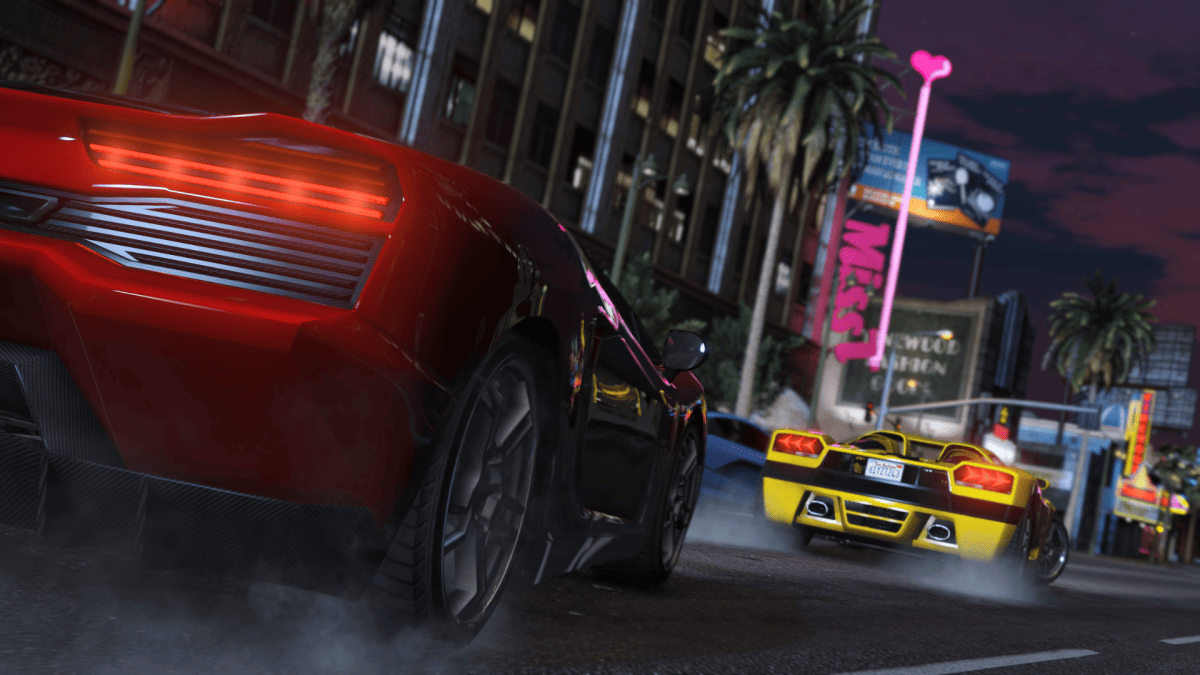
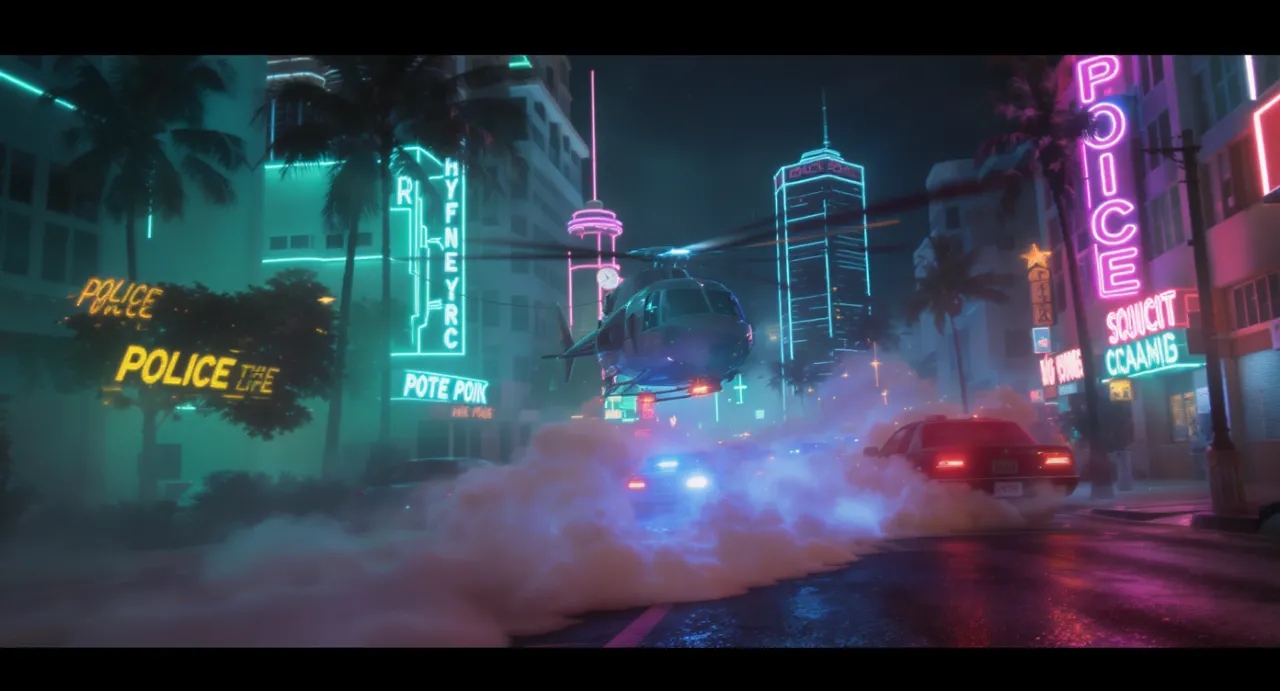
- Police Officers and Helicopters: trailers show police vehicles and helicopters in action. The threat escalation dynamic definitely exists.
- Leonida and Vice City reclaim the urban setting: Rockstar confirmed the return to Florida (called Leonida in GTA 6 fiction). Urban topography necessarily affects police gameplay—narrow alleys, highways, bridges, etc.
- Enhanced RAGE Engine: the new engine's AI capabilities suggest better coordination of law enforcement, though Rockstar hasn't detailed this aspect specifically.
- Dual Protagonists Jason and Lucia: the presence of two playable characters (officially confirmed) likely implies mechanics for police interaction that vary depending on the active character.
Rumors and Leaks: What's Circulating About GTA VI Pursuits
Beyond official confirmations, the community and certain leakers have speculated on potential improvements. Important: these are not verified by Rockstar and should be consumed cautiously.
According to rumors circulating since 2024, the following elements could be in GTA 6:
- Dynamic Adaptive Escalation: police could adjust their response based on the type of crime (theft, murder, property damage). Shoplifting wouldn't trigger the same response as a bank robbery.
- Specialized Units: rumors of SWAT teams or elite units appearing at higher wanted levels, distinct from standard patrols.
- Relationship Degradation with Law Enforcement: some leaks suggest a reputation system affecting difficulty and control frequency.
- Information Leaks in Neighborhoods: witnesses could report the player to police, artificially prolonging the Wanted status.
- Enhanced Detection Mechanics: surveillance cameras, intelligent patrols, urban geofencing.
These elements remain unconfirmed by official Rockstar sources. No official documentation explicitly mentions them.
Wanted System Evolution: Genealogy Since GTA III
To understand where GTA 6 might head, it's helpful to revisit the historical evolution of Wanted in the franchise.
GTA III to Vice City (1997–2002): The Raw Beginnings
Early entries operated on a binary system: no Wanted or a fixed escalating Wanted. Vice City (2002) introduced the five-level star system, still in effect today. The mechanics were straightforward: commit more crimes, stars climb higher.
GTA San Andreas (2004): First Attempt at Sophistication
Rockstar introduced notions of territory, factions, and gang-specific reactions. Police remained generic, but reactions changed based on your gang reputation.
GTA IV and Its DLC (2008–2009): Advanced Urban Simulation
Liberty City benefited from smarter police: reactive patrol officers, coordinated helicopters, predictable roadblocks. Wanted remained a star system, but pursuits became more fluid, less predictable.
GTA V and GTA Online (2013–2025): Iterative Polish
GTA V consolidated the system without major revolution. Animations were smoother, helicopters more aggressive, but the fundamental mechanic was unchanged. GTA Online added variants: Wanted modes with mods, temporary events altering rules.
GTA 6 arrives thirteen years after GTA V. Expectations for significant evolution are massive.
RAGE Engine Technology: What It Enables for Police Pursuits
The RAGE engine was announced as a major improvement for GTA 6. Note: Rockstar hasn't given an official version number "RAGE 9"—the engine is simply called the "enhanced RAGE engine." However, its capacity to handle more NPCs simultaneously, better AI, and richer physical simulation opens possibilities.
- More Intelligent Multi-Unit Coordination: more officers can operate cohesively. Not just linear waves, but encirclement tactics.
- Contextual Environmental Destruction: police vehicles could use the environment (barricades, spike strips, ambushes) more organically.
- Day/Night Cycles Affecting Police: Leonida features a dynamic weather system (confirmed). Police could adapt tactics based on conditions (storms, night, etc.).
- Enhanced NPC Routines: witnesses and civilians could react more realistically, indirectly affecting Wanted.
Again, these speculations rest on the engine's theoretical capabilities, not explicit Rockstar confirmations.
Leonida and Topography: How Geography Affects Pursuit Dynamics
Vice City, the original GTA hub (GTA III and Vice City), was a coastal metropolis with islands, canals, and linear roads. Rockstar confirmed that Leonida—GTA 6's fictional Florida—returns to this paradigm, but on a far vaster and more diverse scale.
According to trailers and leaked maps (unofficial but widely accepted), Leonida includes:
- Vice City Proper: dense urban, skyscrapers, commercial and tourist districts.
- Suburban Sprawl: residential suburbs, shopping centers, run-down zones.
- Keys and Coastal Archipelagos: small islands connected by bridges, natural escape points.
- Everglades or Wetlands: swampy areas, dense vegetation—new ground for police evasions.
- Express Routes and Highways: major thoroughfares connecting zones.
This topographic diversity means the Wanted system can't function uniformly. A dense-city pursuit looks nothing like a chase through swamps. Helicopters are useful in open space, less effective under forest canopy. Roadblocks are easy to deploy on highways, impossible at the Keys.
It's reasonable to assume Rockstar designed GTA 6's police contextually—adapted to each biome. But this is inference, not official confirmation.
Wanted System and Jason-Lucia Duality: Gameplay Divergences
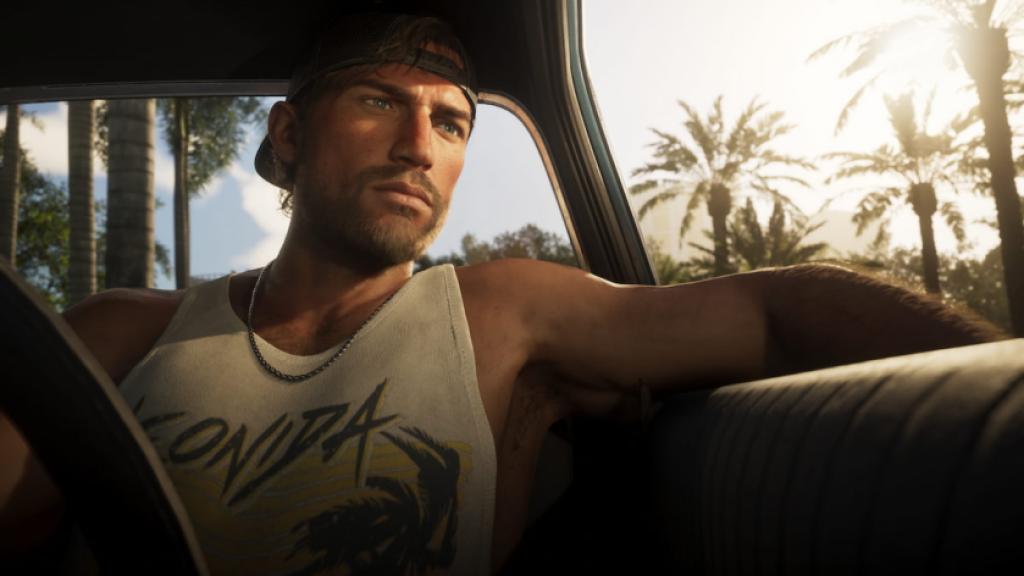
For the first time in the main series, GTA 6 offers two protagonists: Jason Duval and Lucia Caminos. This is officially confirmed. This duality presents a design opportunity: each protagonist could have a different police relationship.
Reasoned Speculation (unconfirmed):
- Lucia as More Wanted Figure: trailers suggest Lucia is a more visible character, potentially more targeted by police.
- Jason as Lone Shooter/Fighter: his animations seem more aggressive, implying Wanted might be lighter if subtle and discreet.
- Distinction Mechanics: disguises affecting Lucia differently than Jason, or unique evasion abilities for each character.
None of these divergences are confirmed by Rockstar. This is deductive design work.
Comparison with Predecessors: GTA V vs. GTA 6
For context on expectations, here's how Wanted worked in GTA V (2013):
- Star 1 (Wanted Basics): standard patrols, arrest attempts.
- Stars 2-3: multiple officers, additional police cars, possible helicopter.
- Stars 4-5: heavily armed police, possible SWAT, coordinated helicopters, systematic roadblocks.
- Star 6: Survival Mode—military (GTA Online), merciless hunt.
The system was effective but predictable. Each star corresponded to a fixed response, poorly adapted to context.
GTA 6 should theoretically introduce flexibility: crime type affects response (murder = more urgent than car theft), location affects tactics, weather or time affects resource availability.
But once more: this is extrapolation based on modern design maturity, not official confirmation.
Map Leaks and Impact on Pursuits
Unofficial images circulating since 2024 suggest a vast map, far beyond Vice City alone. If this topography proves accurate (which seems likely given partial trailers), it completely transforms Wanted dynamics.
A contiguous city lets police encircle you quickly. A vast region with transition zones, ocean, marshes, and suburbs naturally creates escape spaces. Wanted in rural zones would be intrinsically different from urban Wanted.
This could justify an adaptive star system: easier to increase in dense zones (many witnesses), easier to reduce in wilderness (sparse police).
Multiplayer and Wanted: System Extension in Online Mode
GTA V Online integrated Wanted into specific modes (Wanted, Hit, Raid). Details for GTA 6 Online remain unclear—Rockstar hasn't discussed it officially. However, a multiplayer mode will certainly exist.
It's reasonable to assume:
- PvP Wanted Modes: one player hunted, others as hunters or police.
- Heists with Search Mechanics: collective missions where keeping Wanted low is a tactical objective.
- Sensitive Zones: police-controlled sectors where Wanted automatically increases.
But these are standard design assumptions, not revelations.
FAQ: Your Questions About GTA 6's Wanted System
Can You Get Rid of Wanted as Easily as in GTA V?
Rockstar hasn't clarified Wanted evaporation mechanics for GTA 6. In theory, the classic model persists: flee the search zone, hide, lose police line of sight. With a vaster map and smarter AI, evasions are plausibly slightly more complex. But without confirmation, we can only extrapolate. Trailers show dynamic pursuits, but not clearly enough to deduce Wanted extinction mechanics.
Will There Be a Military or GTA V Online's Star 6 Equivalent?
In GTA 6 story mode, Rockstar hasn't announced a military. Vice City (2002) had one; GTA IV didn't. Neither did GTA V. According to rumors, GTA 6 would keep the military absent in story, maintaining escalation to police forces and SWAT units. In Online, it's less certain—multiplayer servers often have different rules. But it's unconfirmed.
Will Lucia Be More/Less Wanted Than Jason in Gameplay?
Trailers suggest Lucia and Jason have different profiles (she seems a more visible figure of notorious criminality, him a lone shooter). It's possible Wanted rises faster for Lucia, or her facial recognition is more effective. But this remains pure speculation—Rockstar said nothing about it. Protagonist choice might also simply affect narrative, not game mechanics.
How Does Weather Affect Police Pursuits?
Leonida features a confirmed weather system (storms, hurricanes, climate cycles). Extreme conditions (storms, flooding) likely affect police and helicopter mobility. A storm could reduce visibility and aerial pursuit capacity. But Rockstar hasn't detailed this mechanism. It's logical deduction, not confirmation.
Conclusion: Waiting Until November 2026 for the Truth
GTA 6's Wanted system remains largely a mystery until the November 19, 2026 launch. Rockstar Games has been strategically silent on mechanical details, preferring to let players discover them. Trailers confirm the persistence of the star system and escalating pursuits, but nuances escape our current knowledge.
What we know firmly: stars exist, police are present, helicopters operate, Leonida offers diverse topography. What we suspect: an adaptive context-aware system, better AI, Jason-Lucia divergences, weather sensitivity. What we don't know: exact mechanics, thresholds, police strategies, specific interactions with both protagonists.
Ultimately, the only certainty remains November 19, 2026, the official launch date for PS5 and Xbox Series X|S. Standard editions ($79.99) and Ultimate editions ($99.99) will finally bring the answers the community has awaited since the first December 2023 trailer.