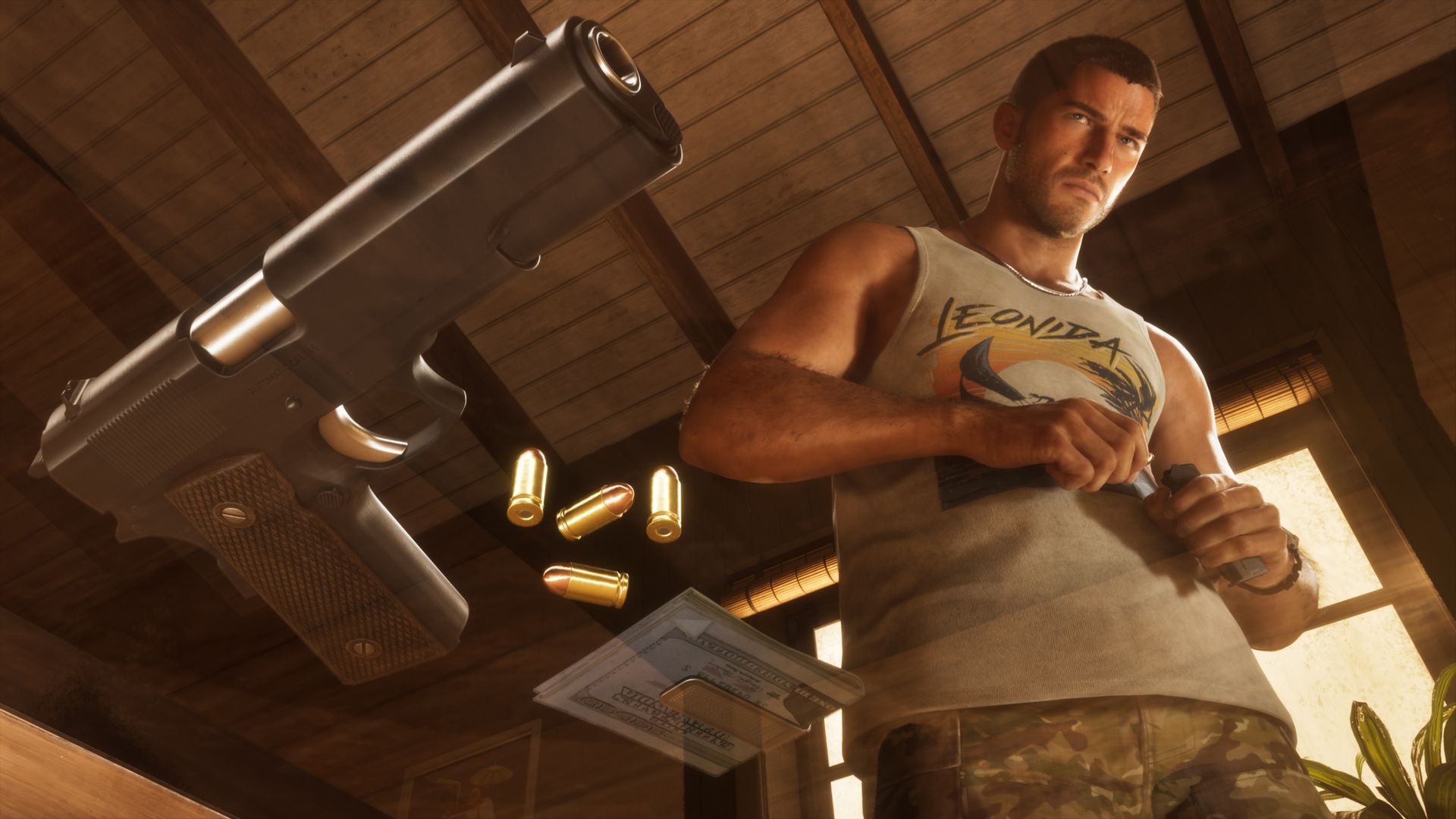
GTA Vice City Returns to Browsers: The Take-Two Legal Tug-of-War Reshaping Gaming History
The original GTA Vice City is playable in your browser again—and it signals a deeper shift in how Rockstar and Take-Two manage intellectual property as GTA 6 approaches its November 19, 2026 launch. After months of takedowns targeting emulation sites and preservation communities, a resurgence of browser-based Vice City access has reignited the decades-old debate over game preservation, corporate control, and the future of retro gaming—a conversation that matters far more than it might seem for the franchise's trajectory heading into its most ambitious entry yet.
- Confirmed: GTA Vice City (2002) is accessible via multiple browser emulation platforms following recent Take-Two enforcement cycles
- Rumor/unconfirmed: Whether Rockstar will officially re-release Vice City before GTA 6 launches remains speculative; no announcement has been made
- Confirmed: Take-Two has historically pursued aggressive takedown campaigns against emulation sites; this enforcement pattern continues in 2024-2025
- Context: GTA 6's dual-protagonist narrative and Leonida setting represent a spiritual successor to Vice City's 1980s Miami excess—making the legacy game's availability culturally relevant
- Impact: Browser emulation's persistence suggests that player demand for retro GTA titles outpaces corporate supply, a gap Rockstar may address post-GTA 6 launch
Understanding the Take-Two Takedown Cycle: Legal Reality vs. Media Narrative
Take-Two Interactive, Rockstar's parent company, has maintained an aggressive stance toward unauthorized emulation and distribution of GTA titles for over a decade. The studio's legal team regularly issues cease-and-desist notices to sites hosting ROM files, emulators configured with GTA Vice City, and preservation communities attempting to maintain the 2002 original in playable form.
What makes 2024-2025 different is the shift from targeting emulation infrastructure to targeting specific game distributions. The result: while emulators themselves remain technically legal in many jurisdictions, the availability of GTA Vice City within those emulators fluctuates wildly depending on regional enforcement, hosting jurisdiction, and the site's willingness to fight legal action.
Confirmed: Take-Two's enforcement actions target ROM distribution sites, not emulation software itself. The company has issued hundreds of DMCA takedowns and legal notices across platforms including GitHub, Archive.org, and private hosting services. Courts in the US and EU have generally upheld these actions, viewing unauthorized distribution of commercial software as copyright infringement regardless of the software's age.
The browser-playable Vice City instances currently circulating operate in a gray zone: they may be hosted on servers in jurisdictions with weaker IP enforcement, or they may be testing Take-Two's appetite for legal action against smaller targets. Some instances use modified versions of the game to avoid direct copyright matching; others rely on obfuscation or geographic IP blocking.
Why GTA Vice City's Availability Matters for GTA 6's Launch Strategy
On its surface, the resurgence of playable Vice City in browsers seems disconnected from GTA 6's November 2026 release. But Rockstar's approach to legacy content reveals a critical strategic choice: should the studio prioritize preservation, nostalgia marketing, or aggressive IP enforcement?
The 2002 original remains Rockstar's most iconic entry in the Grand Theft Auto franchise outside of GTA V. Its cultural footprint—the 1980s Miami setting, the synthetic soundtrack, the satirical radio stations—directly informs GTA 6's Leonida and its fictional Vice City environment. Players returning to the original game before GTA 6's launch experience the creative DNA that drives the new title's narrative and aesthetic.
Rumor / unconfirmed: Multiple gaming communities have speculated that Rockstar may announce an official GTA Vice City re-release (either remastered or original with modern compatibility patches) as a marketing tie-in prior to GTA 6's launch. No official statement from Rockstar or Take-Two has confirmed this. Interviews with Rockstar leadership have focused exclusively on GTA 6's development and November 2026 release, with no mention of legacy re-releases.
The browser emulation surge accomplishes something Take-Two and Rockstar cannot easily replicate: it demonstrates massive player appetite for the original Vice City. Downloads, plays, and session data from these platforms would theoretically show executives the size of the preservation market—a data point that could influence decisions about official re-releases post-GTA 6.
GTA Vice City vs. GTA 6: Leonida's Spiritual Succession
Understanding why players are returning to the original Vice City requires examining how GTA 6 positions itself relative to its predecessor.
| Element | GTA Vice City (2002) | GTA 6 Leonida (2026) | Connection |
|---|---|---|---|
| Setting | Miami, 1986–1989 (1980s Vice City) | Leonida State, 2020s fictional Florida (return to Vice City) | Same fictional universe; Leonida is contemporary Miami reimagined |
| Protagonist count | Single protagonist Tommy Vercetti | Dual protagonists Jason Duval & Lucia Caminos (confirmed) | Evolved narrative structure; dual perspectives on same city |
| Musical palette | Synthwave, new wave, soft rock, pop (1980s nostalgia) | Rumor: contemporary hip-hop, trap, regional Latin (unconfirmed specifics) | Same radio-station-driven soundtrack approach; era updated |
| Engine | GTA III engine | RAGE engine (confirmed) | Technical jump enables open-world density and visual fidelity impossible in 2002 |
| Player accessibility | Console-only (PS2, Xbox, PC) | PS5, Xbox Series X|S (confirmed); PC date unconfirmed | Emulation of original became necessary after platform obsolescence; GTA 6 future-proofed by modern console support |
The table above crystallizes a fundamental truth: GTA 6 is not a remake of Vice City—it is a spiritual successor set in the same fictional city two decades later. This design choice makes the original game simultaneously relevant and nostalgic for returning players. Fans exploring GTA 6's Leonida in 2026 will recognize landmarks, narrative echoes, and thematic continuities with the 2002 original. Emulation communities understand this context. For them, accessing Vice City in browsers becomes a form of literary preparation—a refresher on the canonical source material before the new narrative begins.
The Enforcement Reality: What "Takedown" Actually Means in 2025
When media outlets report that Take-Two has "taken down" Vice City emulation sites, the language can mislead casual readers. A takedown does not mean the game permanently disappears; it means a specific instance—a particular website, server, or distribution channel—has been removed from one location. The game code itself remains on thousands of private servers, cloud drives, and backup repositories.
The actual enforcement landscape works like this:
- Detection phase: Take-Two's IP team or third-party vendors scan the internet for unauthorized GTA distributions using keyword matching, trademark monitoring, and automated crawlers. Common targets include sites with "gta-vice-city.com" domain names or similar identifiers.
- DMCA notice phase: Legal notices are sent to hosting providers (AWS, Cloudflare, Namecheap, etc.) claiming copyright infringement. These providers, to avoid liability, typically comply within 48 hours by suspending or removing the flagged content.
- Site migration phase: Operators of emulation platforms respond by migrating to new hosting jurisdictions (often Eastern Europe or Southeast Asia), changing domain names, or adding obfuscation layers. The cat-and-mouse cycle repeats.
- Graduated enforcement: For larger operators, Take-Two escalates to direct legal action, domain seizures, and ISP-level blocking. This is rare but devastating when applied.
- De facto availability: Despite enforcement, copies of Vice City persist across torrenting networks, backup sites, and private repositories that Take-Two cannot realistically police. Enforcement achieves deterrence and legitimacy signaling rather than total supply elimination.
Confirmed: The United States Copyright Office and multiple court rulings (including the Sony v. Bleem decision of 2000 and subsequent emulation-related cases) have established that emulation software itself is generally legal, but circumvention of anti-copying measures and unauthorized distribution of copyrighted games are not. This legal framework persists through 2025.
The browser-playable Vice City instances gaining traction in early 2025 exploit this distinction. They offer emulation (legal) bundled with game files (a legal gray area depending on jurisdiction and the specific distribution model). Smaller operators betting that Take-Two will deprioritize enforcement of a 23-year-old title against tiny audience bases.
What Players Actually Want: Preservation vs. Profiteering
The preservation community frames Vice City browser availability as a cultural necessity. Games are historical artifacts. They document design philosophy, musical taste, narrative structure, and interactive storytelling at a specific moment in time. When GTA Vice City becomes unplayable on modern systems—when PS2 emulators deteriorate, when hardware ages, when distribution rights expire—it risks vanishing entirely unless someone maintains it.
Rockstar's counterargument centers on intellectual property, revenue protection, and creative control. The studio does not want unauthorized versions of its games circulating, particularly not versions that might be buggy, modified, or misrepresenting the original design intent. Re-releasing Vice City officially would allow Rockstar to refine the experience, ensure technical stability, and generate revenue from the reissue.
Rumor / unconfirmed: Some community members have speculated that Rockstar delayed an official GTA Vice City remaster specifically to avoid competing with GTA 6's marketing window. This theory lacks supporting evidence from any official source. Rockstar has not publicly discussed plans for Vice City re-releases or remasters of any kind.
The reality is likely nuanced. Rockstar may view Vice City preservation as important but non-urgent. The company's engineering and marketing resources are committed entirely to GTA 6 through its 2026 launch and beyond. A Vice City remaster would dilute focus. Once GTA 6 launches and enters its post-release support phase, Rockstar may reassess. At that point, an official re-release becomes a logical secondary project—capturing the nostalgia wave while new players who discovered the franchise through GTA 6 hunger to experience the original.
The Broader Implications for Gaming IP and Community Trust
The Vice City browser emulation surge represents a crack in Take-Two's enforcement ceiling. It signals that despite aggressive legal campaigns, player demand for retro content exceeds the company's official supply. This gap creates space for preservation communities to position themselves as stewards of gaming history—a narrative that resonates with players and, increasingly, with policymakers.
In 2024, multiple U.S. and European legislative bodies have begun discussing legal protections for game preservation. Libraries, archives, and academic institutions have pushed back against aggressive copyright enforcement, arguing that cultural heritage institutions should have exemptions to circumvent technological protection measures for archival purposes. The Copyright Office has granted limited exemptions; further reforms may follow.
Confirmed: The Library of Congress's U.S. Copyright Office has granted limited exemptions to the Digital Millennium Copyright Act (DMCA) for video game preservation by educational institutions and libraries. These exemptions do not currently extend to consumer emulation or distribution but represent a shift in regulatory thinking about who should maintain gaming history.
For Rockstar and Take-Two, this evolving landscape suggests that aggressive enforcement alone cannot sustain long-term IP control. Community trust, official re-releases, and transparent policies about legacy content will increasingly matter. Players who feel that their preferred games are being locked away or erased by corporate policy may become hostile to new releases. Conversely, studios that embrace preservation and respect community efforts build loyalty that transcends individual titles.
GTA 6's launch in November 2026 provides a natural inflection point. If Rockstar accompanies the new game's release with an official re-release or preservation-friendly re-release of Vice City, it demonstrates commitment to legacy while protecting IP. If the company maintains aggressive enforcement against emulation while offering no alternative, the community's goodwill toward the franchise could erode—particularly among players who felt priced out or pushed away by previous enforcement campaigns.
What Comes Next: GTA 6's November 2026 Launch and the Vice City Question
Between now and November 19, 2026—the confirmed launch date for GTA 6 on PS5 and Xbox Series X|S—the conversation around original Vice City's availability will likely intensify. As GTA 6 marketing ramps up, players will seek out the original to refresh their memory. Preservation communities will likely intensify browser emulation efforts, betting that Take-Two deprioritizes enforcement in the months before the new game's arrival.
Rockstar's official response remains unknown. The studio has not announced plans for Vice City re-releases, remasters, or official emulation initiatives. Silence, in this case, likely reflects resource constraints and strategic prioritization. Every engineer, artist, and designer is focused on completing GTA 6 and preparing its live-service infrastructure.
Post-launch, the calculus shifts. If GTA 6 launches successfully and enters a stable phase by mid-2027, Rockstar could announce a Vice City re-release as a secondary project. This would accomplish multiple goals: it would offer players a legitimate way to experience the original, generate revenue from an installed base hungry for supplementary GTA content, and subtly signal that Rockstar respects its own history and community nostalgia.
Rumor / unconfirmed: Some industry analysts have speculated that Rockstar may announce a Vice City re-release as part of a broader "Grand Theft Auto Legacy" initiative post-GTA 6 launch. No official confirmation of this strategy exists. Rockstar has made only brief comments about its post-launch DLC and content roadmap, focusing on GTA Online 6 as the live-service priority.
Sources & Official
- Rockstar Games official website (rockstargames.com) - GTA 6 announcements and release information
- Rockstar Newswire - Official developer communications and blog posts
- Take-Two Interactive investor relations (take2games.com) - Corporate statements on IP enforcement and legal matters
- U.S. Copyright Office (copyright.gov) - DMCA exemptions and preservation policy documents
- Game Preservation and Archival Consortium documentation - Community-led preservation standards
- GTA 6 official social channels (X, Instagram) - Announcements and media rollouts
FAQ
Is it legal to play GTA Vice City through a browser emulator?
Emulation software itself is generally legal in most jurisdictions. However, accessing copyrighted game files (like Vice City's code and assets) through unauthorized sources is typically not legal without a license from the copyright holder. The legal gray area depends on your jurisdiction, the specific emulation platform, and whether you own an original copy of the game. Take-Two actively pursues enforcement against distribution sites, treating unauthorized Vice City access as copyright infringement.
Will Rockstar officially re-release GTA Vice City before or after GTA 6 launches?
Rockstar has not announced any plans for a Vice City re-release. No official date, format, or confirmation exists. Given the studio's current focus on GTA 6's November 2026 launch, a pre-release announcement seems unlikely. Post-launch remains speculative but possible, depending on Rockstar's resource allocation and market demand after GTA 6 ships.
Does GTA 6's Leonida replace Vice City, or does it take place in the same canonical location?
Confirmed: GTA 6 is set in Leonida, a fictional state inspired by Florida. Vice City exists within Leonida and is a central setting for GTA 6. The new game takes place decades after the original GTA Vice City and represents an evolution of the same fictional geography. Players will recognize the city's reimagined version within the broader Leonida state.
How much of GTA 6's narrative and design is influenced by the original Vice City?
Rockstar has confirmed that GTA 6 draws thematic and aesthetic inspiration from Vice City's 1980s Miami setting, but the new game is not a remake or direct sequel. The dual-protagonist system (Jason Duval and Lucia Caminos), contemporary 2020s setting, and Leonida's broader state structure represent significant departures. Thematic echoes exist, but the games operate independently within the same fictional universe.