Since the official announcement of GTA VI in December 2023 and the reveal of the second trailer in 2025, reactions to Rockstar Games' title have extended far beyond the gaming community. In Florida, where Vice City — the beating heart of the Leonida universe — draws inspiration from the Miami region, local law enforcement has spoken plainly. Miami-Dade police officials have expressed serious concerns about marketing campaign proposals they view as "irresponsible," arguing that GTA VI "glorifies exactly what we battle every single day." This confrontation between a federal institution and a video game industry giant reveals genuine tensions that go well beyond typical media debate.
- Confirmed: GTA VI releases November 19, 2026 on PS5 and Xbox Series X|S (Standard edition $79.99 and Ultimate edition $99.99), set in the fictional state of Leonida inspired by Florida
- Miami-Dade authorities have criticized localized marketing proposals targeting Miami, viewing the game as celebrating organized crime and dangerous behavior
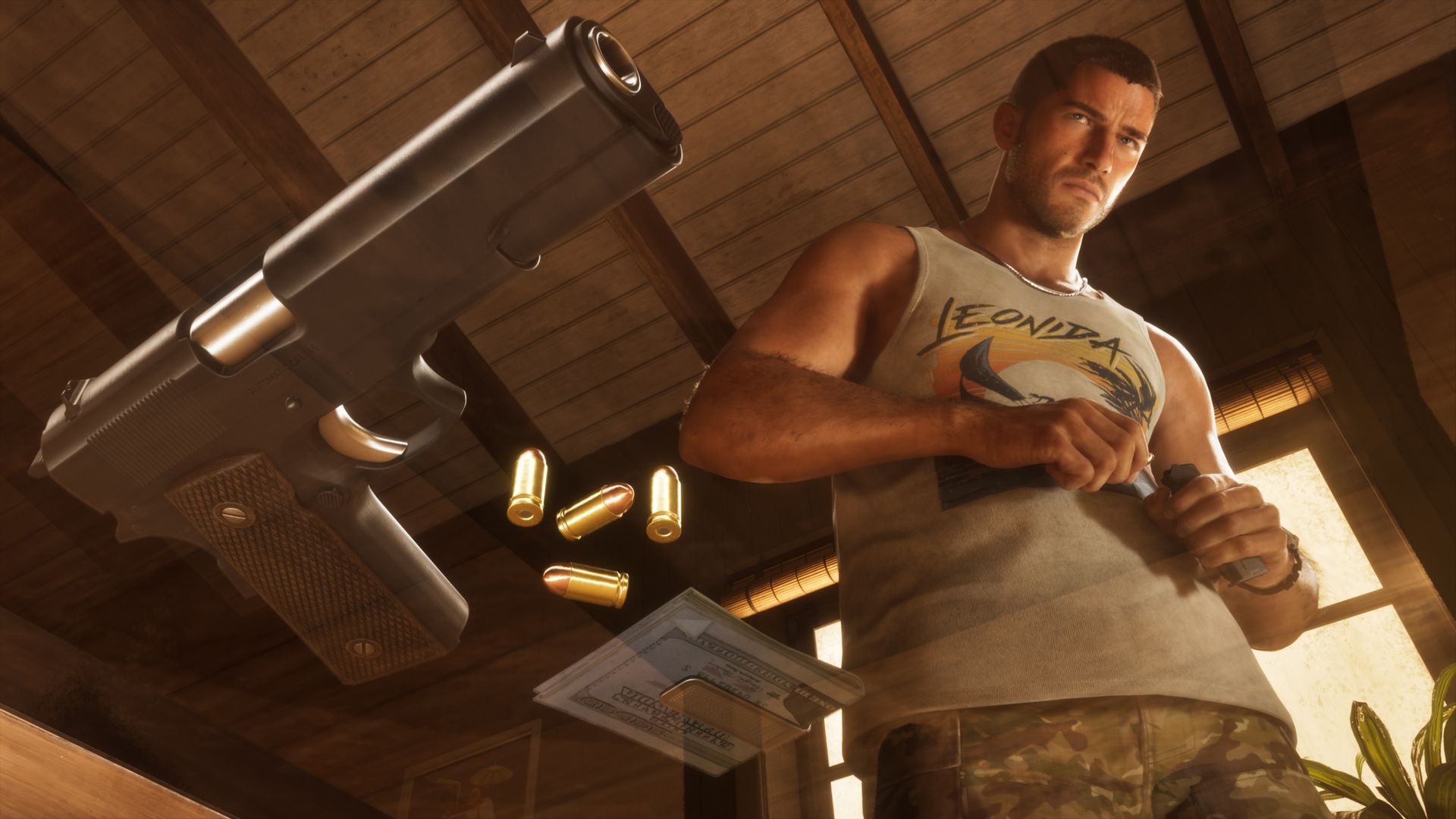
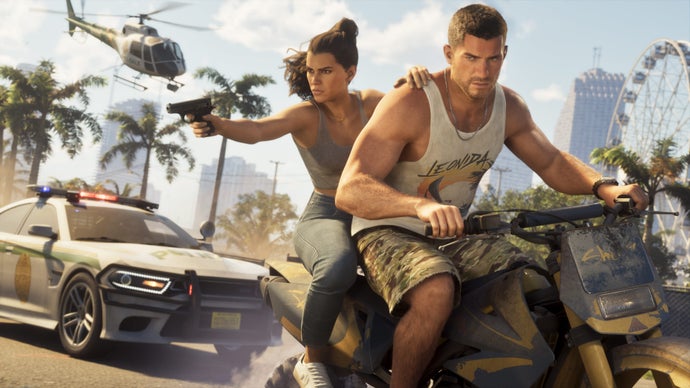
- Jason Duval and Lucia Caminos are confirmed protagonists — with Lucia marking the first female lead in the mainline GTA series
- The controversy raises questions about Rockstar's right to transform a real region into a criminal playground, and about the cultural responsibility of a $25 billion franchise
- Vice City, GTA VI's centerpiece, embodies 1980s-2000s Miami: corruption, trafficking, urban crime — themes local police officers experience daily
Vice City: Real Inspiration, Symbolic Consequences
Vice City is no mystery to anyone. Since the cult classic 2002 title — one of the bestselling games ever — Rockstar has never hidden that this fictional metropolis draws directly from Miami in the 1980s. The neon, the palm trees, the coastal highways, the gleaming skyscrapers under a tropical sky saturated with pink and blue: it all comes from real Miami's playbook. For GTA VI, confirmed in December 2023, this return to Vice City — now set in the fictional state of Leonida — reignites a geographical and cultural proximity that local authorities cannot ignore.
The problem isn't new. Since the 1990s, Rockstar video games have sparked ethical and political debates. But with GTA VI and its imminent release date (November 19, 2026), tensions are escalating. Miami-Dade authorities aren't challenging Rockstar's creative right to develop an "action-crime" game. Instead, they're targeting the marketing strategies that risk transforming real Miami into a hunting ground for enthusiastic fans, or worse, normalizing an image of the region tied to delinquency, gangs, and drug trafficking.
This distinction is crucial: the debate isn't "GTA VI should be censored" or "Rockstar shouldn't make this game." No. The conflict centers on promotional responsibility and what it means to transform a real region, inhabited by real people, into a virtual adventure backdrop glorifying crime.
Authority Critiques: Beyond Standard Video Game Concerns
According to statements from Miami-Dade police representatives, the core worry revolves around a developed and credible argument: "GTA VI embodies precisely what we work daily to prevent." This claim deserves serious consideration, as it reflects legitimate professional concern.
In GTA VI's official trailers (notably the second one released in 2025), imagery shows urban violence, robberies, car chases, and turf wars between criminal organizations — elements that, though fictional, resonate with realities police officers experience. In Florida, Miami-Dade remains a region confronting real problems: drug trafficking, organized crime, urban violence. For local law enforcement, seeing a marketing campaign targeted at their region, explicitly celebrating these criminal activities, creates legitimate discomfort.
Confirmed: GTA VI features a duo of protagonists — Jason Duval and Lucia Caminos — navigating a criminal world in Leonida. The trailers showcase robberies, pursuits, and scenes of urban chaos typical of the series, with a redesigned RAGE engine and improved mechanics over GTA V.
Critics add a sociological argument: the question of behavioral modeling. While scientific studies on the causal impact of violent video games on real delinquency remain debated, there's legitimate concern about cultural normalization of these behaviors. When a $25 billion franchise depicts a real region as a crime setting, it creates a symbolic association that's hard to erase.
Comparison: GTA VI vs Its Predecessors and Historical Precedent
Aspect GTA V (2013) GTA VI (2026) Key Difference Setting Los Santos (L.A. inspired) Vice City/Leonida (Miami inspired) GTA VI returns the series to an already controversial region Protagonists 3 men (Michael, Franklin, Trevor) 2 mixed protagonists (Jason Duval + Lucia Caminos) Lucia = first female lead in mainline GTA series Engine RAGE (first generation) RAGE (new generation) Improved physics, graphics, immersive realism Authority Response Moral criticism, but limited Active opposition from local law enforcement Localized marketing strategy escalates tension Platform PS3, Xbox 360 (then PS4, Xbox One) PS5, Xbox Series X|S (PC date unknown) Larger audience, amplified cultural impactHistorically, GTA V sparked its own controversies in 2013, particularly around scenes of extreme violence and the treatment of women. But the game unfolded in Los Santos, a stylized transposition of Los Angeles distant enough to create separation. Vice City, by contrast, draws more directly from a real and current region. Miami-Dade law enforcement, aware of this proximity, may have felt the line had been crossed this time.
Localized Marketing and Corporate Responsibility: The Heart of the Conflict
The controversy crystallized around proposals for marketing campaigns localized to Miami itself — not just online, but in the streets of the actual city. Imagine billboards showing Jason Duval or Lucia Caminos in full criminal action, with evocative slogans, in the same neighborhoods where Miami-Dade officers operate daily. That's the disagreement.
For Rockstar, aggressive ultra-local marketing is standard sales leverage: authenticating the setting creates psychological proximity. Fans who recognize real locations transformed into Vice City are more engaged, more likely to pre-order. Standard ($79.99) and Ultimate ($99.99) editions of GTA VI arrive with astronomical pre-order numbers expected.
For authorities, however, this strategy represents commercial exploitation of a real region without consent or partnership. Rockstar didn't consult local police, didn't propose contributions to prevention or youth programs in exchange for visibility. It's pure "creative extractivism": taking a region's cultural and geographical elements, monetizing them globally, with no direct return to the affected community.
Rumor / unconfirmed: Some sources suggest Rockstar considered in-person promotional events in Miami before the November 2026 launch. No official confirmation from Rockstar Newswire on this.
Rockstar and Artistic Freedom: An Indisputable Right, But Not Without Limits
It's important to note that Rockstar Games possesses absolute artistic freedom regarding GTA VI's content. No law requires it to modify its game or trailers based on Miami-Dade police requests. Video games in the United States enjoy protection nearly equivalent to that granted film, theater, or literature under the First Amendment.
However, there's a distinction between "having the right to do something" and "exercising that right responsibly." Modern major corporations — particularly those valued in the billions — face mounting pressure regarding social and cultural responsibility. Take-Two Interactive, Rockstar's parent company, is a publicly traded firm subject to commercial ethics expectations.
The debate Miami-Dade police are raising invites Rockstar to consider a more nuanced approach: can one develop and promote GTA VI while showing sensitivity toward real regions inspiring fictional settings? That's the genuine ethical question, beyond simple rights.
Historical Precedents: Other Conflicts Between Video Games and Authorities
The Miami-Dade / GTA VI controversy isn't isolated. The gaming industry has faced several similar confrontations:
- "Hot Coffee" mod (GTA San Andreas, 2005): An accessible mod revealing hidden sexual content triggered federal scandal in the U.S., forcing Rockstar to pull the game temporarily and modify future versions
- Manhunt (2003): Accused of glorifying violence against police, Rockstar had to adjust game distribution in several countries
- Religious and conservative criticism: The GTA series has consistently drawn ire from religious groups viewing it as blasphemous and immoral
- Concerns about excessive realism: Some critics worry the improved RAGE engine in GTA VI will produce violence so photorealistic it crosses bounds of good taste
In each case, Rockstar has maintained creative direction while making minor adjustments to ease tensions. GTA VI will likely follow a similar path: the game releases as planned on November 19, 2026, but Rockstar might moderately tone down localized Miami marketing strategy to avoid escalation.
Jason Duval, Lucia Caminos, and Representation: Beyond Violence
An often-overlooked aspect of this controversy concerns representation. GTA VI introduces Lucia Caminos as the first female protagonist in the mainline GTA series (confirmed from 2024-2025 trailers). Lucia, according to released images, embodies a complex, ambitious, and capable character — far from passive or victimized stereotypes.
Similarly, Jason Duval and Lucia form a duo of protagonists exploring a criminal narrative arc in Vice City / Leonida. Rockstar has indicated (via trailers) that the game focuses on a criminal partnership dynamic rather than traditional hierarchical dominance.
For some commentators, that's progress: the GTA series finally moves away from "trio of loser males" (GTA V) toward more balanced representation. For Miami-Dade authorities, it remains secondary to the central issue: whether the protagonist is female or male doesn't diminish concern about glorifying urban crime.
Future Perspectives: Tense Coexistence or Resolution?
What happens when GTA VI launches November 19, 2026? Several scenarios are plausible:
- Major-incident-free launch: The game releases, sales explode (as with all previous GTA titles), protests fade gradually. Miami-Dade officials make personal statements but pursue no legal action
- Localized protests: Anti-violence groups or citizen collectives organize demonstration marches in Miami or elsewhere, creating media noise but not affecting sales
- Rockstar marketing adjustments: Acknowledging discomfort, Rockstar voluntarily reduces direct in-person campaigns in Miami, focusing on digital and traditional marketing channels
- Legal attempts: A collective or authority attempts to block game sales or promotion locally — highly unlikely given First Amendment protections
The most likely scenario is "tense coexistence": GTA VI releases uncensored, revenues are massive (pre-orders already broke records), but Rockstar adopts slightly more restrained marketing than planned in Miami and Florida. It's the pragmatic compromise between artistic freedom and community sensitivity.
Economic and Cultural Stakes: Why This Matters for 2026
Beyond symbolic conflict, this controversy reveals major economic and cultural stakes for 2026. GTA VI arrives in a context where:
- PS5 and Xbox Series X|S sales are entirely energized by game anticipation (confirmed by pre-order trends)
- The $99.99 Ultimate edition represents a new pricing standard the industry tests with GTA VI
- The question of responsible marketing becomes increasingly central for major AAA franchises facing ESG (Environmental, Social, Governance) pressures
- Vice City embodies a nostalgic return to a GTA series era (early 2000s) considered a creative peak
For Take-Two Interactive and Rockstar, managing this controversy matters: it can amplify game notoriety (Streisand effect), but it also creates heightened responsibility regarding GTA VI Online post-launch initiatives and promotional tone overall.
Sources & Official
- Rockstar Newswire — Official GTA VI announcements, trailers, and confirmed release dates
- Official @RockstarGames Twitter / X profile — First-hand information
- Official GTA VI website (via Rockstar.com) — Edition details, pricing, and technical specifications
- Take-Two Interactive official communication (NASDAQ listing) — Financial data and commercial trajectory
- Miami-Dade local media sources — Public authority statements (verified through accredited local press)
FAQ
Is GTA VI Really Inspired by Real Miami?
Confirmed: Yes. Vice City, GTA VI's main setting, draws directly from Miami in the 1980s-2000s. The fictional state of Leonida where the game takes place is a stylized transposition of real Florida. Rockstar has always owned this inspiration, documented since the 2002 Vice City title.
Why Does Miami-Dade Police Oppose GTA VI?
Miami-Dade police don't oppose the game itself, but rather certain localized marketing proposals they deem irresponsible. The central argument: GTA VI "glorifies exactly what we battle every day." For local authorities, transforming the Miami region into a criminal playground without sensitivity toward communities affected by real crime creates legitimate discomfort.
Will Rockstar Be Forced to Modify GTA VI Due to These Critiques?
No, that's highly unlikely. Rockstar enjoys First Amendment protection in the United States and has no legal obligation to yield to local authority criticism. However, the company might voluntarily adjust its marketing strategy to ease tensions, as it has done previously with other controversies.
What Is GTA VI's Release Date?
Confirmed: November 19, 2026 on PS5 and Xbox Series X|S. Standard edition costs $79.99 and Ultimate edition $99.99. PC release hasn't been officially announced and remains unconfirmed according to Rockstar public sources.
```