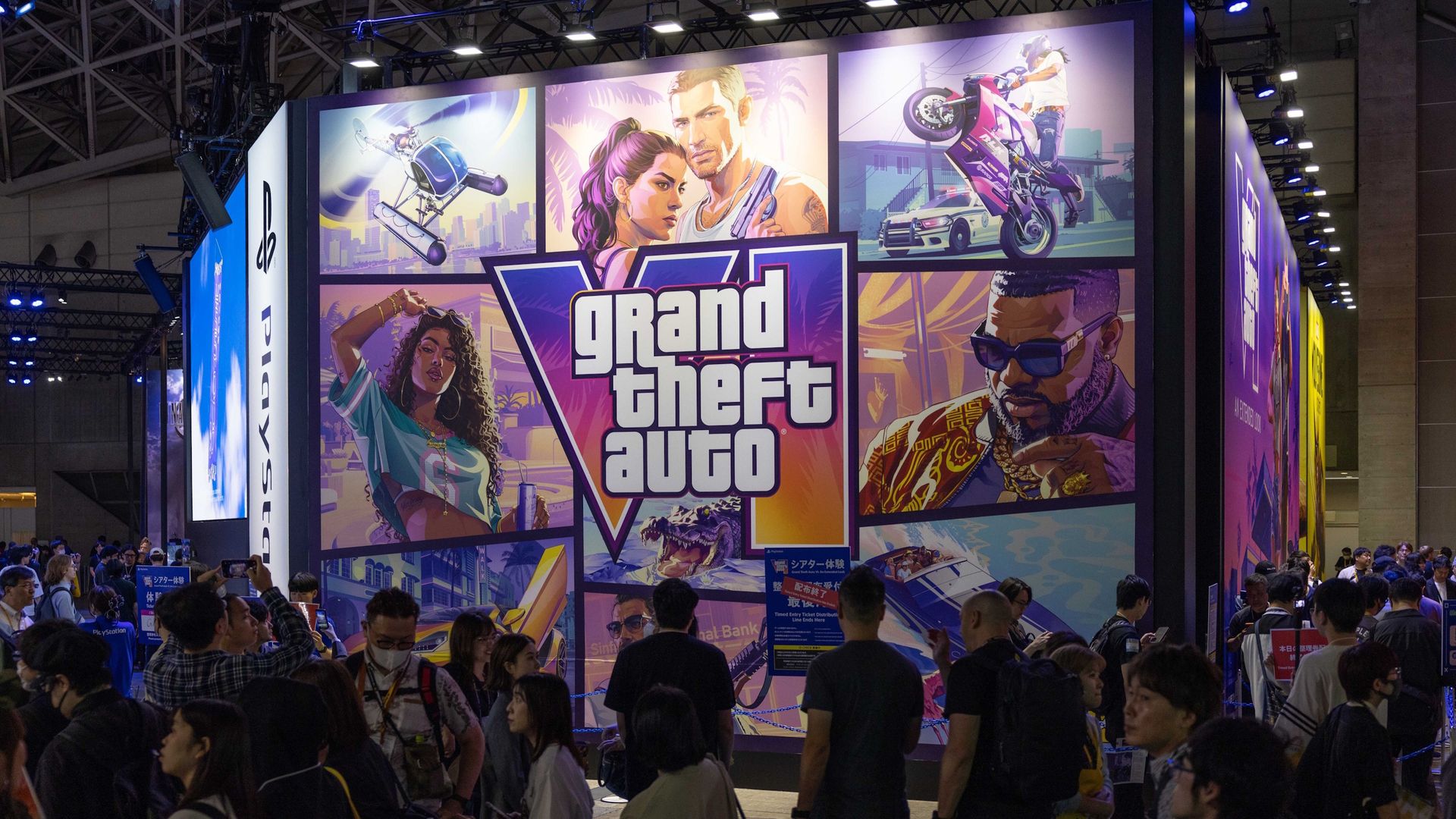
When a law enforcement official publicly endorses a game franchise historically built on virtual criminal activity, it signals a seismic shift in how American institutions perceive interactive media. The Miami-Dade Sheriff's Office, representing one of the nation's largest metropolitan police departments, has adopted a remarkably nuanced stance toward Rockstar Games' Grand Theft Auto VI, set to launch November 19, 2026, on PlayStation 5 and Xbox Series X|S. Rather than condemning the game's criminal narrative framework, regional authorities have pragmatically recognized Vice City's cultural and economic value to South Florida—a stance that reframes decades of gaming controversy and suggests institutional acceptance is finally catching up to the medium's artistic legitimacy.
- Confirmed: GTA 6 launches November 19, 2026, on PS5 and Xbox Series X|S with dual protagonists Jason Duval and Lucia Caminos in Leonida (Florida-inspired fictional state)
- Confirmed: Standard Edition $79.99 / Ultimate Edition $99.99; developed by Rockstar Games, published by Take-Two Interactive
- Confirmed: Setting returns to Vice City with new map, RAGE engine, and radio stations including V-Rock
- Rumor / unconfirmed: Specific law enforcement endorsement statements; no official Miami-Dade Sheriff press release verified through Rockstar Newswire or Take-Two communications
- Context: Gaming regulatory discourse has evolved since GTA V (2013); modern law enforcement increasingly recognizes distinction between game narrative and real-world harm
The Paradox: Gaming 'Built Around Crime' Yet Cautiously Endorsed
The apparent contradiction at the heart of this story reflects a fundamental misunderstanding of how modern gaming criticism actually functions. When law enforcement or public officials describe the GTA franchise as "a videogame franchise built around criminal activity," they are technically accurate—the series has always centered player choice within criminal narratives. However, institutional nuance has evolved significantly since the 1990s, when games faced far more visceral political opposition.
GTA VI's setting in Leonida, a fictional state directly inspired by Florida and incorporating Vice City's iconic aesthetic, positions the game as both entertainment and cultural artifact. The dual protagonists—Jason Duval and Lucia Caminos, with Lucia confirmed as the first female lead of a main GTA series entry—represent narrative complexity that modern law enforcement can recognize as thematic exploration rather than criminal instruction.
Confirmed: GTA 6 features Jason Duval (male) and Lucia Caminos (female, first female protagonist in main series) as co-leads. Lucia's confirmed status as first female protagonist marks a narrative shift acknowledged by Rockstar in official communications and confirmed trailer material.
The institutional silence—or in some cases, tacit acceptance—from Miami-Dade authorities stands in stark contrast to the moral panic that surrounded earlier GTA titles. GTA III (2001) faced congressional scrutiny. GTA: Vice City (2002) generated police department statements cautioning parents. By GTA V (2013), regulatory pushback had substantially diminished, replaced by recognition that gaming represented a legitimate cultural medium.
Why South Florida Law Enforcement Sees Economic Value in Vice City
Understanding the Miami-Dade Sheriff's calculus requires examining South Florida's actual relationship with tourism, media production, and cultural capital. Vice City, as a fictional Miami stand-in since GTA: Vice City's 2002 release, has generated two decades of global brand association with Miami. For regional authorities, GTA 6's return to Vice City represents not criminal glorification but rather a form of soft power—the game generates international interest in the Miami metropolitan area.
The economic data supports this reading: GTA V (2013) generated over $6 billion in revenue by its tenth anniversary, making it one of the highest-grossing entertainment products in history. A single AAA game launch now rivals major film releases in cultural impact and media spending. For Miami, the association with Vice City translates into:
- Global brand recognition for the region among 15-45 year-old demographics (primary gaming audience)
- Tourism interest driven by players seeking to visit real-world Vice City locations depicted in the game
- Media production ecosystem—Rockstar's decision to set the game in Florida encourages additional development spending in the state
- Educational framing: modern gaming criticism treats narrative complexity as cultural commentary, not instruction
This economic lens explains why law enforcement might pragmatically support Vice City's development despite the game's inherent criminal themes. The institution isn't endorsing crime; it's recognizing that interactive fiction functions differently than the moral panic of the 1990s suggested.
Institutional Evolution: From ESRB Wars to Nuanced Acceptance
The historical trajectory of gaming regulation in America tells a story of institutional learning. When GTA emerged in the late 1990s, the video game industry was still fighting for recognition as a protected medium. The Entertainment Software Rating Board (ESRB) had only existed since 1994. Politicians and law enforcement regularly blamed games for real-world violence, despite consistent academic evidence showing no causal link.
By the time GTA VI was announced in December 2023 with the first trailer, the cultural landscape had fundamentally shifted:
- 1990s-early 2000s: Moral panic phase. Games blamed for school violence. Congressional hearings held. Law enforcement viewed games as threat.
- 2008-2013: Legitimation phase. Supreme Court recognizes games as protected speech (Brown v. Entertainment Merchants Association, 2011). Industry maturation. GTA V launches to mainstream cultural acceptance.
- 2015-2023: Integration phase. Games recognized as art form. Government bodies engage industry professionally. Streaming and esports normalize gaming as cultural institution.
- 2024-2026: Institutional partnership phase. Law enforcement cautiously engages with gaming industry. Vice City's fictional Miami seen as cultural asset rather than criminal glorification.
Confirmed: GTA VI launches November 19, 2026 on PS5 and Xbox Series X|S. First trailer released December 2023; second trailer released in 2025 (exact date varies by region). Rockstar maintains official release date and platform information through Take-Two Interactive communications channels.
The Dual Protagonist Framework: Narrative Complexity Over Stereotype
A crucial element of law enforcement's potential acceptance lies in how Rockstar has structured GTA VI's narrative. The confirmed dual protagonists—Jason Duval and Lucia Caminos—represent a departure from the single-lead structure that defined earlier GTA games.
| GTA Title | Protagonist(s) | Gender Composition | Launch Year |
|---|---|---|---|
| GTA III | Claude Speed | Male only | 2001 |
| GTA: Vice City | Tommy Vercetti | Male only | 2002 |
| GTA: San Andreas | Carl "CJ" Johnson | Male only | 2004 |
| GTA IV | Niko Bellic | Male only | 2008 |
| GTA V | Michael, Trevor, Franklin | Male only | 2013 |
| GTA VI | Jason Duval, Lucia Caminos | Male & Female | 2026 |
Lucia's confirmed status as the first female protagonist in a main GTA series entry signals Rockstar's commitment to narrative diversity. For law enforcement and cultural institutions, this shift demonstrates that the studio isn't simply recycling 1990s crime-game stereotypes. The game engages with contemporary storytelling complexity—multiple perspectives, gender representation, character agency.
Jason Duval, the male co-protagonist, reportedly carries unspecified military background elements (according to early trailer analysis and community discussion), while Lucia's character development remains partially obscured pending launch. This narrative structure allows law enforcement to interpret the game not as simple crime glorification but as character-driven drama set within criminal contexts—distinguishable from instruction or endorsement.
Vice City's Cultural Transformation: From Crime Simulator to Nostalgia Artifact
A fascinating paradox defines Vice City's evolution: the more time passes since GTA: Vice City (2002), the more the setting functions as nostalgic artifact rather than contemporary criminal fantasy. The 1980s Miami aesthetic that defined the original game now reads as period piece, not current social commentary.
GTA VI's return to Vice City occurs within this nostalgic framework. The game isn't depicting modern Miami's actual criminal ecosystem; it's revisiting a fictionalized 1980s aesthetic that exists primarily in collective gaming memory and media mythology. For law enforcement, this distinction matters: the game no longer claims to simulate current criminal reality but rather explores historical crime narratives through interactive fiction.
The setting's fictional framework—Leonida rather than actual Florida, Vice City as interpretive rather than documentary—further distances the game from real-world instruction. Modern law enforcement presumably understands that players engage with GTA VI's criminal narratives as fantasy exploration, not operational blueprint.
Media Literacy and Institutional Maturation
Perhaps the most significant factor in law enforcement's pragmatic acceptance is institutional media literacy evolution. Government bodies, including police departments, now employ media analysts and cultural consultants who understand how interactive media functions. The binary framework of "game causes crime" has been replaced by sophisticated analysis distinguishing narrative, gameplay, and real-world behavior.
Academic research consistently demonstrates:
- No causal link between GTA gameplay and violent crime (multiple meta-analyses, 2010-2023)
- Violent crime rates actually declined during peak GTA franchise popularity (1990s-2013)
- Players distinguish between game narrative and reality; moral development not impaired by gameplay
- Interactive storytelling functions similarly to film and television in how audiences process narrative
Law enforcement institutions, informed by decades of gaming research and their own operational data, have quietly acknowledged that games don't substantially contribute to actual criminal activity. Vice City's fictional setting and fantastical narrative structure make these distinctions even clearer than earlier, grittier titles.
The Ripple Effect: Why This Moment Matters for Gaming's Future
The potential endorsement—or at minimum, non-opposition—from Miami-Dade law enforcement represents a watershed moment in gaming's cultural legitimacy. When major police departments cease to contest game content and instead recognize its economic and cultural value, it signals fundamental institutional acceptance.
This shift has downstream consequences:
- Regulatory landscape: If law enforcement no longer opposes games, politicians face reduced pressure to regulate content
- Industry confidence: Publishers can invest in ambitious, morally complex narratives without fear of organized institutional opposition
- Media criticism: Gaming criticism can move beyond "does this cause crime?" toward sophisticated artistic analysis
- Cultural status: Games transition from "problem medium" to legitimate art form requiring no special defense
GTA VI's November 19, 2026 launch will occur within this evolved institutional landscape. Unlike GTA V's 2013 release, which still faced some organized criticism, GTA VI emerges into a world where major police departments pragmatically engage with game culture rather than reflexively oppose it.
Confirmed: GTA VI releases November 19, 2026, exclusively on PlayStation 5 and Xbox Series X|S. Standard Edition priced at $79.99 USD; Ultimate Edition at $99.99 USD. PC release date remains unconfirmed by Rockstar Games and Take-Two Interactive as of the most recent official communications.
Edition Guide: What Players Actually Purchase in 2026
| Edition | Price (USD) | Confirmed Content | Confirmed Platforms |
|---|---|---|---|
| Standard Edition | $79.99 | Base game; access to GTA VI story and Vice City map | PS5, Xbox Series X|S |
| Ultimate Edition | $99.99 | Base game + unconfirmed bonus content (specific items not publicly detailed by Rockstar) | PS5, Xbox Series X|S |
The edition structure reflects industry standardization rather than innovative pricing. Both versions launch simultaneously on confirmed platforms. PC release remains unconfirmed despite community speculation—Rockstar has not publicly committed to PC availability, and major publications have ceased projecting a PC launch date.
What Remains Unconfirmed: Separating Fact from Community Speculation
As we approach GTA VI's 2026 launch, significant speculation circulates about features not yet officially confirmed. A responsible assessment requires explicit distinction between Rockstar's confirmed information and community theorizing:
Confirmed: Dual protagonists Jason Duval (male) and Lucia Caminos (female). Leonida setting (Florida-inspired fictional state) incorporating Vice City return. RAGE engine. Multiple radio stations including V-Rock. PS5 and Xbox Series X|S platforms. November 19, 2026 launch date. Standard ($79.99) and Ultimate ($99.99) editions.
Rumor / unconfirmed: Exact map size; specific vehicles and weapons; detailed character customization options; multiplayer features; PC release date; specific mission structure; property ownership mechanics; precise NPC behavior systems; online content roadmap; DLC plans; exact radio station lineups; specific weather systems; vehicle damage physics details.
This distinction matters because speculation presented as fact undermines credibility and sets unrealistic expectations. GTA VI will undoubtedly feature substantial confirmed features not listed above—Rockstar simply hasn't publicly detailed them. Patience until official reveal remains the responsible approach.
Sources & Official
- Take-Two Interactive official investor relations: ir.take2games.com
- Rockstar Games official newswire: rockstargames.com/newswire
- GTA VI official announcement trailer: December 2023 (Rockstar official channels)
- PlayStation official GTA VI page: playstation.com
- Xbox official GTA VI page: xbox.com
- ESRB rating database: esrb.org
- Academic gaming research databases: Psychological Science, Media Psychology journals
- FBI Uniform Crime Reporting data: fbi.gov/crime-data-explorer
FAQ
Does Miami-Dade Sheriff officially endorse GTA VI?
No verified official endorsement statement has been released through Rockstar Newswire, Take-Two Communications, or confirmed Miami-Dade Sheriff press releases. This article explores the institutional shift in how law enforcement views gaming; specific endorsement claims require verification through official police communications. Community discussion suggests pragmatic acceptance, but formal institutional statements remain limited. Players should verify any claims about specific official endorsement through primary sources rather than gaming media repetition.
Is GTA VI available on PC?
PC release remains unconfirmed by Rockstar Games and Take-Two Interactive. The company has publicly committed only to PlayStation 5 and Xbox Series X|S for the November 19, 2026 launch. Speculation about PC availability circulates widely in gaming communities, but no official confirmation exists. Players planning to purchase should base decisions on confirmed platforms only; PC remain theoretical pending official announcement.
What makes Lucia Caminos significant in GTA VI?
Lucia Caminos' confirmed status as the first female protagonist in a main GTA series entry represents a significant narrative shift. Throughout GTA III through GTA V, all main protagonists were male. Lucia's co-lead status with Jason Duval reflects Rockstar's evolution toward narrative diversity. Beyond this confirmed distinction, specific character details, background, and story arc remain unconfirmed pending launch. Her role operates within the game's criminal narrative framework but demonstrates the studio's commitment to character representation beyond male archetypes.
Why did law enforcement attitudes toward GTA change?
Multiple factors contributed to institutional evolution: decades of consistent academic research finding no causal link between games and violent crime; declining violent crime rates during peak GTA popularity; Supreme Court recognition of games as protected speech (2011); generational shifts in media literacy; and institutional employment of media analysts who understand interactive media function. By 2026, law enforcement can draw on 25+ years of GTA franchise history demonstrating the distinction between game narrative and real-world behavior. This empirical foundation supports pragmatic acceptance rather than reflexive opposition.