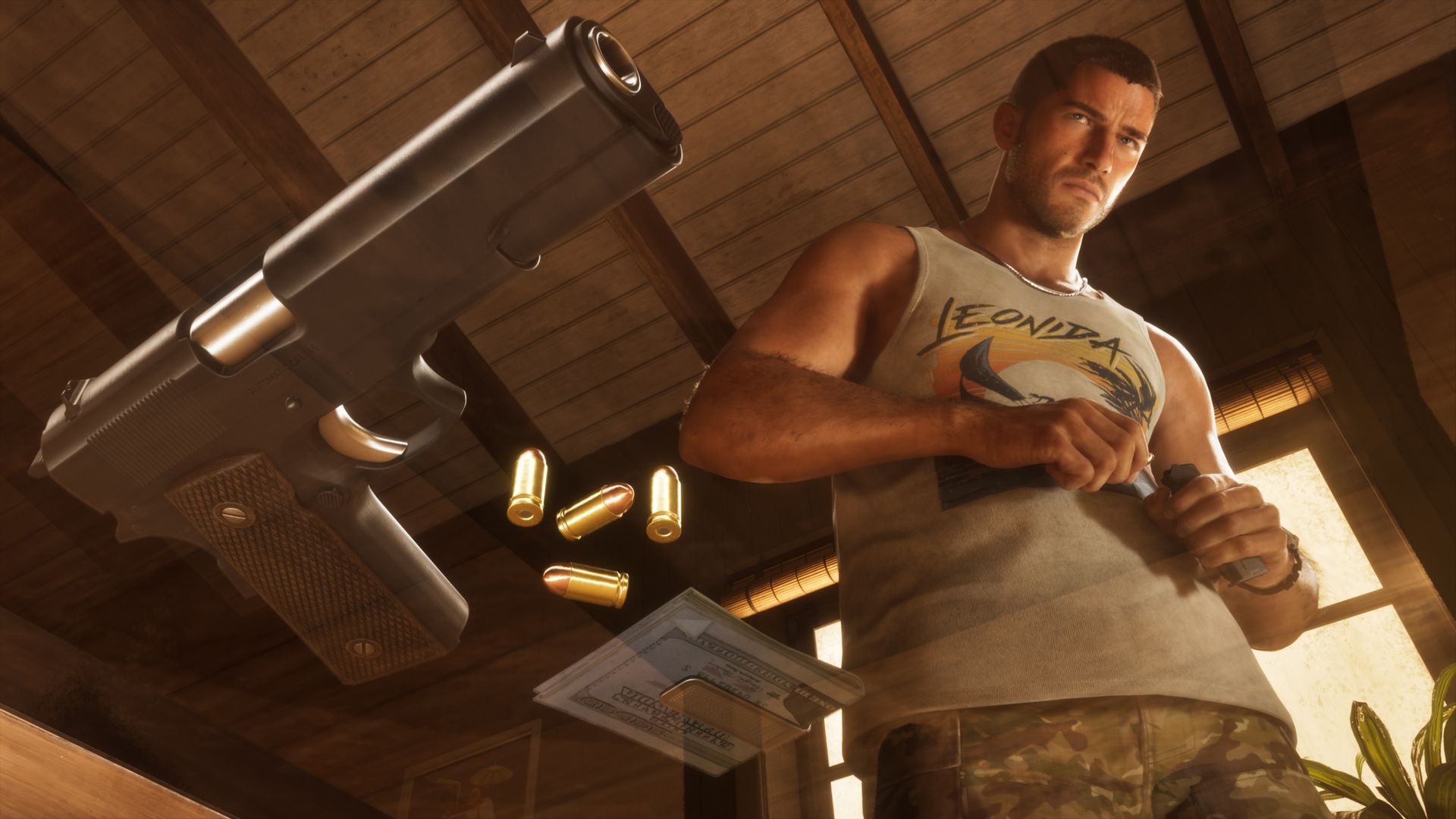
Take-Two Executive Caught Off Guard: The Investor Call That Exposed GTA 6 Development Friction
During a high-stakes investor earnings call in 2025, a Take-Two Interactive executive visibly bristled when a financial analyst pressed the company on repeated production delays surrounding Grand Theft Auto VI. The exchange, marked by terse responses and defensive language, offered a rare glimpse into the internal pressures surrounding Rockstar Games' most anticipated release in over a decade. While Rockstar and Take-Two have maintained strict public silence on development setbacks, this unguarded moment on Wall Street suggested deeper friction than either company had publicly acknowledged.
- Confirmed: GTA 6 is scheduled for release November 19, 2026 on PlayStation 5 and Xbox Series X|S
- Rumor / unconfirmed: Multiple alleged delays have circulated in gaming media, though Take-Two has not officially confirmed postponements beyond the November 2026 target
- Confirmed: Standard Edition costs $79.99; Ultimate Edition costs $99.99
- Key finding: Investor calls in 2025 revealed corporate tension over delivery timelines, hinting at internal development challenges
- Confirmed: Game features dual protagonists Jason Duval and Lucia Caminos set in the fictional state of Leonida (inspired by Florida)
The Earnings Call Tension: What Happened in 2025
On an investor earnings call in 2025, Take-Two's leadership faced direct questions about the timeline for GTA 6's delivery to market. An analyst, aware of industry rumors surrounding development friction and potential setbacks, asked pointed questions about how confident executives were in hitting the November 2026 window. The response, captured in call transcripts and later discussed across gaming forums and financial news outlets, lacked the usual corporate polish.
Rumor / unconfirmed: According to investor call summaries circulated in gaming media, an executive reportedly became "noticeably short" and "dismissive" when pressed on whether Rockstar had faced production delays, with one attendee noting the response felt "defensive rather than reassuring."
The tone mattered. In corporate finance, tone is substance. When executives dodge or deflect on specific timeline questions, analysts interpret that as a signal of internal uncertainty. One gaming finance specialist noted on social media that the executive's reluctance to provide detailed assurances was itself a form of admission—that something wasn't running as smoothly as quarterly earnings statements suggested.
Rockstar's Development History: Why Investors Are Nervous
Take-Two's skittishness around GTA 6's timeline isn't irrational. Rockstar Games has a well-documented history of ambitious timelines and complex production cycles. Red Dead Redemption 2, released in October 2018, faced years of rumors about internal crunch, reported staff dissatisfaction, and extended development schedules. The game eventually shipped to critical acclaim but left scars on the industry's perception of Rockstar's organizational practices.
GTA V itself, launched in September 2013, endured a five-year development cycle before release. The gap between GTA IV (2008) and GTA V (2013) set investor expectations for a roughly seven-to-nine-year development window for a new mainline entry. However, the interval from GTA V to the announced GTA VI November 2026 release date represents thirteen years—the longest wait in franchise history.
| Grand Theft Auto Title | Release Date | Development Window (prior title) | Platform(s) |
|---|---|---|---|
| GTA IV | September 2008 | ~5 years (GTA: Chinatown Wars, 2009 mobile) | PS3, Xbox 360, PC |
| GTA V | September 2013 | ~5 years (GTA IV, 2008) | PS3, Xbox 360, PC |
| GTA VI (announced) | November 19, 2026 | 13 years (GTA V, 2013 PS3/Xbox 360; 2014 PS4/Xbox One; 2015 PC) | PS5, Xbox Series X|S |
That extended timeline, combined with the scale Rockstar has demonstrated in recent projects, creates legitimate shareholder concern. A bigger world, more detailed character systems, the RAGE engine upgraded for current-generation hardware, and dual playable protagonists all expand complexity exponentially. And that's before factoring in the post-launch support model that GTA Online has pioneered—a living game that generates ongoing revenue.
Industry Signals: The Broader Context of Delay Rumors
The 2025 investor call defensiveness must be read against a wider pattern of industry reporting throughout 2024–2025. Several gaming outlets, citing sources familiar with Rockstar's production pipeline, suggested that development had encountered "significant challenges." These allegations were never officially confirmed by Rockstar or Take-Two but circulated persistently in forums, Discord communities, and gaming news sites.
Rumor / unconfirmed: According to leaks and insider reports in gaming media, Rockstar allegedly underwent internal restructuring of development teams around 2024–2025, with some sources claiming certain story missions were revised or extended mid-production.
Such rumors are normal in the final 18–24 months before a major AAA release. However, the sheer number of sources, the consistency of the narrative (production friction, internal debates over creative direction, timeline pressure), and the unusual corporate defensiveness on the investor call suggested something more than routine industry gossip.
A veteran game industry analyst noted on Twitter that "When a publisher's executive gets testy on a call about delivery timelines, rather than simply providing confidence and moving on, that's typically a yellow flag. It suggests either uncertainty or fatigue with the narrative—possibly both."
What the November 2026 Target Actually Means
Rockstar officially announced on November 19, 2024, that GTA VI would launch on November 19, 2026—exactly two years later, a notably specific and symbolic date selection. The precision of that announcement, combined with its public commitment to both the gaming community and shareholders, creates immense pressure internally.
Confirmed: GTA VI is scheduled for November 19, 2026 on PlayStation 5 and Xbox Series X|S only. No PC release date has been confirmed; no multiplayer launch date has been officially stated by Rockstar.
November 2026 gives Rockstar roughly 23 months of post-announcement development time. In the industry, that's a tight window for a game of this scale, especially one meant to define an entire console generation. By contrast, when GTA V was announced in November 2011, it launched in September 2013—a 22-month window, though development had been underway for years prior.
The question an investor naturally asks is: Can they make it? And more cynically: If they miss this date, what does that say about Rockstar's organizational capacity as its parent company ages?
The Dual Protagonist Factor: More Complexity Than Expected
Part of the rumored development friction stems from GTA VI's narrative ambition. For the first time in a mainline GTA game, Rockstar is making a female protagonist the co-lead alongside a male character. Confirmed: The two playable protagonists are Jason Duval and Lucia Caminos, with Lucia marking the first female lead character in the main numbered series.
Dual protagonists require separate dialogue trees, mission branches, character arcs, and cinematics. Red Dead Redemption 2 proved Rockstar could handle this complexity with Arthur Morgan's parallel storyline alongside John Marston's epilogue. But GTA VI's approach—two equal protagonists, potentially playable in the same missions—exponentially multiplies the assets needed, the story permutations, and the quality assurance burden.
Rumor / unconfirmed: According to leaked development notes circulated in 2024, some sources claimed Rockstar revised mission design to ensure both Jason and Lucia felt equally impactful, which allegedly delayed certain story sequences into late 2024 or early 2025.
If that's true, it explains why an executive might grow terse when asked about delays. You can't publicly say, "Yes, we rewrote 15 percent of our story missions"—because that signals internal doubt. So you deflect, you offer vague reassurance, and you hope investors trust the November 2026 commitment.
The Radio Station Challenge & Production Scope
Another often-underestimated aspect of GTA development is audio production. Confirmed: GTA VI will include radio stations, one of which is called V-Rock, carrying forward a tradition from GTA IV and GTA V. Building multiple radio stations means licensing hundreds of songs, recording original DJ dialogue, creating in-universe spots and advertisements, and ensuring all audio layers (dialogue, music, SFX, ambient) integrate seamlessly into a sprawling open world.
The scope of this alone—negotiating music rights, managing celebrity partnerships, recording custom voice work—can balloon schedules. If Rockstar's audio or music department encountered licensing delays or contractual disputes with artists, that's the kind of invisible production friction that doesn't make headlines but definitely appears in developer mood on investor calls.
What Happens if GTA VI Misses November 2026?
The financial stakes are staggering. GTA V generated over $6 billion in lifetime revenue, making it one of the highest-grossing entertainment products ever. Every month of delay costs Take-Two shareholders money—not just in opportunity cost but in renewed investor scrutiny, possible guidance misses, and competitive pressure from other major releases.
If GTA VI slipped to Q1 2027 or beyond, Take-Two would face a significant stock price hit, analyst downgrades, and intensified pressure on CEO leadership. That's why executives on investor calls are visibly anxious when asked about delays: they understand the financial weight of the November 2026 promise.
Rumor / unconfirmed: Financial analysts and gaming industry observers noted that the defensive tone on the 2025 earnings call was unusual enough to spark speculation that Rockstar might be bracing investors for a possible delay announcement, though no such announcement materialized as of late 2025.
The irony is that defending the timeline too aggressively can also backfire. If executives over-promise and then delay, the credibility damage is severe. A slight deflection—acknowledging "challenges" while reaffirming the target—is often the safest corporate posture. But investors read that silence as a warning sign.
Leonida's Scope: Setting as a Development Bottleneck
Confirmed: GTA VI is set in Leonida, a fictional state inspired by Florida, with Vice City as the primary urban setting. The game will feature both urban and rural environments, likely including swamps, beaches, suburbs, and industrial zones—the full ecological and geographical diversity of the greater Miami-Dade region.
That geographical variety multiplies the art department's workload. Texturing a sprawling open world isn't just painting pixels; it's creating thousands of unique assets, environmental details, weather systems, dynamic lighting, and NPCs that populate diverse zones. A swamp environment has entirely different vegetation, creatures, building styles, and ambient audio than a beachfront zone.
If Rockstar's environment artists or technical team encountered issues scaling this diversity across the map—performance bottlenecks, LOD (level-of-detail) optimization problems, or narrative integration challenges—that's the kind of mid-cycle problem that pushes timelines and elevates stress in the C-suite.
The RAGE Engine Upgrade Factor
Confirmed: GTA VI runs on the RAGE engine, the same proprietary technology that powers GTA V and Red Dead Redemption 2. However, upgrading RAGE for current-generation hardware, supporting new features, and maintaining performance across different hardware specs (PlayStation 5 vs. Xbox Series X|S) is non-trivial.
Engine optimization, especially for an open-world game of GTA's scale, is an iterative process. Late-stage bugs, physics glitches, or performance issues discovered during QA can cascade and require substantial rework. If Rockstar's technical team discovered, for instance, that Leonida's density or NPC simulation was causing frame rate dips in certain zones, they'd need to implement fixes—work that extends timelines and stresses already-taxed development teams.
The Human Cost & Crunch Culture Question
Beyond corporate finance, there's the human element. Rockstar's development practices, especially during the Red Dead Redemption 2 crunch, faced significant criticism from labor advocates and gaming journalists. Reports of 100-hour work weeks, mandatory overtime, and staff burnout sparked industry-wide conversation about sustainable game development.
If Take-Two or Rockstar leadership faces pressure to deliver GTA VI on November 2026 and suspects internal timelines are slipping, the default corporate response is often to accelerate crunch—demand longer hours, tighter deadlines, and weekend work. That's demoralizing and ultimately counterproductive, but it's a reflexive corporate instinct.
The defensive tone on the investor call might reflect not just financial nervousness but also internal team stress. An executive aware of high employee burnout might be terse because they're absorbing criticism of management decisions and labor practices.
What Investors Actually Care About: Post-Launch Revenue
It's important to note that shareholder concern isn't purely about launch date—it's about launch quality and post-launch monetization. If GTA VI launches on time but buggy, requiring day-one patches and player goodwill recovery, that damages the launch window's revenue potential and creates negative publicity that spreads to mainstream media.
Conversely, if GTA VI launches rock-solid and Rockstar's GTA Online implementation for Leonida is polished and engaging, players will spend money on battle passes, cosmetics, and property content for years. That ongoing revenue stream is where shareholders see generational wealth creation.
So an executive's defensiveness on the earnings call might reflect anxiety about both delivery and quality—the company wants to promise both a firm November 2026 date and a flawless launch, but internally they're managing risk on both fronts.
Looking Ahead: What November 19, 2026 Likely Means for Rockstar
Assuming GTA VI launches as scheduled on November 19, 2026, the immediate aftermath will be intense. Day-one server stress, patch deployment, player feedback absorption, and GTA Online stability dominate Rockstar's focus. The months following will determine whether the November window was a success—measured in player retention, revenue velocity, and critical reception.
For context, GTA V's first month of sales exceeded $1 billion in revenue. If GTA VI approaches or exceeds that figure, the November 2026 target will have been worth the internal stress, the investor call defensiveness, and whatever production friction occurred behind closed doors.
Confirmed: GTA VI Standard Edition costs $79.99; Ultimate Edition (featuring additional in-game content and currency) costs $99.99. These are the only officially confirmed pricing tiers as of early 2025.
The Bigger Picture: Is Rockstar Under Pressure Because of Industry Trends?
A final context: GTA VI's development extends across a period when the entire AAA industry faced upheaval. Delayed major releases from studios like Cyberpunk 2077 (December 2020, after delays), Starfield (September 2023, pushed from 2022), and Final Fantasy XVI (June 2023, delayed) normalized longer development cycles and transparent delay announcements. However, Take-Two and Rockstar have chosen relative opacity—a single announcement, minimal updates, and corporate discretion.
That strategy works if timelines hold. If they slip, the discretion becomes suspicious, and investor confidence erodes. The 2025 earnings call defensiveness reflected that high-wire tension: Rockstar and Take-Two have publicly committed to November 2026, industry observers are skeptical based on scope and complexity, and every earnings call becomes a test of confidence.
Sources & Official
- Take-Two Interactive official investor relations website and earnings call transcripts (investor.take2games.com)
- Rockstar Games official Newswire (rockstargames.com/newswire)
- Grand Theft Auto VI official announcement (November 19, 2024)
- GTA VI first official trailer (December 4, 2023)
- GTA VI second official trailer (late 2024 / early 2025)
- Industry gaming news outlets (IGN, GameSpot, Kotaku) covering earnings calls and development reports
FAQ
Has Rockstar or Take-Two officially confirmed any delays to GTA 6?
No. As of early 2025, Rockstar and Take-Two have not officially announced any postponement. The November 19, 2026 release date on PS5 and Xbox Series X|S remains the confirmed target. Rumors and speculation about development setbacks have circulated in gaming media and investor communities, but these are unconfirmed. Corporate defensiveness on investor calls suggests internal awareness of risk, but that is distinct from an official delay announcement.
Why did a Take-Two executive seem defensive on the 2025 earnings call?
When investors asked about production delays and timeline confidence, the executive's response was reportedly terse and deflecting rather than reassuring. In corporate finance culture, this tone signals either internal uncertainty or fatigue with questions about the topic. Given the scale of GTA VI, the 13-year gap since GTA V, and industry-wide reports of development complexity, defensiveness is arguably rational—acknowledging "challenges" while reaffirming the target is the safest posture, but investors often interpret that defensive tone as a yellow flag.
What makes GTA 6 development more complex than previous titles?
Confirmed factors include: dual playable protagonists (Jason Duval and Lucia Caminos) requiring separate dialogue and mission branches; a sprawling open-world state (Leonida) with diverse environments (urban, suburban, rural, swamp, beach); upgraded RAGE engine optimization for PS5 and Xbox Series X|S hardware; extensive radio station and music licensing; and higher-resolution assets and simulation systems expected for current-generation standards. Each of these multiplies production burden and timeline risk.
Is GTA 6 still launching November 19, 2026?
Confirmed: The official release date is November 19, 2026 for PlayStation 5 and Xbox Series X|S. No official delay has been announced. However, investor call defensiveness and persistent industry rumors suggest internal timeline pressure. Until Rockstar or Take-Two issues an official statement, the November target remains the confirmed plan, though some analysts and observers view it as at-risk based on scope and recent AAA release delays across the industry.