The Legacy of Vice City: More Than a Video Game, a Cultural Icon
November 2002. Rockstar Games released a PlayStation 2 game that would redefine the interactive entertainment industry. Vice City wasn't called "GTA III Part 2" or "the Miami spin-off"—it was a graphic, narrative, and musical celebration of an entire era. Twenty-three years later, that legacy still burns in the hands of millions of players, and it burns even brighter now that GTA 6 brings the series back to Leonida—the fictional state inspired by Florida that welcomes Vice City's return.
Vice City never left our minds. It settled there, comfortably, like an album you loop endlessly. And that's exactly what we're going to explore: not empty retro nostalgia, but an understanding of why this game marked generations, and how GTA 6 reignites that flame in 2026.
2002: When Vice City Freed the Open World
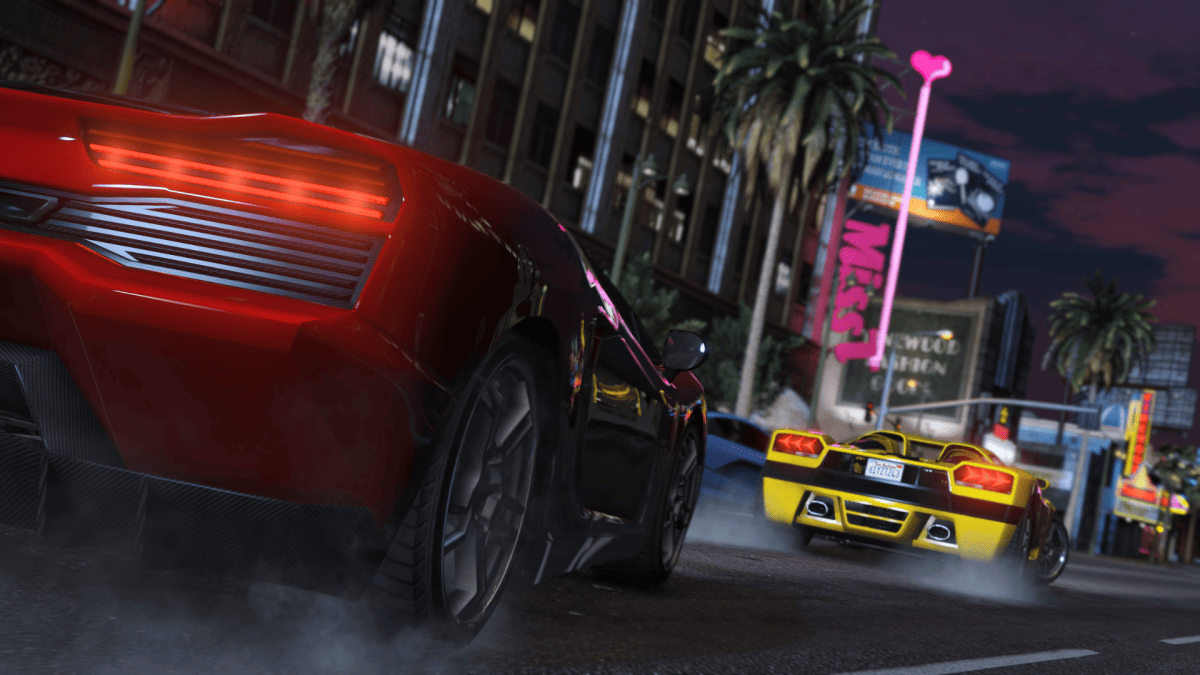
Before Vice City, open-world gaming existed, but it wasn't alive. Then Rockstar did something radical: it took Miami—its neon colors, its disco and synthpop music, its candy-pink skyscrapers, its golden beaches, its climate of perpetual corruption—and made it the game's main character.
The numbers speak for themselves. Vice City sold over 5 million copies in its first two years. Not because it was a default blockbuster, but because every moment of the game screamed identity, an authentic vision. The radio playing Michael Jackson's "Billie Jean" alongside a fierce firefight. The orange and blue storefronts. Street conversations captured with disarming naturalness.
What Vice City understood before almost all its contemporaries was that an open world is never truly "open"—it's rather an extremely carefully staged production where every detail whispers a story. Rockstar's developers treated the city like a character with its own psychology, not like a soulless box of pixels.
The Aesthetic DNA: Neon, Synthwave, and Vice City's Golden Age
Let's talk aesthetics, because that's where Vice City really crushed the competition.
The 1980s never left Vice City. They stayed there, frozen in amber, as if the city had decided that decade was the only one worth living through. The colors—hot pink, electric blue, burnt orange—didn't happen by accident: they told the story of an era obsessed with excess, easy money, and synthetic beauty.
- Neon architecture: every establishment, every casino, every nightclub breathed that 80s aesthetic. The typefaces were pixelated but ultra-recognizable.
- The soundtrack: with over 100 songs spread across multiple themed radio stations—Emotion 98.3, V-Rock, Flash FM—Vice City offered a musical experience unmatched in gaming. Each radio station told a slice of 80s/90s culture.
- Characters and fashion: the protagonists, NPCs, passersby wore clothes that screamed "1986." No bland "timeless style"—pure flashiness.
This visual and sonic coherence created something transcendent: a world that felt real because it was obsessed with a single idea—capturing the energy of an era. And what Rockstar is preparing with GTA 6 in Leonida promises an evolution of this formula, with modern graphics but the same synthwave soul that made Vice City great.
The Characters That Carved Vice City Into Our Hearts
An empty open world stripped of good characters is just hollow tourism. Vice City refused that mediocrity.
Tommy Vercetti, the protagonist, was a perfectly calibrated anti-hero. Not a charitable superhero, but a criminal with his own codes, ambitions, and wounds. His voice—that of Ray Liotta, a living legend of Hollywood—gave the character a gravity that few video games had achieved at that time.
But beyond Tommy, it was the ecosystem of supporting characters that made Vice City shine:
- Sonny Forelli: your Mob boss, using you while pretending to protect you—a classic organized crime trope delivered with style.
- Ricardo Diaz: the local cocaine baron, embodying the Latin American trafficker cliché, but with palpable dramatic tension.
- Lance Vance: the false friend who becomes an enemy—a narrative archetype that Rockstar executed with visceral mastery.
- Malibu Club, Pole Position Club: the locations themselves become characters, emotional refuges where the narrative accelerates.
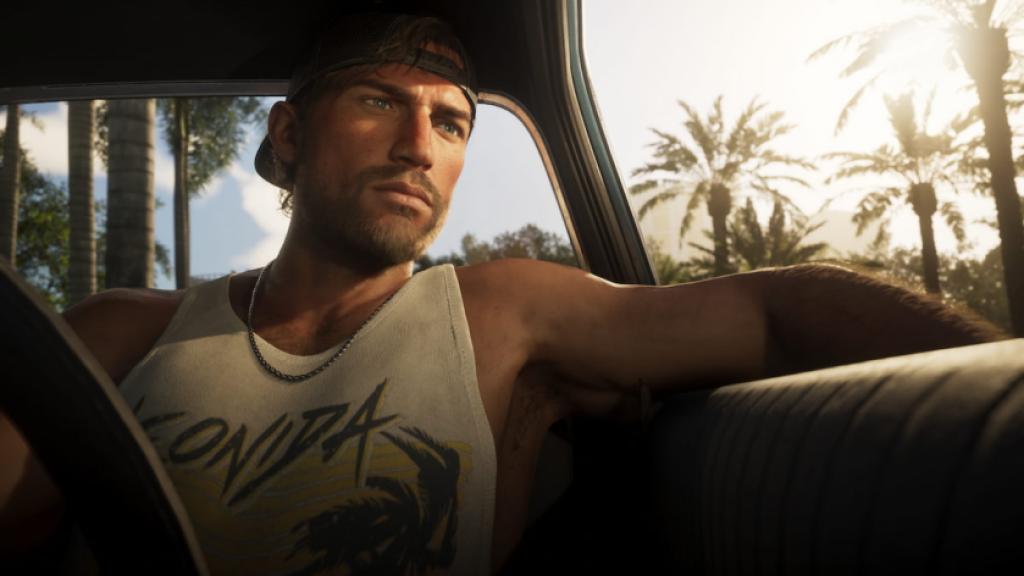
Every mission wasn't just "do this, collect that." It was a conversation with the psychology of Vice City itself. And that's what GTA 6 promises to revive with its two confirmed protagonists, Jason Duval and Lucia Caminos—a duo dynamic that Vice City instilled but the 2026 reboot promises to explore fully.
Why Vice City Nostalgia Remains So Intense in 2024-2026
Nostalgia isn't just cheap retro sentimentality. It's a visceral connection to a moment when you felt alive.
Vice City represented, for millions of players in 2002-2004, the first true digital freedom. Not just the right to drive around—it was far more. It was the freedom to build an identity inside a universe that respected your vision of chaos. You weren't a spectator; you were an architect of destruction.
That sensation was diluted with the sequels. GTA IV brought gothic urban gravity. GTA V brought the urban multiverse of Los Santos—vast, but less aesthetically coherent. GTA Online transformed the game into a perpetual service, sometimes losing that narrative delicacy.
Vice City remained an island of thematic perfection. Every pixel, every synth note, every line of dialogue served a singular vision. And that singularity can't be reproduced—it can only be revisited with reverence.
The Lasting Impact: Vice City Changed Post-2002 Hollywood Action Cinema
Almost no one says it like this, but Vice City influenced post-2002 Hollywood cinema. Why? Because it proved that 1980s-styled storytelling could captivate massively, even (or especially) when it was violent, immoral, completely devoid of morality.
The action films of the 2010s-2020s—Drive (2011), Neon Demon (2016), All the Money in the World (2017), similar works—all tasted the Vice City formula: synthwave aesthetics + violent crime + complex characters + flawless soundtrack.
Vice City didn't create this style, but it popularized and codified it for millions of players who would never have read a noir novel or watched a 70s exploitation film. Video games democratized an entire aesthetic movement.
Vice City's Return in 2026: How GTA 6 Reignites That Magic
And now, we stand on the brink of a resurrection.
GTA 6 returns to Leonida—the fictional Florida state—in November 2026, with a confirmed release on PS5 and Xbox Series X|S. The trailers (first in December 2023, second in 2025) have already established that Rockstar isn't just making a geographic return: it's a pilgrimage of aesthetics.
What we've seen so far:
- Vice City rediscovered: the city of Leonida shines with vaster proportions, neon colors refined by two decades of graphical evolution, but the synthwave soul intact.
- Lucia Caminos: the first female protagonist of the main GTA series. Her arrival isn't a marketing gimmick—it represents a major narrative evolution.
- Reinvented RAGE engine: graphics promise visual density never before seen, a living city to a new degree.
- Multiple editions: Standard at $79.99 and Ultimate at $99.99 with bonus Vintage Vice City Pack (not yet officially detailed, but rumors of early access and cosmetic content).
This isn't just a return—it's an apotheosis. Rockstar brings Vice City back not as kitschy nostalgia, but as a statement: this universe, this aesthetic, this urban psychology, they never stopped being relevant.
FAQ: Vice City, GTA 6, and the Nostalgia We Can't Ignore
Why is Vice City considered the franchise's best game?
Vice City isn't technically the best by modern standards—GTA V is vaster, GTA IV more narratively dense. But Vice City achieved something rare: perfect harmony between aesthetic vision, game mechanics, and storytelling. Every element reinforced the others. For players who discovered it in 2002-2004, that coherence remains unmatched. It's like asking if "Thriller" is Michael Jackson's best album technically—the answer isn't in the specs, it's in the cultural impact.
Can GTA 6 really recapture the magic of the original Vice City?
Impossible to recapture exactly—you can't relive 2002. But Rockstar can create something new that respects and celebrates that legacy. The trailer hints suggest that's exactly what they're attempting: the same synthwave aesthetic, refined by two decades of graphical power, dynamic characters including the first main female protagonist, and the massive narrative ambition that has always characterized Rockstar's major launches. The November 2026 release should clarify how far they're going.
Does Lucia Caminos change the essence of what Vice City represents?
Absolutely. And it's an improvement. Vice City 2002 was captivating, but deeply limited by its context: a female protagonist didn't exist in the main series. GTA 6 with Jason Duval and Lucia Caminos opens narratives impossible before. A female criminal in Vice City / Leonida, with her own contradictions, her own traumas, her own arc—that's never been explored at AAA level before. It's a respectful evolution of the legacy, not a replacement.
How can GTA 6's soundtrack honor Vice City's?
Vice City had an unmatched music catalog: over 100 tracks, each chosen to reinforce the city's aesthetic identity. GTA 6 has confirmed the return of V-Rock radio (among other stations), suggesting that 80s synthwave and rock will remain central. But with modern technical capability, Rockstar can deliver denser, more nuanced musical coverage while maintaining that obsession with a historic era. The real question isn't whether it'll be good—it's whether it'll be radical enough to justify the 15-year wait since GTA V.