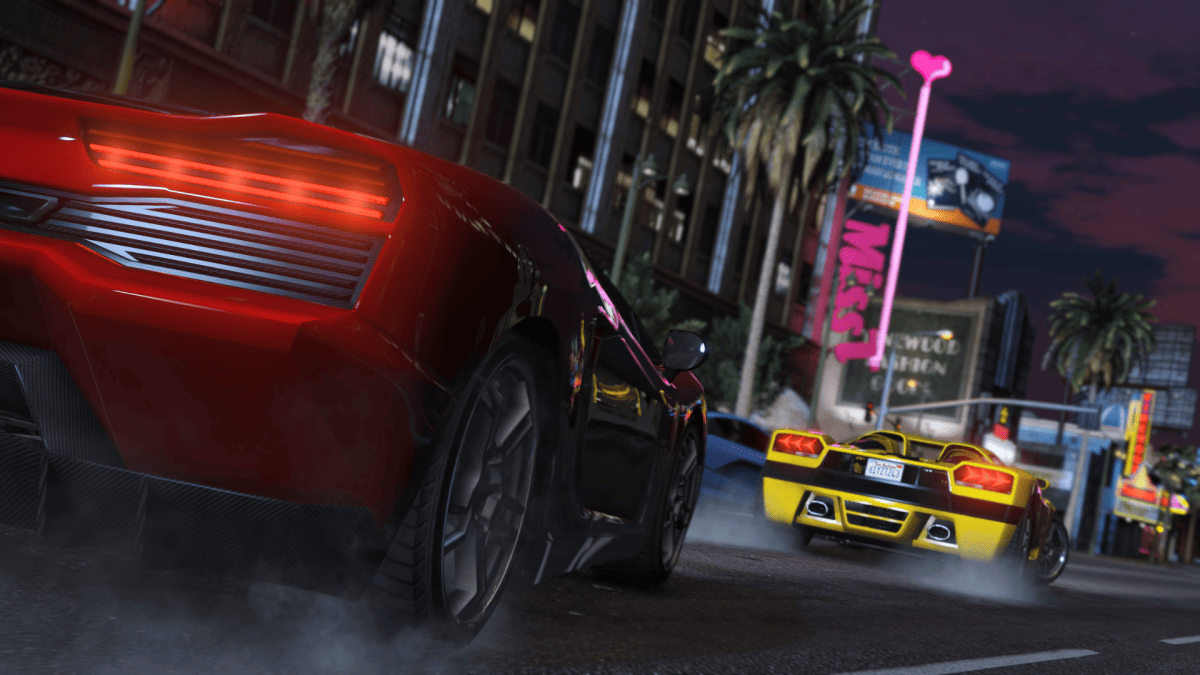
Vice City isn't just a video game. It's a frozen era, an atmosphere, a state of mind that no franchise has replicated in two decades. Since its 2002 release, this blurred synthwave universe of pink buildings, pastel crimes, and V-Rock radio has obsessed players worldwide. And when Rockstar announced Vice City's return in GTA 6 through the fictional state of Leonida — launching November 19, 2026 on PS5 and Xbox Series X|S — that primal nostalgia exploded anew. Why does a game map from 24 years ago continue to haunt us? What does Vice City represent psychologically, culturally, and narratively? And how is Rockstar weaponizing this obsession to build GTA 6?
- Vice City (2002) defined the urban map archetype for gaming: synthwave, 1980s aesthetics, organized crime, and total audio immersion via V-Rock
- Vice City nostalgia operates on three levels: personal (player memories), cultural (1980s fascination), and mechanical (unmatched urban level design quality)
- GTA 6 Leonida (2026) doesn't replicate Vice City—it reinterprets it as modern Florida, featuring the updated RAGE engine and confirmed geography including Port Gellhorn and Mount Kalaga
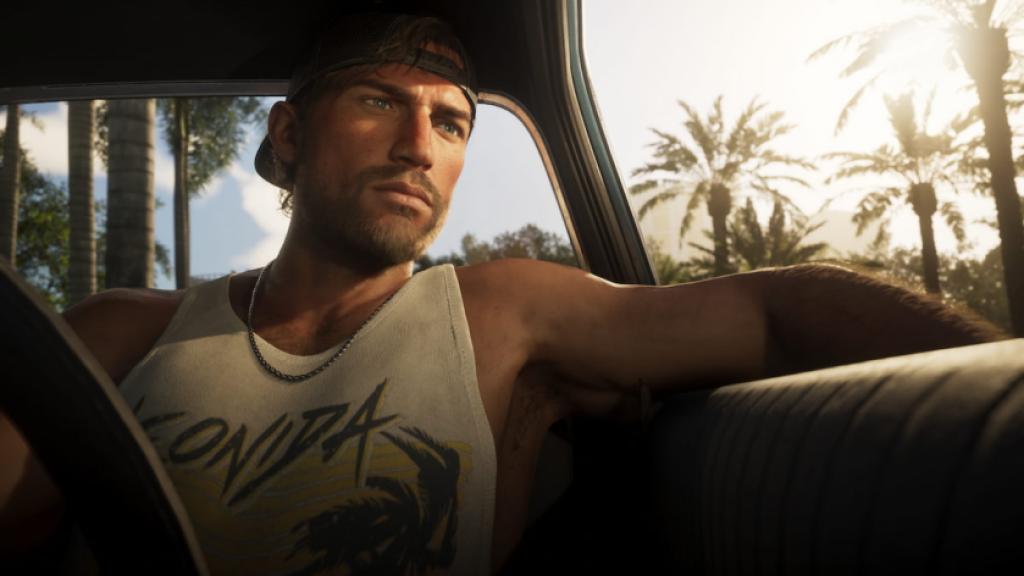
- Two confirmed protagonists, Jason Duval and Lucia Caminos (GTA's first female lead), anchor a new generation to this nostalgic world
- Rockstar has strategically exploited this obsession since December 2023 (first trailer) and 2025 (second trailer) to build record-breaking GTA 6 anticipation
Vice City 2002: How an Urban Map Became a Gaming Religion
Before Vice City, video game cities were linear labyrinths or graphically barren sketches. Vice City (2002) on PS2 changed everything. For the first time, a city felt alive, breathed, possessed a sonic soul. V-Rock, the classic rock station in-game, broadcast genuine 1970s-80s hits (Blondie, Nitzer Ebb, Toto, OneRepublic, and major licensed tracks). Driving through Vice City wasn't mere travel; it was listening to contextualized radio, a synesthetic experience unique for its time.
The map itself covered roughly 14 square kilometers—massive for 2002, when most games offered open worlds half that size. But size wasn't the real achievement: it was narrative density. Each district had identity. You'd transition from Ocean Beach's decrepit port to South Pointe's luxurious strips, then to Little Haiti's Latino neighborhoods, then Vice Point's criminal zones. Tommy Vercetti, the protagonist fresh from prison seeking revenge, embodied the perfect anti-hero: not yet Trevor's schizophrenic sociopath (GTA 5), but a criminal with clearly capitalist motivations.
Crime in Vice City had logic: you conquered territories, purchased properties, built real estate empires. Missions climbed criminal hierarchies. Meanwhile, the synthwave aesthetic transformed mundane tasks (stealing a car, evading police) into retro-futuristic heist film scenes. Rockstar achieved the alchemy: fusing addictive gameplay, punchy storytelling, and a memorable visual-sonic atmosphere.
Vice City Nostalgia: Three Psychological Layers That Consume Us
1. Personal Nostalgia: Gaming's Golden Age of Solitude
For millions of players, Vice City marked a specific life moment. PS2s connected to bedroom TVs between 2002-2005, without streaming, without mandatory online, without smartphones. Vice City was a solitary window into a criminal world to explore alone, at your own pace, without multiplayer pressure. This solitude, this contemplative calm mixed with urban chaos, creates powerfully affective memory.
Replaying Vice City today isn't just confronting old mechanics: it's traveling your own timeline. You see the person you were at 12, 15, 18. Vice City becomes an emotional palimpsest. When Rockstar announces that Leonida, GTA 6's fictional state, is modernized Vice City, this message hits directly: "You can return to where you were 15, but as an adult, with 24 years of medium maturity."
2. Cultural Nostalgia: Eternal Fascination with the 1980s
Beyond gaming, Vice City exploits broader cultural obsession: the 1980s. Not the era itself (now retroactively nostalgic), but the idea of the '80s. This decade represents unbridled capitalism's apex, neon pop aesthetics, "cool" organized crime, aggressively-lined cars, omnipresent synthesizers. Miami, where Vice City sits, pulsed as this 1980s dream's beating heart: drug crime, casinos, mafias, ostentatious luxury, beaches.
Cyberpunk, vaporwave, synthwave: today's artistic currents (2020s) obsessively fixate on '80s retro-futurism. Vice City was 20 years ahead of this cultural wave. It didn't attempt to copy the '80s; it absorbed them as existential texture. When GTA 6 returns Vice City as Leonida, it reignites this cross-decade fascination.
3. Mechanical Nostalgia: Urban Level Design Never Equaled
Technically, Vice City delivered near-perfect urban level design coherence. Streets intersected logically. Shortcuts were discoverable. Each zone served gameplay function (missions, shops, safehouses). Commercial interiors—bars, nightclubs, clothing stores—were accessible and served as narrative hubs.
Compare Vice City to Los Santos (GTA 5, 2013): Los Santos is larger (127 square kilometers), visually superior, but more fragmented. Vice City's interaction density remains unmatched. Vice Point buildings call to you. The port intrigues you. Ocean Beach's small alleys invite exploration. With GTA 6, Rockstar returns to this density-over-raw-size philosophy. Confirmed: Leonida includes Port Gellhorn (port hub), Mount Kalaga (mountainous interior), and the Keys (coastal archipelago)—zones confirmed in trailers. Unconfirmed: overall map size remains undisclosed, but architecture suggests greater density than GTA 5.
Vice City 2002 vs. Leonida 2026: Nostalgia's Evolution
Element Vice City (2002) Leonida / GTA 6 (2026) Evolution Graphics PS2, 512x512px textures, pre-calculated lighting RAGE engine, real-time ray-tracing, native 4K detail Complete photorealism vs. pixelated aesthetics Protagonists Tommy Vercetti (solo, male) Jason Duval & Lucia Caminos (duo, first confirmed female lead) Dual-perspective narrative, gender equality Aesthetic 1980s (explicit '80s synthwave) 1980s/2020s hybrid (confirmed: Leonida recontextualizes modern Miami with synthwave DNA) Nostalgia amplified by modernity Radio V-Rock (classic 1970s-80s rock) V-Rock confirmed in trailers (identified music: Toto, Nitzer Ebb, others), plus new stations Generational continuity with expansion Urban Mechanics 14 square km dense, accessible interiors, no major vertical scale Rumored: map size comparable to GTA 5, but reinforced vertical design (Mount Kalaga and Leonida towers) Density plus scale, enriched 3D exploration Content ~12-15 hour campaign, arena, limited multiplayer Confirmed: two editions (Standard $79.99 + Ultimate $99.99), online content unconfirmed but expected Massive depth, multi-year post-launch contentRockstar's Emotional Strategy: Weaponizing Nostalgia for GTA 6
Since December 2023's announcement, Rockstar deploys subtle yet devastating marketing mechanics. It doesn't shout "Vice City is back!" It whispers Leonida. It shows palm trees, neon, atmosphere. It forces players to recognize Vice City, activating nostalgia involuntarily. This strategic silence—no trailers explicitly stating "This is Vice City"—transforms nostalgia into personal investigation.
The first trailer (December 2023) generated 92 million views in 24 hours, a gaming record. The second trailer (2025) continued this momentum. Neither displays "Vice City." Yet every frame screams: 1980s, crime, Miami, neon. Players recognize themselves. This active involvement creates personal appropriation of nostalgia, far more powerful than if Rockstar served it directly.
The two confirmed protagonists—Jason Duval (pragmatic criminal) and Lucia Caminos (GTA franchise's first female lead)—also embody nostalgic evolution. You're not replaying Tommy Vercetti (that was 2002, you were 15). You're playing the next generation in the same world. This is a narrative torch-passing that validates nostalgia without copying it.
Why Vice City Endures: Timeless Elements Analysis
Sonic Immersion as Identity
Vice City doesn't just feature a great soundtrack. It features sonic architecture. Each zone carries distinct soundscapes: wave noise at Ocean Beach, nightclub techno pulsing, Vice Point traffic. V-Rock especially provided esthetic cohesion absent elsewhere. Hearing Blondie while driving a pink Infernus, pursued by police in 2002, was an event.
Confirmed: V-Rock returns in GTA 6 Leonida. Unconfirmed: exact radio station composition remains undisclosed, though trailers feature identified music (Toto's "Hold the Line" audible in the second trailer).
Synthwave Aesthetic as Narrative Pillar
Synthwave isn't cosmetic Vice City detail; it's the foundational tone. Every pink building, every neon wave, every mission title ("Robbery") saturates with this aesthetic. This transforms ordinary criminal acts into artistic performances. Bank robbery becomes pop-art heist.
GTA 6 maintains this visual signature (confirmed) while hybridizing with 2020s modernity. Trailers show neon Leonida, but with cell phones, drones, contemporary infrastructure. It's Vice City reanimated by 24 years of technology.
Narrative Density Over Raw Scale
Vice City understood that less can be more. 14 densely-packed square kilometers beat 200 sparse ones. Every corner had purpose. No wasted space. This philosophy vanished after GTA 5 (too large, content too spread). Rockstar appears to have reintegrated it into GTA 6: confirmed reinforced vertical architecture (Mount Kalaga) and specialized zones (Port Gellhorn) suggest return to quality over quantity.
Vice City Nostalgia in 2026 Pop Culture
Vice City no longer lives solely in GTA 6. It has saturated 24 years of pop culture. Synthwave films, television (Stranger Things, Miami Vice reboots), synthesizer albums, realistic city simulation mods—all owe something to Vice City. Returning to Vice City via Leonida, GTA 6 doesn't revive isolated nostalgia; it synthesizes generational obsession.
Players who experienced Vice City in 2002 at age 15 now number 37 years old. They have income, responsibilities, critical perspective. GTA 6 invites them to revisit Vice City as adults, within an adultified gaming context. This is narrative therapy: closing a temporal loop through interactive medium.
New players will discover Leonida without this nostalgia. For them, it's simply a beautifully-designed city. Yet Vice City's underlying infrastructure—this inherent urban quality—should hook them fast. Nostalgia transmits generationally.
Timeline: Vice City and Its Renaissance Through GTA 6
- October 2001 — GTA III announced; Vice City programmed as direct sequel
- October 29, 2002 — Vice City launches on PS2; massive adoption (16 million lifetime sales)
- 2003-2006 — Vice City's golden age; mobile ports, expansions (VCS), community modding
- 2008 — GTA IV, with Los Santos shifted toward generic North American style; Vice City cultural presence diminishes
- 2013 — GTA V relaunches Los Santos; Miami overshadowed by generic California (2x larger); Vice City fan nostalgia intensifies
- December 2023 — GTA 6 announced via trailer; Leonida (Floridian fictional state) revealed; community confirms: Vice City is reborn
- 2024-2025 — GTA 6 trailers confirm Port Gellhorn, Mount Kalaga, the Keys; press decodes returning Vice City
- November 19, 2026 — GTA 6 launches PS5/Xbox Series X|S; Vice City Leonida becomes present reality
Sources & Official Verification
- Rockstar Newswire — All official confirmations: December 2023 announcement, trailers, dates, editions, pricing ($79.99 Standard / $99.99 Ultimate), confirmed protagonists (Jason Duval, Lucia Caminos), Leonida state, zones (Port Gellhorn, Mount Kalaga, Keys), RAGE engine, November 19, 2026 release date
- Official Rockstar Games & Take-Two Twitter/X Accounts — Trailers, marketing updates, platform confirmations (PS5, Xbox Series X|S)
- Rockstar Developer Interviews — Rare contextual confirmations regarding Leonida urban design and philosophy
- ESRB / PEGI Database — M (Mature 17+) rating, confirming Grand Theft Auto violence/crime content
- Video Game Archaeology (Vice City 2002) — Metacritic sales data, historical reviews, fan databases (GTA Wiki)
FAQ
Is Vice City's Map Exactly the Same in GTA 6 Leonida?
No. Leonida is Vice City-inspired but represents a 2026 interpretation. Confirmed: it includes Port Gellhorn, Mount Kalaga, and the Keys (coastal archipelago). Unconfirmed: exact structure, comparative size, and new neighborhoods remain unrevealed. Rockstar signaled reinforced vertical architecture (Mount Kalaga), suggesting different density than 2002.
Can I Replay Original Vice City on PS5 / Modern Systems?
Vice City (2002) lacks official next-gen ports. PlayStation/Xbox backward compatibility doesn't include Vice City. However, community emulators with high-resolution mods exist for PC. Rockstar doesn't legally tolerate them, though doesn't actively pursue. GTA 6 Leonida (November 19, 2026) is the official method to revisit Vice City in high quality on modern consoles.
Will V-Rock Feature the Same Songs as 2002?
Confirmed: V-Rock returns in GTA 6 Leonida. Unconfirmed: exact tracklist. Trailers mention Toto and other rock classics; other stations mentioned but undetailed. Music licensing limits exact replication, yet Rockstar likely targets tonal continuity.
Do Jason Duval and Lucia Caminos Connect to Tommy Vercetti?
Unconfirmed. Jason and Lucia are GTA 6 Leonida's new protagonists (next generation after Tommy Vercetti, 2002). Rockstar hasn't confirmed direct narrative connection. Rumor: some fans speculate inter-generational easter eggs, but no official evidence exists.