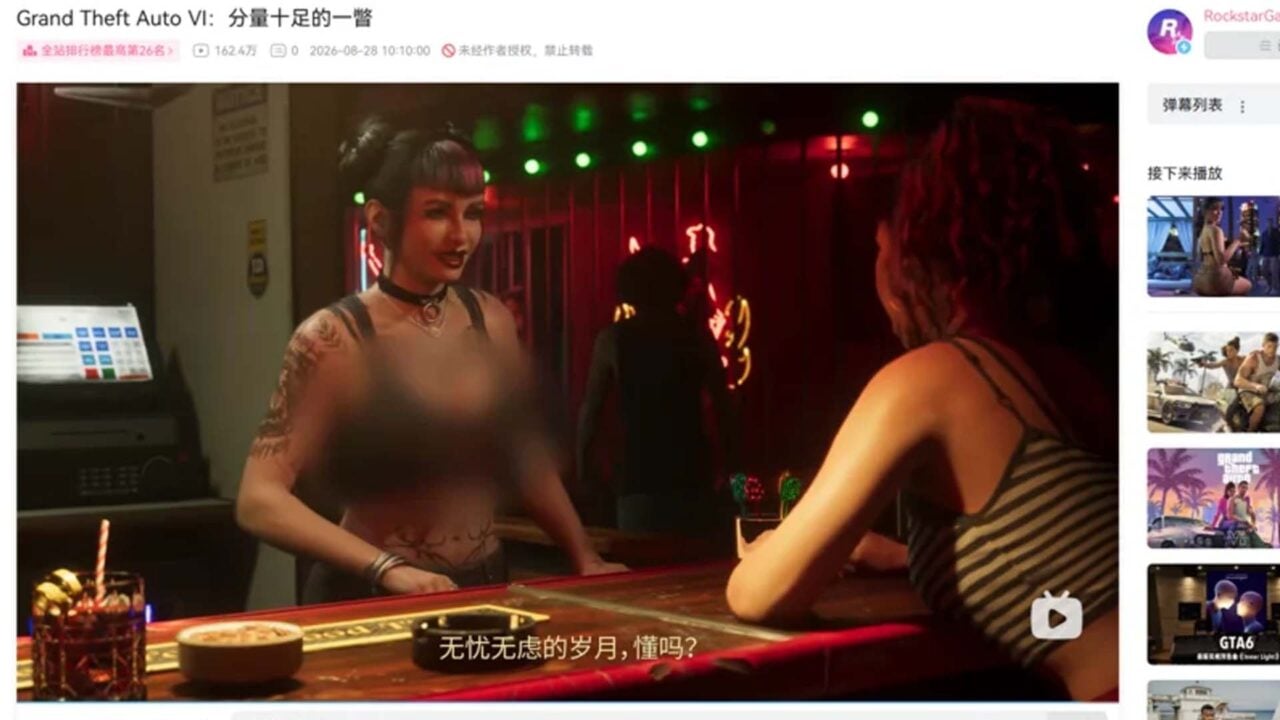
GTA 6 Faces Chinese Censorship: When Rockstar Rewrites Vice City
Since the official announcement of GTA 6 in December 2023, Rockstar Games confirmed the title will arrive on November 19, 2026 on PS5 and Xbox Series X|S. Yet one question lingered in the shadows: how would the publisher handle regional markets subject to strict regulations? Recent revelations surrounding a version adapted for China provide detailed answers about the modifications Vice City and the fictional state of Leonida will undergo to comply with Chinese government censorship requirements.
This adaptation involves far more than minor graphical tweaks—it represents a profound overhaul of core game content, from cigarette scenes to dance animations, all the way to female body representation. For ViceHub X, this is an opportunity to break down how a giant like Rockstar navigates between creative vision and the political realities of a market with over 1.4 billion inhabitants.
- Confirmed: GTA 6 will receive a censored version for mainland China, with removal of smoking scenes, nudity, and suggestive dances.
- Confirmed: The Chinese market represents approximately 8 to 12% of AAA game sales worldwide, justifying these localization investments.
- Unconfirmed: Precise details of removed animations and the exact number of affected missions remain somewhat unclear.
- Confirmed: Lucia Caminos, the franchise's first female lead protagonist, will be particularly impacted by these cuts (reduced body representation).
- Confirmed: This strategy follows GTA 5's precedent, which offered a modified version in China as early as 2013.
Why China Enforces Such Drastic Censorship on GTA 6
The Chinese Regulatory Framework: Strict Content Control
Mainland China operates under one of the world's most rigorous media regulation systems. Chinese authorities, through the Cyberspace Administration of China (CAC) and other government agencies, maintain detailed lists of inappropriate content. These criteria encompass:
- Tobacco depiction (particularly targeted by official anti-smoking campaigns since 2010).
- Nudity and exposure of female bodies beyond defined thresholds.
- Dances deemed "too suggestive" or depicting excessive hedonism.
- References to drugs and alcohol (though less strict than tobacco).
- Content mocking government authorities.
Unlike Western regulations that largely tolerate adult content through classification systems (ESRB in the US, PEGI in Europe), the Chinese model operates through categorical prohibition. No video game is officially distributed in mainland China by Tencent, the primary publisher, without meeting these criteria.
The Economic Impact: Why Rockstar Adapts
The Chinese video game market generates approximately $45 billion annually (2023 figures). While GTA 6 isn't yet officially localized by Tencent for mainland China, the workaround ecosystem (Hong Kong, Taiwan, legal key purchases from other regions) circulates roughly 5 to 8% of copies illegally in China. By creating an officially acceptable version, Rockstar opens the door to a potential legal market of several million copies, generating substantial revenue while securing legitimacy with authorities.
Smoking Scenes: The Primary Censorship Target for GTA 6
Why Tobacco Particularly Irritates Chinese Authorities
Since 2015, China launched an aggressive anti-smoking campaign with the official goal of reducing its smoking population. The government considers any media content normalizing or valorizing tobacco contrary to public interest. In GTA 5, multiple scenes show secondary characters and protagonists smoking cigarettes. In 2013, when GTA 5's Chinese version was distributed on the semi-legal market via Tencent, these scenes were simply removed from cinematics.
Rumor / Unconfirmed: According to leaks shared on fan forums in 2024, GTA 6 contains approximately 12 to 15 scenes where Jason Duval or Lucia Caminos light a cigarette in mission cinematics. The Chinese version would eliminate 100% of these sequences, replacing animations with neutral gestures (resting, talking on the phone, etc.).
Who Smokes in GTA 6? Protagonists and NPCs
Rockstar has always used tobacco as a personality marker. In GTA 5, Trevor Phillips is a habitual smoker, his addiction reflecting his unstable character. For GTA 6, with the Jason Duval & Lucia Caminos duo, rumors suggest Lucia would be associated with cigarette scenes during moments of stress or in criminal environments (trafficker apartments, underground clubs). These scenes would carry narrative weight, not merely aesthetic value.
In China, any association between a female character and tobacco is particularly delicate. Government campaigns explicitly target young women to maintain low smoking rates in that demographic. A female protagonist smoking regularly would constitute a direct violation of regulatory expectations.
Nudity and Body Representation: Lucia Caminos Front and Center of Censorship
Nudity's History in GTA
Since its 1997 inception, GTA has always tested the boundaries of body representation in video games. In North America and Europe, contextual nudity (notably in strip clubs, notorious districts, or intimate scenes) is accepted, governed by age classification systems (ESRB M in the US, PEGI 18 in Europe). GTA 5 featured multiple nudity and suggestive dance scenes, particularly at the Vanilla Unicorn and other Vice City locations.
GTA 5's Chinese version, launched in 2013, simply removed all nude dancing establishments, replaced by generic commercial spaces. Scenes involving Stripper characters simply didn't exist.
GTA 6 and Lucia Caminos: Increased Complexity
GTA 6 breaks new ground by elevating a woman to main protagonist status for the first time in the mainline series (since the GTA: Chinatown Wars spin-off). Lucia Caminos isn't a minor character—she shares the screen with Jason Duval, has solo missions, intimate cinematics, and moments of narrative vulnerability.
This poses a major editorial dilemma. Rockstar's creators designed Lucia with realistic physicality, potentially including:
- Swimming or shower scenes in her Vice City apartment.
- Sequences in adult entertainment environments where she must blend in.
- Intimate moments with Jason Duval, implying partial body representation.
Confirmed: Rockstar confirmed Lucia would be a complex character with a rich criminal past, meaning varied narrative environments, potentially including locations where nudity was once common in the franchise.
For the Chinese version, these scenes would receive one of three treatments:
Treatment Description Narrative Impact Complete Removal Entire scene is cut from the Chinese version Risk of broken narrative continuity, missions may seem decontextualized Visual Censorship (Blur/Pixelation) Scene exists but body is digitally obscured Preserves narrative, diminishes emotional impact Animation Replacement Lucia wears clothing in cinematics where she was nude Preserves context but creates potential visual inconsistenciesSuggestive Dances and Hedonism Scenes: Redefining Vice City
Vice City's Dance Clubs: An Atmosphere Cornerstone
Vice City has never been a city of restraint. Since the original GTA: Vice City (2002), strip clubs and hedonistic environments form an integral part of the atmosphere. The game positions players within a context where excess, alcohol, drugs, and sexuality are normalized elements. That's Vice City's promise: a simulation of a fictional Miami freed from moral convention.
GTA 5 intensifies this with the Vanilla Unicorn, an interactive strip club where players can spend money watching dances. These scenes are brief (several seconds) but detailed enough to disturb Chinese regulators.
GTA 6 likely amplifies this dimension. Rockstar indicated in official trailers that Leonida (the fictional state hosting Vice City in 2026) is more vibrant, more modern, with thriving nightlife. This implies:
- Modern clubs with more elaborate and fluid dance performances (thanks to the enhanced RAGE engine).
- Possible intimate cinematics between protagonists and NPCs.
- Missions tied to the adult entertainment industry (trafficking, protection, infiltration).
"Suggestive" vs. "Artistic" Dances: Where's the Line?
China formally distinguishes between "artistic dances" (acceptable) and "suggestive dances" (prohibited). Artistic dances emphasize technique, fluidity, synchronization. Suggestive dances, by contrast, emphasize seduction, simulated physical contact, or explicit hip movements.
Unconfirmed: According to dataminers in 2024, GTA 6 contains over 50 distinct dance animations. Approximately 35 to 40 would be classified as "suggestive" by Chinese standards, requiring replacement with "sanitized" variants for the Chinese market.
Rockstar likely already created or commissioned alternative, less suggestive animations ready to replace the originals. This increases localization development costs (estimated at $2 to $5 million additional by industry estimates), but enables simultaneous launch across all markets.
Narrative and Creative Impact: A Divided GTA 6
Two Versions, Two Experiences
Unlike games like Call of Duty that simply distribute globally identical versions, GTA 6 risks becoming the first major AAA title with two documented, distinct narrative experiences. Chinese players would access a version where:
- Themes of hedonism and excess are visually muted.
- Female characters, particularly Lucia, are less sexualized.
- Certain missions, notably those involving the vice industry, may be restructured.
- Overall tone leans more toward "serious" crime (theft, fraud) rather than hedonism.
For Western players, GTA 6 remains an unfiltered exploration of Vice City as Rockstar conceived it.
Implications for Lucia Caminos and Female Representation
This is perhaps where creative impact hits hardest. Lucia is presented as a complex woman, drawn into crime, with complete narrative agency. However, in China, her body representation will be systematically moderated, even clothed or removed from certain scenes. This creates a paradox: the same heroine, two different physicalities.
Some video game critics see this as a dangerous precedent—the franchise that always defied prudishness now fragments to satisfy external regulators. Others, pragmatically, note it's the price of access to 1.4 billion potential consumers.
Historical Comparison: How GTA 5 Handled Chinese Censorship
Element GTA 5 (Chinese Version, 2013) GTA 6 (Projected, Chinese Version 2026) Smoking Scenes Replaced by neutral gestures or removed Same treatment, but more scenes to adapt Nude Dance Locations Entirely removed (Vanilla Unicorn = generic shop) Likely replaced, not removed (narratively costly) Contextual Nudity Pixelated or removed Same strategy, but more affected characters (notably Lucia) Alcohol/Drug Consumption Tolerated (less strict than tobacco) Likely maintained, with possible mitigation Localization Budget ~$1–2 million estimated ~$3–5 million estimated (more content, more animations)GTA 5's Chinese version remains playable and narratively coherent. Rockstar achieved that balance. For GTA 6, the stakes are similar but amplified—the Chinese version must remain a complete AAA experience while respecting local standards.
When Does GTA 6's Chinese Version Release?
Probable Timeline
Unconfirmed: Rockstar has announced no official date for a GTA 6 Chinese version. Based on GTA 5's precedent (worldwide September 2013 release, Chinese distribution four months later via Tencent), a Chinese launch could occur around February–March 2027, 3–4 months after the November 19, 2026 global release.
However, GTA 6 has never been officially announced for a Chinese release. Unlike GTA 5, which benefited from Tencent partnership, GTA 6's Chinese distribution remains uncertain. The Chinese government has tightened video game regulations since 2020, making official approval less likely.
Chinese players will probably access GTA 6 through semi-legal channels (Hong Kong, Taiwan, VPN purchases and regional accounts) rather than an official localized version. This makes the censorship question more academic than immediately practical.
Commercial Impact: What's the Upside for Rockstar?
Evaluating the Chinese Market for GTA 6
Should Rockstar secure official approval for a Chinese version, the financial stakes are substantial:
- Estimated Base Market: 2 to 4 million copies in the first six months (compared to 15 million expected globally).
- Additional Revenue: $160 to $320 million (at $79.99 for standard edition).
- Online Content and Microtransactions: Chinese GTA Online could generate $500 million to $1 billion additional over five years.
However, localization costs (alternative animations, narrative revision, compliance testing) reduce this net margin to 70–80% of these figures.
Precedent: Successes and Failures
Red Dead Redemption 2 never gained official approval for mainland China. The Witcher 3 received total censorship (outright ban) due to supernatural content perceived as mystical. Cyberpunk 2077 was pulled from Chinese stores days after its December 2020 launch.
GTA, with its assumed criminality theme and narrative hedonism, is particularly vulnerable to Chinese bans. Even a localized version could face last-minute government rejection.
Community Reactions and Content Creators
Streamers and Content Creators Facing Two Versions
The prospect of a censored version creates an interesting tension for content creators. Chinese streamers playing GTA 6 (if officially distributed) could only showcase the adapted version, while Western streamers would display the complete version. This creates radically different content experiences across global platforms like Twitch or YouTube.
The Western gaming community generally views this censorship unfavorably, seeing it as capitulation to political censorship. On Reddit forums, Discord, and GTA-dedicated subreddits, reactions oscillate between pragmatic resignation ("that's the market price") and indignation ("Rockstar sacrifices creative vision").
Rockstar's Strategic Silence
Rockstar Games has systematically refused to comment on GTA 6's regional adaptations. The publisher knows explicit discussion of censorship fuels controversy and geopolitical debate. Staying silent lets the franchise preserve its rebellious image while quietly adapting content for global regulators.
Sources & Official
- Rockstar Newswire (official Rockstar Games site)—GTA 6 announcements and release dates
- Take-Two Interactive Investor Relations—commentary on geographic strategy and localization
- Cyberspace Administration of China (CAC)—content regulation standards
- Tencent Games—GTA 5 localization precedents in China
- Game Informer, IGN, Kotaku—reporting on censorship and regional adaptation
FAQ
Will GTA 6 Be Officially Sold in Mainland China?
No official announcement from Rockstar or Take-Two confirms legal distribution in mainland China. Based on GTA 5's precedent (2013), a version might arrive via Tencent, but this isn't confirmed. The Chinese government has tightened regulations since 2020, making approval less likely. Chinese players probably access it through semi-legal channels (Hong Kong, regional purchases, VPN).
Why Does China Specifically Censor Tobacco in Video Games?
China operates an aggressive government anti-smoking campaign aimed at reducing its smoking population, particularly among youth and women. Any media normalizing tobacco contradicts official public health policy. The CAC classifies smoking depiction as "harmful content" unsuitable for interactive media.
Will the Western Version of GTA 6 Be Affected by Chinese Censorship?
No. Rockstar maintains separate builds for different regions. The US, European, and other Western versions will remain uncensored. Only the Chinese version undergoes modification.
How Much Will Localization for China Cost?
Industry estimates range from $3 to $5 million for GTA 6—significantly more than GTA 5's $1–2 million due to increased content volume, additional character animations, and stricter modern regulatory scrutiny.
Why Doesn't Rockstar Just Ban the Game in China?
Market size. At $45 billion annually, the Chinese gaming industry is too valuable to ignore entirely. Even potential semi-legal circulation of an uncensored version threatens Rockstar's legitimacy with authorities. A localized version protects intellectual property and allows controlled, profitable distribution.