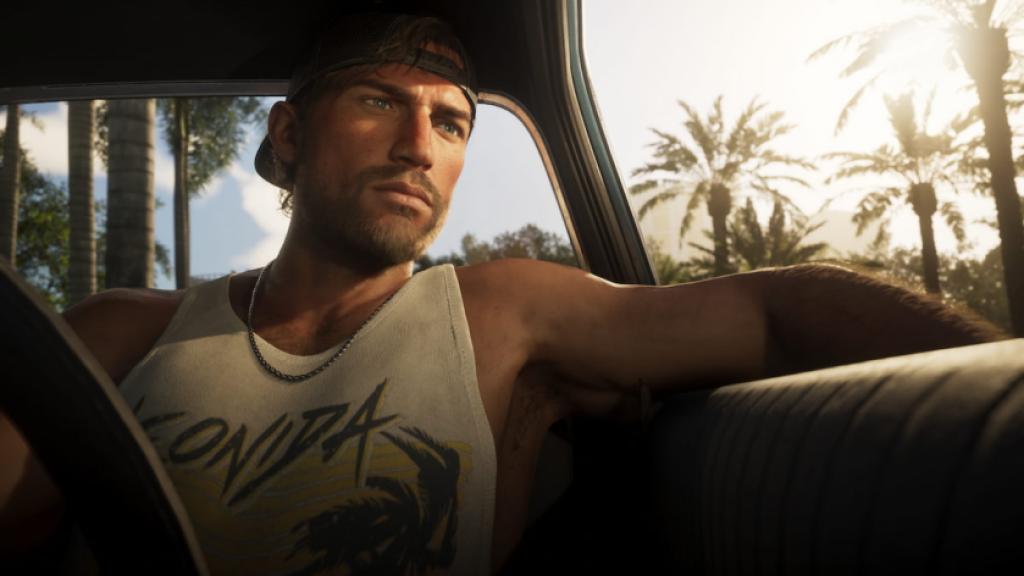
The Colossal Financial Impact of GTA VI: When Rockstar Reshapes Market Equilibrium
Grand Theft Auto VI is far more than just another video game: it's an economic event that has mobilized Wall Street analysts, financial executives across the gaming industry, and Take-Two Interactive shareholders since its official announcement in December 2023. The planned launch on November 19, 2026 for PS5 and Xbox Series X|S represents a major strategic turning point for Rockstar Games and its publisher Take-Two, whose portfolio has weakened in recent years despite the colossal success of GTA V and GTA Online.
Understanding the financial stakes of this title means dissecting not only the investments committed to its creation, but also market expectations, monetization strategies, geopolitical risks, and commercial domination opportunities that will shape the gaming industry for years to come.
- Colossal development budget: GTA VI has mobilized Rockstar's massive human and technological resources over multiple years, with production costs estimated (unconfirmed) among the highest in video game history.
- Stratospheric revenue expectations: analysts predict first-year revenue exceeding $5-7 billion, with GTA Online generating the majority of recurring income.
- Multiple editions and progressive monetization: Standard ($79.99) and Ultimate ($99.99) create differentiated entry points, with the Vintage Vice City Pack driving additional purchases.
- Critical PS5/Xbox console dependency: the absence of a PC launch at release concentrates initial demand on these two ecosystems, maximizing short-term profits.
- Reputational and regulatory risks: controversy over video game violence and political scrutiny could potentially threaten launch schedules or regional sales.
Take-Two's Financial Ecosystem: Why GTA VI Is Vital for the Company
Take-Two Interactive is the financial mastermind behind GTA VI. This New York-based publicly traded giant depends on a handful of blockbuster franchises to generate its recurring revenue. In recent years, the company has diversified its portfolio through strategic acquisitions (Zynga for $12.7 billion in 2022, notably), but profitability has weakened due to high development costs and prolonged production schedules.
GTA VI embodies the revitalization strategy. Rockstar Games, the developer subsidiary owned by Take-Two since 1998, symbolizes the company's cash cow. GTA V, launched in 2013, remains a phenomenal revenue source thanks to GTA Online: over $900 million generated in 2023 according to analyst reports, more than a decade after its initial release. This Games as a Service model revolutionized profitability for big-budget titles at Rockstar, and Take-Two is banking on GTA VI to replicate and exceed this success.
GTA VI's launch occurs amid industry consolidation. Microsoft acquired Activision Blizzard for $68.7 billion (2023), Sony strengthened its market position, and Nintendo dominates the mobile/handheld segment. Take-Two must prove to investors that its expensive development model for PC/console remains viable against competitors with massive budgets. GTA VI is therefore a statement: yes, ambitious big games on traditional platforms are the future.
Massive Investments and Production Timeline: The Price of Ambition
No official figures have been disclosed by Rockstar or Take-Two regarding GTA VI's development budget. However, financial analysts and executives from other AAA studios offer revealing clues.
For context: GTA V cost between $250-300 million (confirmed by court documents and press reports). At that time (2008-2013), it was an industry record. In 2024 dollars adjusted for inflation, that would represent approximately $400 million today.
Rumor / unconfirmed: according to industry analyst reports and community leaks, GTA VI allegedly required an investment between $300-500 million, potentially making it the most expensive game ever produced. This budget escalation reflects: the scope of Leonida's map (inspired by Florida), target graphics quality on the RAGE engine, the scale of game systems for both protagonists Jason Duval and Lucia Caminos, and extended development timelines (announced in 2023 for 2026 = 3+ years of finalization).
Rockstar bet on a staggered production approach. The first trailer (December 2023) marked the public commitment. The second trailer (2025, exact date unconfirmed) is meant to fuel player anticipation. This communication cadence is strategic: it maintains media buzz without massive spending on conventional marketing, since GTA VI generates organic coverage via streamers, YouTubers, and specialized press. Take-Two potentially saves hundreds of millions in marketing budget compared to a new franchise.
The choice of exclusive PS5/Xbox Series X|S launch (not simultaneous PC) is deliberate. Rockstar revealed in trailers that the game would come to PC later (date unconfirmed). This strategy, already applied to GTA V (PS3/Xbox 360 launch in 2013, PC in January 2014), allows them to:
- Maximize console revenue for 6-12 months without PC cannibalization.
- Optimize code for each platform without simultaneous penalties.
- Generate a second sales peak when the PC version launches later.
- Reduce technical risk from complex simultaneous multi-platform launch.
Monetization Model and Recurring Revenue: Beyond $79.99
GTA VI's business model rests on a three-tier architecture: initial sale, paid content, and GTA Online.
Edition Price Confirmed Content Estimated Sales Target Standard Edition $79.99 Base game, GTA Online access 70-75% of volume (standard entry point) Ultimate Edition $99.99 Base game + Vintage Vice City Pack included + GTA Online bonus 25-30% of volume (premium segment)The Vintage Vice City Pack (included in Ultimate) is a stroke of marketing genius: it capitalizes on nostalgia for GTA Vice City (1999-2003) among millennial players, justifying a $20 premium. This pack generates additional willingness to pay that only GTA could mobilize.
GTA Online, the true recurring revenue engine, operated under the following model in its GTA V implementation:
- Sharkcards: purchase of in-game currency (from $10 to $99.99) to acquire vehicles, properties, and cosmetics.
- Seasonal Battle Pass: monthly/quarterly engagement at $10-15 per season to unlock temporary content.
- Cosmetics and themed packs: character skins, vehicle designs, limited edition outfits.
- Properties and virtual enterprises: digital real estate generating in-game revenue streams, incentivizing Sharkcard purchases.
Confirmed: GTA Online for GTA VI will be integrated at launch. The exact model for Sharkcards and Battle Pass hasn't been officialized, but Rockstar/Take-Two confirmed in investor communications that GTA VI Online would follow proven monetization principles.
Goldman Sachs and JP Morgan analysts estimated (2024 reports) that GTA Online could generate $3-4 billion annually for Take-Two during the first 3-5 years post-launch, representing 60-70% of the group's total revenue during that period.
Market Outlook and Sales Forecasts: The Numbers Behind Success
Wall Street analysts offer varied but convergent projections. Here are the consensus scenarios:
Optimistic Scenario (Maximum Market Capture)
Unit sales: 30-40 million copies in year one (September 2026 - September 2027). For context: GTA V reached 11 million in year one (2013), but the industry was smaller and without simultaneous AAA competition. GTA VI targets a much larger console + future PC audience.
Year-1 revenue: $7-9 billion (game sales + GTA Online premium).
GTA Online user base: 50-80 million monthly active players at peak, concentrated November 2026 - February 2027.
Median Scenario (Confirmed Success but No Surprises)
Unit sales: 20-25 million copies year one.
Year-1 revenue: $4.5-6 billion.
GTA Online user base: 30-50 million DAU (Daily Active Users).
Cautious Scenario (Regulatory Obstacles or Technical Issues)
Unit sales: 12-15 million copies year one.
Year-1 revenue: $2.5-3.5 billion.
GTA Online user base: 15-25 million DAU.
The cautious scenario applies if: (a) regulatory restrictions emerge in key markets (South Korea, Japan, Europe), (b) critical bugs delay major patches, or (c) unexpected competition captures audience share (e.g., simultaneous blockbuster releases from other studios).
Regional Strategies and Geopolitical Risks: When Geography Determines Revenue
Take-Two generates revenue across three critical zones:
North America (United States + Canada)
Importance: ~40-45% of estimated GTA VI revenue.
This is the native and most mature market. PS5/Xbox Series X consoles are saturated; GTA VI adoption will be immediate. No major regulatory risk anticipated, though controversy over violence content persists regularly among American activist groups. No federal embargo expected.
Western Europe (UK, France, Germany, Italy, Spain)
Importance: ~30-35% of estimated revenue.
Stable market, well-regulated by ESRB/PEGI. GTA VI will receive an M (Mature 17+) rating via ESRB and standard 18+ PEGI. No revocation anticipated. However, certain child protection groups (notably in Germany and Scandinavia) could attempt legal action against underage sales. A total ban is unlikely but possible marketing restrictions or localized content adjustments.
Asia-Pacific (Japan, South Korea, China, Australia)
Importance: ~15-20% of estimated revenue.
Major risk: South Korea has historically targeted GTA games for violent content; a partial ban is possible. Mainland China de facto ignores Western releases (Great Firewall), so GTA VI won't receive official recognition there. Japan remains permissive. Australia, while strict (R18+ classification), generally accepts GTA since GTA V.
The absence of China's 1+ billion potential mobile/console players represents a major strategic loss for Take-Two, mitigated by the fact that GTA VI targets hardcore consoles (PS5/Xbox), less prevalent in Asia.
Competitive Impact and Positioning Against Other Publishers
GTA VI doesn't exist in a commercial vacuum. Other emerging or renewing AAA franchises compete for the same player attention and resources:
- The Elder Scrolls VI (Bethesda/Microsoft): rumors of 2026-2027 launch, but no official date. If released simultaneously, GTA VI would dominate through marketing scale and GTA fan base.
- Dragon Age 4: The Veilguard (BioWare/EA): launched October 2024, so old content by 2026.
- Final Fantasy VII Remake Part III: no confirmed date, potentially 2027+.
- Independent open worlds: Star Citizen, Unreal Engine 5 experiences, will attract niche audiences, not direct mainstream competition.
Microsoft Game Pass represents an indirect strategic risk. If The Elder Scrolls VI arrives on Game Pass day one (Microsoft's typical strategy), this diverts player budgets. However, GTA VI will likely not reach Game Pass before 2-3 years post-launch, as Take-Two maximizes direct sales revenue first (Premium Model). This decision, while risky against Microsoft's aggressive Game Pass strategy, maximizes short-term profits.
Rumor / unconfirmed: some analysts speculate a delayed Game Pass deal (2028-2029) could be considered by Take-Two once initial console/PC sales peak is exhausted. This would represent a compromise: Game Pass would pay Take-Two a flat fee for inclusion, generating additional revenue without cannibalizing existing direct sales.
Stock Market Implications and Investor Response
GTA VI's December 2023 announcement immediately affected Take-Two's stock price. Though Rockstar simply formalized the release date (November 19, 2026) and Standard/Ultimate editions, the market interpreted this as confirmation of the wait's end: GTA VI is coming soon, revenues will explode.
Financial analysis ratios adjusted:
- Forward Price-to-Earnings (P/E): analysts revised 2027 net earnings projections upward, justifying a higher P/E multiple.
- Free Cash Flow projections: available cash flows (revenue minus operating/capital costs) from GTA Online are expected to exceed $2-3 billion annually, attractive to investment funds.
- Disappointment risk: if GTA VI underperforms (major bugs, sales below 20M units), the stock drops 15-30%, as investors immediately revise expectations downward.
Take-Two has communicated cautiously with investors, avoiding precise forecasts (standard in the industry), but acknowledging that GTA VI is transformational for the group's multi-year growth. This coded language means: we're counting on it to justify our future valuation.
Identified Risks and Mitigations: The Art of Crisis Management
Major Technical Risk: Launch Bugs
GTA V experienced notable launch bugs (physics glitches, sporadic console crashes), but nothing critical-blocking. GTA VI, more ambitious, could face stability issues on PS5/Xbox Series X if the RAGE engine isn't fully optimized. Rockstar has historically managed this through massive day-one patches (hotfixes) and day 2-3 updates.
Confirmed mitigation: Rockstar mentioned during the second trailer (implicitly) that the November 2026 timeline includes extensive testing cycles. The team anticipates bugs through massive QA (Quality Assurance) in pre-launch months.
Reputational Risk: Sensitive Content Controversy
GTA has always been targeted by conservative values groups for violence, explicit language, and sexual themes. GTA VI, featuring Lucia Caminos as a female protagonist (first in the main series), could attract more scrutiny: progressive media demanding nuanced character representation, conservative media outraged by urban promiscuity.
Mitigation: Take-Two/Rockstar will maintain strict communication silence on politically sensitive content, deferring to ESRB/PEGI classification legitimizing adult content. Legal risks or bans are low in the West, but potential negative media coverage could affect pre-orders among older demographics or parents (purchase decision-makers for minors).
Market Risk: Console Saturation and Cloud Gaming Migration
The PS5/Xbox Series X base will reach ~120-140 million units sold by November 2026 (market extrapolations). This is sufficient for GTA VI, but the console market is aging. Cloud Gaming (Xbox Cloud, PlayStation Plus Premium Remote Play) offers an alternative. If cloud gaming investment accelerates, GTA VI could lose traditional console sales.
Mitigation: Take-Two and Rockstar adopt a "hardware agnostic" strategy = the game works on console, PC (future), and potentially cloud per commercial agreements (e.g., Xbox Cloud Play). This diversifies revenue and reduces single-platform dependency.