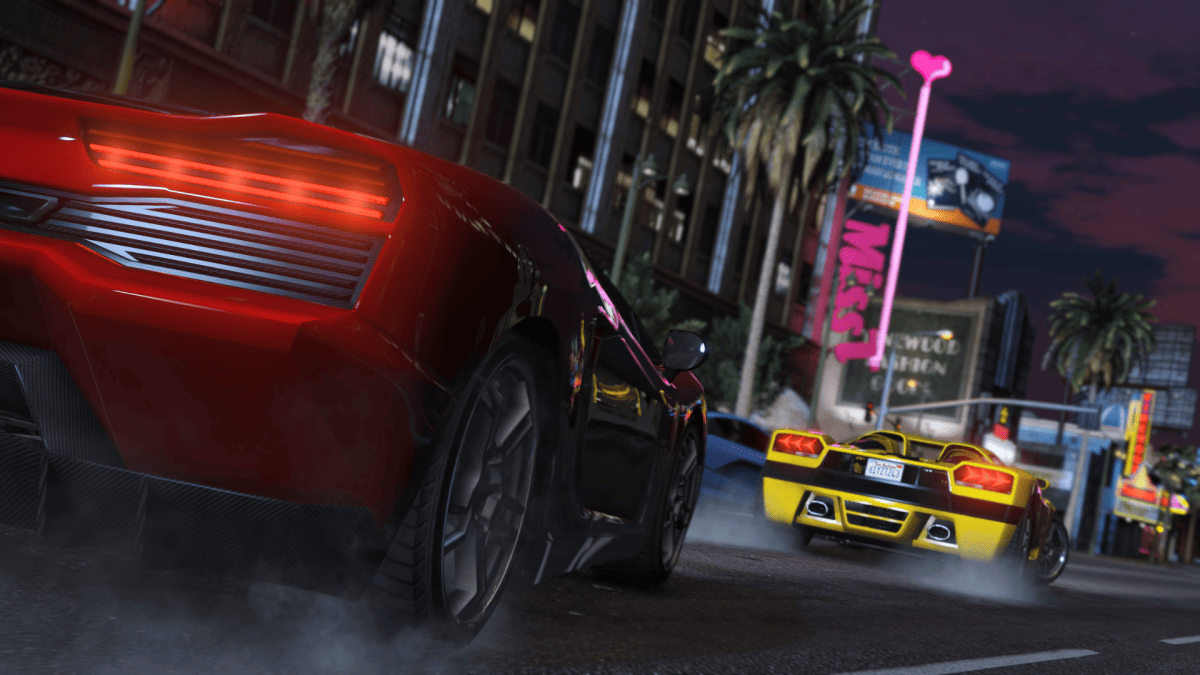
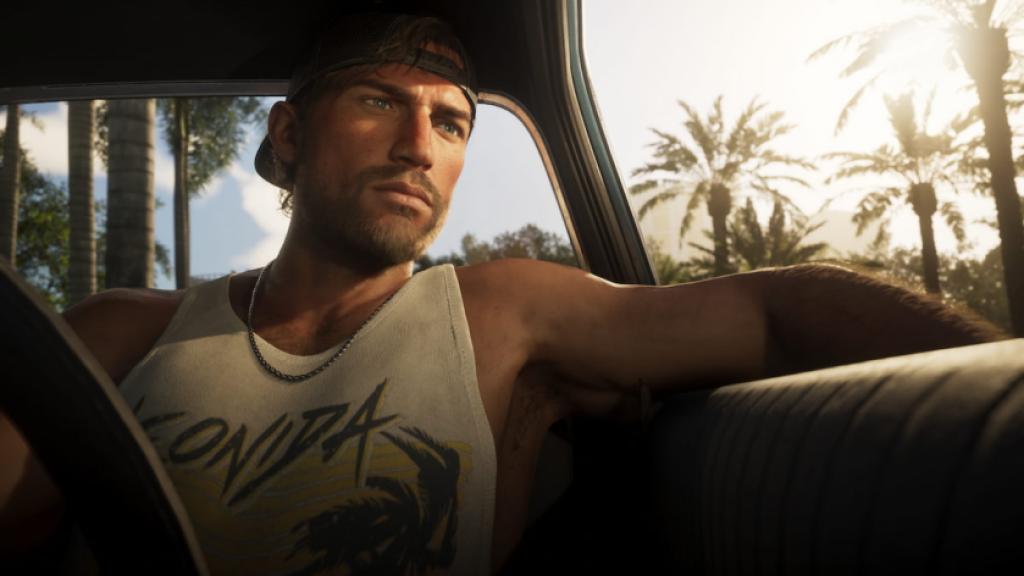
Vice City 2002 is more than just a video game. It's a moment frozen in pixels, a state of mind locked inside a PlayStation 2 cartridge, a soundtrack that still echoes in our heads 24 years later. With GTA 6 approaching and its announced return to Leonida — the fictional state inspired by Florida — a pressing question haunts the community: why is this obsessive nostalgia for Vice City resurging with such intensity in 2026? And more importantly, what does this reveal about us as GTA players, as a generation?
- Vice City (2002) defined the modern open-world blueprint that every game has tried to replicate since: freedom of exploration, optional missions, immersive radio stations, and unforgettable characters.
- This nostalgic obsession rests on three psychological pillars: the recency effect of first experiences, emotional anchoring to adolescence and early adulthood, and the perceived authenticity of its artistic direction (versus modern polish).
- GTA 6 Leonida (releasing November 19, 2026 on PS5 and Xbox Series X|S) revives this nostalgia by design: the Jason/Lucia duo, the return of the Vice City setting, confirmed radio stations (including V-Rock), and the promise of a more vibrant and detailed world than ever before.
- The GTA community transforms nostalgia into participatory culture: memes, fan art, speedruns, secret discoveries, Reddit and Discord debates feed a collective memory that transcends the simple gaming experience.
- This obsession reveals a fundamental tension: the desire to recreate what moved us, coupled with the fear that no remake, sequel, or new experience will ever perfectly reproduce that original magic.
Vice City 2002: The Game That Laid the Foundation for Modern Gaming
Before Vice City, open-world games existed. But none had crystallized the formula with such coherence and emotional impact. Vice City launched on November 2, 2002 in North America on PlayStation 2 — a console barely capable of delivering on the promise of seamless, immersive 3D. It was a pivotal moment in gaming history.
The game transposed the universe of Scarface (1983), Miami Vice (the 1980s TV series), and Florida drug-trafficking plots into an unprecedented interactive narrative. Tommy Vercetti, the protagonist — a criminal released from prison after 15 years — embodied a corrupted American Dream: arriving in an unfamiliar city, building a criminal empire, conquering territory and respectability through violence and cunning.
But what transformed Vice City into legend wasn't just the story. It was the alchemy of six elements:
1. Unmatched Audio Immersion
Vice City featured over 80 hours of radio content — multiple wideband stations, each with its own musical identity. V-Rock, Emotion 98.3, Fever 105, Flash FM: this wasn't a simple jukebox; it was a window into the city's cultural soul. Players spent as much time driving through Vice City listening to music as they did completing missions. This audio immersion became the franchise's signature.
2. Narrative and Graphical Density
With just 32 MB of RAM on PS2, Rockstar had created a dense, colorful, detailed island. Every district breathed its own personality: the downtown Promenade, the tourist beaches of Ocean Drive, the marinas, the glitzy hotels, the sordid alleys. It was procedural photorealism before the term officially existed. Players believed in Vice City because it resembled something that could have actually existed.
3. Characters Written as Complex Human Beings
Tommy Vercetti wasn't a one-dimensional hero. He was an ambitious, vulnerable, traumatized criminal. His contacts — Sonny Forelli (his inside man), Lance Vance (his jealous lieutenant), Diaz (the ruthless drug lord) — each had credible motivations. The dialogue was crafted with the care of a television series. The voice actors (like Tommy Flanagan, who voiced Tommy Vercetti) brought emotional nuance rarely seen in 2002 gaming.
4. Gameplay That Transcended the Mission
Vice City allowed you to play, but never forced you to. Want to run a taxi service? Possible. Visit a nightclub and dance? Yes. Rent a helicopter and fly over the city at sunset? Yes. This guilt-free freedom — the absence of mission obsession — transformed the game into an exploration space rather than a disguised linear narrative.
5. Authenticity of Social Critique
Vice City wasn't an apology for crime: it was a sharp satire of the American Dream, political corruption, capitalist brutality, and systemic sexism. Missions forced you to commit atrocities, then cutscenes showed you the consequences. This moral tension — without ever becoming preachy — created ethical depth lacking in almost all competitors.
6. Perfect Technological Timing
Vice City launched exactly when the PS2 was becoming mainstream (over 10 million units sold by 2003). Teenage players accessed a game for the first time that didn't patronize them, that offered an entire world to explore, and that showed video games could be mature narrative art. For a generation of millennials, Vice City was the first experience with a franchise of their generation, not their parents'.
The Three Psychological Pillars of Nostalgic Obsession
Why does Vice City, 24 years later, remain seared into our brains with an acuity reserved only for the most impactful experiences of our youth? The science of nostalgia offers three explanations.
The Recency Effect of First Experience
Our brains encode first significant experiences disproportionately. For millions of players born in the 1980s and 1990s, Vice City was the first time they explored a virtual world without external direction. No linear levels. No checkpoints. No suffocating tutorials. It was a form of freedom no previous game had truly allowed. This primacy creates exceptionally resilient memory traces.
Emotional Anchoring to a Period of Transition
Vice City launched when its players were between 10 and 20 years old. That's precisely the age when maximal neuroplasticity coincides with emerging emotional consciousness. Games you play at 15 aren't forgotten; they become part of your formative identity. Vice City wasn't just a game: it was the symbol of a certain freedom, of permissible transgression, of a window into adulthood. These emotional associations never fully fade.
Perceived Authenticity Versus Contemporary Polish
Vice City, by technological necessity, was less polished than modern games. Bugs persisted. Textures lacked resolution. Animations were jerky. Paradoxically, this imperfection reinforces perceived authenticity. Contemporary players find this roughness more "real" than the sanitized photorealism of 2025. Vice City looks like something an artist created; modern games look like something a machine simulated. Nostalgia values perceptible human creation over perfect illusion.
The Shadow of Vice City in GTA 6 Leonida
Rockstar Games hasn't ignored this nostalgic obsession. GTA 6, officially announced in December 2023 via trailer, deliberately capitalizes on the return to the Vice City setting — reinvented as Leonida, a fictional state inspired by contemporary Florida.
Confirmed: GTA 6 releases November 19, 2026 on PS5 and Xbox Series X|S. The game is set in Leonida and features two protagonists: Jason Duval and Lucia Caminos. Lucia is the first female protagonist of the main GTA series (confirmed by Rockstar).
Official data released — notably the announcement trailer and the second 2025 trailer — reveal how Rockstar revives Vice City nostalgia:
The Return of the Era: Contemporary Context Linked to 1980s Heritage
Although GTA 6 is set in a contemporary Leonida (presumably 2024–2026), the aesthetics, architecture, and even the color palette deliberately evoke Vice City's 1980s Miami aesthetic. The palm trees, pink and blue neons, Art Deco hotels, marinas: these are the same archetypes as Vice City, but aged 24 years. It's a dual gaze: we view Leonida through the filter of Vice City, through our memory.
Radio Stations: Still Central to Immersion
Confirmed: GTA 6 includes multiple radio stations, notably V-Rock (officially confirmed). Radio stations will serve as vectors for immersion and cultural characterization, as in previous entries.
Rockstar explicitly stated that GTA 6's radio stations will play a similar role to Vice City's. This means: musical curators that tell Leonida's story without direct narrative exposition; audio immersion as important as graphics; a soundtrack that becomes inseparable from the gaming experience.
The Protagonist Duo: Jason and Lucia as Tommy Vercetti's Evolution
Tommy Vercetti stood alone at the top — or nearly so. Jason Duval and Lucia Caminos, GTA 6's duo, represent narrative evolution: two perspectives, two motivations, two intertwined emotional arcs. With Lucia as the first playable female protagonist in the main GTA canon, she also embodies a conscious break with tradition: nostalgia is celebrated, but also questioned and modernized.
World Detail and Richness: More Dense Than Ever
Confirmed: GTA 6 is built on the RAGE engine. Rockstar announced a more detailed, more alive world with more active NPCs and environmental interactions than any previous entry.
Where Vice City was impressive for 2002, Leonida will be impressive for 2026. Modern 3D technologies — ray tracing, sophisticated real-time rendering, behavioral AI — allow Rockstar to create a Vice City that not only resembles what Vice City promised in 1998 to enthusiasts, but actually delivers on that promise today. It's nostalgic and transcendent.
The GTA Community: Guardians of Collective Memory
Vice City nostalgia isn't an individual experience. It's a communal phenomenon sustained by millions of fans across Reddit, YouTube, Discord, TikTok, and dedicated forums.
Speedruns and Archaeological Mastery
Players dedicate hundreds of hours to rediscovering Vice City with scientific rigor: mapping every secret, every easter egg, every hidden line of dialogue. Vice City speedruns (completion in under 2 hours, depending on category) transform the game into artistic performance. This ludic archaeology keeps Vice City alive as an object of study, not merely as a memory.
Fan Creation: Fan Art, Mods, Reconstructions
Modders recreate Vice City in real-time using modern engines (Unreal Engine 5, Unity). Artists draw Lucia Caminos in Vice City aesthetic, or imagine Tommy Vercetti 20 years later. Composers remix original soundtracks into modern versions. This cultural production transforms nostalgia into living creation.
The Debates: Preservation Versus Innovation
Every GTA 6 announcement generates nuanced debate on Reddit and Discord: should Rockstar preserve Vice City's essence, or innovate radically? This creative tension keeps the franchise in permanent conversation. Nostalgia isn't passive; it's active, contentious, creative.
The Inevitable Tension: Can Vice City's Magic Be Recreated?
There's an uncomfortable truth at the heart of Vice City obsession: no new game can truly reproduce the original experience. Not because GTA 6 will be bad (all evidence suggests it will be exceptional). But because nostalgia never belongs to the present; it belongs to the past.
When we replay Vice City today — or watch playthroughs on YouTube — we're not just playing Vice City: we're replaying our idea of Vice City at age 15. We're replaying our innocence, our sense of consequence-free freedom, our belief that the world was explorable and understandable. No modern graphics, no innovative gameplay can restore that.
GTA 6 Leonida won't be Vice City. It will be a distinct work that honors Vice City and draws inspiration from Vice City, but will create its own nostalgic obsessions for Gen Z players who experience it at 15 in 2026. Perhaps in 24 years, players in 2050 will look at Leonida with the same gaze we turn toward Vice City today — as a time capsule, a captured era, a moment of their lives frozen in pixels.
Vice City vs GTA 6 Leonida: Contextualized Comparison
Aspect Vice City (2002) GTA 6 Leonida (2026) Setting 1980s Miami (retro by design) 2020s Leonida (contemporary) Protagonists Tommy Vercetti (lone man) Jason Duval & Lucia Caminos (duo) Technology PS2 32 MB RAM, visible polygons PS5/Xbox Series X|S, ray-tracing, advanced AI Radio Stations 80+ hours of content confirmed V-Rock confirmed, exact content unrevealed Narrative Approach 1980s satire from the 2000s perspective 2020s satire of a changing era Collector Status Cult classic, near-mythical Anticipated as potentially equal or superiorTimeline: From Vice City to GTA 6
- November 2, 2002: Vice City launches on PlayStation 2 (North America). Instantly becomes a cultural phenomenon.
- 2003–2008: Vice City remains the undisputed open-world benchmark. No game matches its narrative and audio immersion.
- 2008: GTA IV (Liberty City) launches a new direction: more realistic, less fantastical, less musical. Vice City relegated to "old school" status.
- 2009–2013: GTA Chinatown Wars and Vice City Stories solidify the legend but don't rival it.
- 2013: GTA V (Los Santos) defines the next 13 years. Vice City becomes a niche cult, not active franchise.
- 2020–2023: Vice City and GTA III remasters intensify nostalgia. Fans pressure Rockstar for a Vice City return.
- December 2023: Rockstar announces GTA 6: return to Leonida (Florida-inspired/Vice City-adjacent). Nostalgic obsession peaks.
- 2025: GTA 6's second trailer amplifies Vice City connections. Community hype reaches unprecedented levels.
- November 19, 2026: GTA 6 releases on PS5/Xbox Series X|S. Nostalgia transforms into new experience.
Sources & Official Information
- Rockstar Newswire (newswire.rockstargames.com): official GTA 6 announcements, trailer confirmations, release dates, editions.
- Official GTA 6 Trailer (December 2023, 2nd trailer 2025): primary source for Leonida imagery, protagonist design, narrative context.
- Take-Two Interactive Investor Relations: pricing confirmations, Standard (79.99$) and Ultimate (99.99$) editions, multiplatform timeline.
- Rockstar Games Support & FAQ: mechanical clarifications, radio confirmations, RAGE engine, technical specifications.
FAQ
Will Vice City Actually Be a Playable Area in GTA 6?
Rumor / Unconfirmed: Rockstar hasn't announced that historical Vice City will be a distinct sector within Leonida. Leonida appears to be the primary setting, aesthetically inspired by Florida and Vice City, but not a historical recreation. Community leaks and theories suggest Leonida could include Vice City-themed references or districts (like retro beaches, styled Ocean Drive), but nothing is confirmed.
Will GTA 6 Have the Same Soundtrack as Vice City?
No. V-Rock is confirmed, but Rockstar typically creates original soundtracks for each entry, even when honoring predecessors. GTA 6's radio stations will likely be new creations, with perhaps some covers or homages to Vice City, but not a direct re-edition. This is Rockstar's opportunity to craft a new sonic identity for Leonida.
Why Does Vice City Obsess Fans More Than GTA III or GTA V?
Three reasons. First, generational timing: Vice City launched when most current players were 10–20 years old — the age when emotional memory forms. Second, innovation: Vice City seemed to offer unprecedented freedom. GTA III opened the door, but Vice City perfected it. Third, authenticity of social critique: Vice City satirized timeless targets (1980s America remains culturally relevant), while GTA III and GTA V aimed elsewhere. Nostalgia cherishes Vice City because it embodies a well-defined, rich era now historically distant.
Do Standard and Ultimate Editions of GTA 6 Include Vice City-Specific Content?
Confirmed: GTA 6 comes in two editions: Standard (79.99$) and Ultimate (99.99$). Edition-specific content hasn't been detailed to reference Vice City explicitly, though the entire Leonida setting carries Vice City-inspired DNA. More details are expected closer to launch.