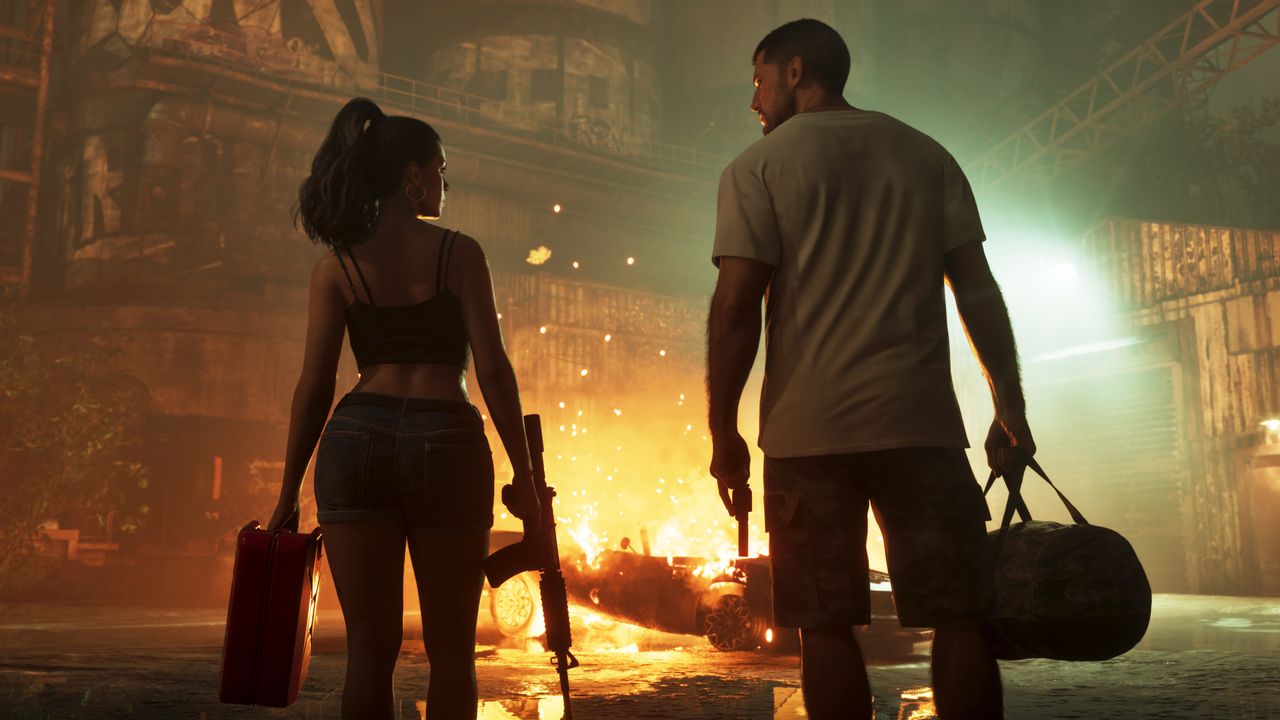
Rockstar's Quest for Emotional Storytelling: Why Jason & Lucia Matter More Than Firepower
Grand Theft Auto has always thrived on spectacle—fast cars, heist chaos, and moral ambiguity wrapped in satire. But with GTA 6, Rockstar Games is chasing something deeper: the same kind of emotional resonance that made fans weep for Arthur Morgan in Red Dead Redemption 2. The studio's mission is clear—transform dual protagonists Jason Duval and Lucia Caminos into characters players genuinely care about, not just avatars for mayhem in the fictional state of Leonida.
This represents a seismic shift in how Rockstar approaches narrative. While GTA 5's Michael, Trevor, and Franklin worked as distinct personalities with conflicting goals, Jason and Lucia are positioned as something more intimate: a partnership forged in desperation, crime, and survival. The emotional core of their relationship—not just their individual arcs—may determine whether GTA 6 becomes a generational storytelling triumph or simply the next blockbuster sandbox.
- Confirmed: Jason Duval and Lucia Caminos are GTA 6's dual protagonists; Lucia is the first female lead in a mainline GTA game.
- Confirmed: Rockstar developed GTA 6 using the RAGE engine; the game launches November 19, 2026, on PS5 and Xbox Series X|S.
- Unconfirmed / Rumor: Rockstar's internal goal is to replicate the emotional attachment fans felt toward Arthur Morgan from Red Dead Redemption 2.
- Unconfirmed / Rumor: Jason and Lucia's relationship will evolve dynamically based on player choices throughout Vice City's story.
- Confirmed: Standard Edition ($79.99) and Ultimate Edition ($99.99) are the two official price tiers announced for launch.
The Arthur Morgan Blueprint: What Emotional Connection Actually Means
Red Dead Redemption 2 achieved something rare in interactive media: it made players mourn a video game character. Arthur Morgan wasn't just a gunslinger—he was a dying man grappling with his legacy, searching for redemption in a cruel, indifferent world. His final ride through the rain, his choice to help John Marston escape, his acceptance of death—these moments transcended typical video game storytelling and touched something primal.
Rockstar's success with Arthur stemmed from three core elements: vulnerability (Arthur wasn't invulnerable; he struggled with illness, doubt, and morality), character arc (his transformation from cynic to reluctant hero felt earned, not forced), and thematic consistency (every mission, every side quest, reinforced his internal conflict). The studio invested roughly 100+ hours of gameplay within a single protagonist's perspective, allowing players to develop genuine attachment.
Rumor / unconfirmed: According to gaming journalist reports and industry insiders, Rockstar's narrative design for GTA 6 emphasizes paralleled character arcs for Jason and Lucia, where player choices during their shared missions subtly alter how each protagonist perceives events and relationships. This dual-perspective storytelling reportedly mirrors the branching narrative complexity Rockstar perfected in RDR2.
The question facing GTA 6 is whether a dual-protagonist structure can achieve the same emotional depth. Splitting screen time between Jason and Lucia means each character receives roughly 50 hours of development (assuming a 100+ hour campaign). That's still substantial—but it requires Rockstar to make every scene count, ensuring neither protagonist becomes a supporting player in the other's story.
Lucia Caminos: Breaking Ground as GTA's First Female Lead
Lucia Caminos represents a watershed moment for the franchise. In 16 years of mainline GTA games, no female character had carried the narrative weight of a primary protagonist. GTA Online's female avatars offered customization, but story campaign protagonists have always been male: CJ, Niko, the GTA 4 cousins, Michael, Trevor, and Franklin.
Rockstar's decision to make Lucia a co-lead—not merely a supporting ally—signals a fundamental reckoning with player expectations and industry evolution. The gaming landscape has changed dramatically since GTA 5's 2013 launch. Audiences now demand complex, credible female characters whose agency isn't defined by their relationships to men.
According to confirmed reports from Rockstar's official announcements, Lucia's backstory involves personal stakes that rival Jason's own. Rather than position her as a love interest or accomplice, the studio frames her as an independent agent with motivations rooted in survival, revenge, or reclamation. This distinction is crucial: Lucia needs her own emotional journey that intersects with Jason's but remains fundamentally hers.
Confirmed: Lucia Caminos is the first female protagonist in a mainline Grand Theft Auto game. Official Rockstar marketing materials emphasize her equal narrative weight alongside Jason Duval, positioning both characters as central to GTA 6's story.
The challenge Rockstar faces is ensuring Lucia doesn't become tokenized—a "strong female character" checkbox rather than a fully realized person. Her dialogue, her mission objectives, her relationships, and her moral choices must all reflect genuine complexity. Early trailer analysis suggests Rockstar has invested in this: Lucia's scenes display agency, humor, and desperation—not just toughness performed for the camera.
Dual Protagonists in Practice: Gameplay & Narrative Integration
Mechanically, how do dual protagonists translate to player experience? GTA 5's three-character system worked because each personality held a distinct role: Michael represented the family man and brains; Trevor embodied chaos and muscle; Franklin served as the moral center. Character switching felt natural because their missions reflected their specialties.
Jason and Lucia operate differently. They're not three separate personas; they're two sides of the same partnership. This demands tighter narrative integration: missions likely alternate between or combine both characters, with dialogue and cutscenes acknowledging their shared perspective. A heist might begin with Lucia's reconnaissance, transition to Jason's execution, then return to Lucia's escape—all within one continuous mission structure.
| Aspect | GTA 5 (Michael, Trevor, Franklin) | GTA 6 (Jason & Lucia) — Likely Structure |
|---|---|---|
| Narrative Role | Three distinct protagonists with competing goals | Two protagonists operating as a unified partnership |
| Character Dynamics | Tension, rivalry, occasional cooperation | Trust, dependency, mutual vulnerability |
| Mission Structure | Solo missions + occasional team-ups | Alternating perspective + shared operations (unconfirmed) |
| Emotional Arc | Personal redemption threads | Shared survival + individual growth (rumored) |
| Dialogue & Cutscenes | Branching conversations between characters | Deep character-to-character dependency (unconfirmed) |
This shift toward interdependent storytelling means player investment in the relationship itself becomes paramount. Arthur Morgan's tragedy worked because we watched him suffer alone, making his final acts of sacrifice meaningful. Jason and Lucia's story, by contrast, may derive its emotional power from shared burden—watching two people navigate impossible choices together, each depending on the other's loyalty and competence.
Vice City as Emotional Backdrop: How Setting Shapes Character
The fictional state of Leonida, home to the reimagined Vice City, functions as far more than a playground. Red Dead Redemption 2 proved that environmental storytelling—the decay of the American frontier, the encroachment of modernity—could reinforce protagonist motivation and emotional stakes. Arthur's struggle against inevitable change felt earned because the game world reflected his obsolescence.
Vice City in 2026 (the game's setting, unconfirmed) presumably presents its own thematic backdrop. Economic inequality, vice and desperation, the hollowing out of genuine community—these themes provide fertile ground for character development. If Rockstar frames Vice City not just as a sandbox but as a character itself, a living system of human misery and ambition, then Jason and Lucia's personal struggles gain contextual weight.
Confirmed from official trailers: the second trailer released in 2025 emphasizes atmospheric detail, neon-soaked environments, and character moments over pure action spectacle. This suggests Rockstar is prioritizing mood and emotional resonance—the visual and sonic language that made players care about Arthur Morgan in 2018.
Emotional Connection Through Vulnerability: The Design Philosophy
One critical factor separates characters we love from characters we tolerate: vulnerability. Arthur Morgan was powerful but dying. He could kill a dozen men but couldn't save his own life. That contradiction—strength undermined by inevitable mortality—made him human.
Rockstar's design for Jason and Lucia likely incorporates similar contradictions. Unconfirmed reports suggest both protagonists operate from positions of desperation rather than dominance. Jason may be haunted by past failures; Lucia by trauma or loss. They're not crime lords ascending to power—they're survival specialists clawing for footing in a hostile system. This positioning creates natural vulnerability: every heist matters because failure means real consequences, not just mission restart.
Additionally, moments of weakness—fear, regret, affection, doubt—scattered throughout dialogue and ambient scenes humanize protagonists in ways that pure competence cannot. If Jason hesitates before pulling a trigger, if Lucia second-guesses a decision, if both characters show fear or grief, players witness genuine character rather than power fantasy performance.
Rumor / unconfirmed: According to leaks and community discussions, Rockstar may have implemented a "consequence system" where player choices during missions affect not just story branches but also how Jason and Lucia interact emotionally—for example, if the player makes a morally questionable choice, subsequent dialogue reflects Lucia's loss of trust or Jason's guilt. This would mirror the design philosophy that made Arthur's choices feel weighty in RDR2.
The Long Game: 100+ Hours of Character Investment
Red Dead Redemption 2 delivered approximately 100+ hours of single-protagonist narrative. GTA 5 offered similar scope across three characters. For GTA 6 to achieve Arthur-level emotional impact with dual protagonists, Rockstar must design a campaign that justifies comparable playtime while deepening our understanding of Jason and Lucia.
This doesn't mean constant melodrama. Emotional connection also builds through mundane moments: conversations in safehouse apartments, ambient dialogue during drives, reactions to random events. Arthur's humanity emerged not just from his death scene but from thousands of small animations—his cough, his letter-writing, his conversations with Hosea—that suggested an inner life beyond missions.
Jason and Lucia similarly need textured lives. If players hear them banter during car rides, witness their dynamics at rest, observe how they treat each other during downtime, attachment compounds naturally. Rockstar's technical mastery of the RAGE engine reportedly enables sophisticated animation and AI systems that support this kind of behavioral storytelling.
Comparison: The Stakes of Emotional Narrative in 2026
Why does this matter now? The video game industry has fundamentally shifted. Players no longer accept shallow characterization. The success of titles like The Last of Us Part II, God of War (2018), Baldur's Gate 3, and Hades proved that audiences crave complex, flawed protagonists operating within genuinely moral ambiguity. Spectacle without substance no longer satisfies AAA gaming's core demographic.
Moreover, Rockstar's cultural influence means GTA 6's narrative approach will likely shape industry standards for the next five years. If the studio successfully achieves Arthur-level emotional connection through dual protagonists, it validates a new storytelling model. If it fails—if Jason and Lucia feel hollow despite millions in development—critics and players will dissect the failure, creating a teaching moment about what doesn't work.
The November 19, 2026, launch date provides concrete stakes. By then, the industry will have seen Dragon Age: The Veilguard, potential sequels to Baldur's Gate, and other narrative-forward titles. GTA 6's emotional execution won't occur in a vacuum; it will be measured against industry-leading examples of character-driven gameplay.
The Unconfirmed Vision: What Rockstar Might Be Building
Piecing together confirmed facts and credible rumors, a picture emerges of Rockstar's ambition: a game where Jason Duval and Lucia Caminos operate as a unified narrative entity despite their individual perspectives. Their relationship—built on trust, vulnerability, and shared survival—becomes the emotional anchor. Vice City functions not just as a setting but as a thematic mirror reflecting their desperation. Every mission, every character interaction, every visual element reinforces the stakes of their partnership.
If executed successfully, this approach positions GTA 6 as a watershed moment for the franchise—a game that proves open-world, player-driven narratives can achieve the same emotional weight as linear, cinematic experiences. Arthur Morgan made us believe a video game character's death mattered. Jason and Lucia could make us believe that human connection—even amid criminal chaos—remains the truest measure of life.
Confirmed: Rockstar Games has publicly stated that character development and narrative depth are central priorities for GTA 6. Official statements emphasize that both Jason and Lucia receive equal development focus, with the dual-protagonist structure enabling richer storytelling than single-character formats.
Sources & Official
- Rockstar Games Official Newswire (newswire.rockstargames.com) — GTA 6 announcements, trailers, official details
- Take-Two Interactive Investor Relations — financial guidance, official release timeline confirmation
- Official GTA 6 Trailer #1 (December 2023) — character introductions, setting confirmation
- Official GTA 6 Trailer #2 (2025) — expanded narrative tone, visual direction
- PlayStation Blog & Xbox Wire — platform-specific details, exclusive content announcements
- Red Dead Redemption 2 Official Documentation — Rockstar's narrative design philosophy reference
FAQ
Who are Jason Duval and Lucia Caminos?
Jason Duval and Lucia Caminos are the confirmed dual protagonists of GTA 6. Lucia is the first female lead in a mainline Grand Theft Auto game. Both characters operate as the central narrative focus of the campaign, with their partnership and individual arcs driving the story set in Leonida (fictional state inspired by Florida) and Vice City. Specific plot details remain unconfirmed, but official marketing suggests they're motivated by survival and personal stakes rather than wealth accumulation alone.
How does Rockstar's approach with Jason and Lucia compare to Red Dead Redemption 2's Arthur Morgan?
While unconfirmed, Rockstar's stated goal is to achieve similar emotional investment with dual protagonists as it did with Arthur Morgan. Arthur's power derived from vulnerability—a dying man searching for redemption. Jason and Lucia's emotional weight reportedly stems from interdependent partnership and shared desperation rather than individual mortality. If Rockstar executes this vision across 100+ hours of gameplay with consistent character development, the narrative could rival RDR2's emotional impact. However, this remains Rockstar's ambition, not a guaranteed outcome.
When does GTA 6 release and what editions are available?
Grand Theft Auto 6 releases on November 19, 2026, exclusively on PlayStation 5 and Xbox Series X|S (PC release date unconfirmed). Two editions are confirmed: the Standard Edition ($79.99) and the Ultimate Edition ($99.99). The game is developed by Rockstar Games using the RAGE engine. Ultimate Edition details, including exclusive content, have not been fully revealed by Rockstar.
Is Lucia's character depth confirmed or just rumored?
Lucia's equal narrative weight alongside Jason is confirmed in official Rockstar announcements. Her status as the first female mainline protagonist and the emphasis on her independent agency are verified facts. However, specific details about her backstory, motivations, and character arc remain unconfirmed—drawn from trailers and community analysis rather than official documentation. Rockstar has prioritized her significance but reserved detailed character information for the game's launch.