Rockstar Games built its legend on razor-sharp satire. Since Grand Theft Auto III in 2001, the British studio has perfected the art of caricaturing contemporary society — grotesque politics, exaggerated pop culture, unbridled consumerism — while delivering a sandbox where this absurdity becomes playable. But here's the colossal challenge facing GTA 6: after eleven years of development, how do you satirize subjects that risk being obsolete, radically transformed, or completely forgotten by launch day on November 19, 2026?
This isn't a theoretical question. The creators of GTA 6 have explicitly raised it in recent interviews, revealing the internal tensions of a studio caught between satirical ambition and temporal reality. Let's dive into this fascinating dilemma that's reshaping how the most anticipated action game of the decade approaches its storytelling.
- Record development span (11 years): GTA 6 stretches from around 2015 to 2026, forcing Rockstar to anticipate unpredictable social phenomena.
- Risk of dated satire: political jokes, cultural trends, or targeted scandals can become incomprehensible or offensive after more than a decade.
- Deliberate caution strategy: GTA 6's designers apply "deliberate prudence" — satirizing permanent structures rather than immediate headlines.
- Proven satirical heritage: Vice City (2002) and GTA IV (2008) both mastered the balance, proving the formula works when targeting timeless archetypes.
- Return to Vice City & Leonida: choosing a nostalgic setting (inspired by 1980s-2000s Florida) gives Rockstar a canvas where retro satire and modernity coexist naturally.
The Temporal Dilemma: 11 Years of Waiting, a Moving Target
When Rockstar Games began preproduction on GTA 6 around 2015, the world was a different place. Social media already dominated, but TikTok didn't exist. Donald Trump was preparing to run for president. Major social movements hadn't erupted yet. Emerging technologies seemed distant. Then, year after year, the cultural landscape transformed — sometimes slowly, sometimes violently.
For a creative studio, this delay poses an existential problem: how do you produce relevant satire when reality itself becomes unimaginable? A political joke that seemed bold in 2018 can feel oddly dated by 2026. Commentary on technological trends risks being either irrelevant or prophetic, and both cases undermine satirical effectiveness.
The creators of GTA 6 have publicly acknowledged this tension. According to reported statements, the studio recognizes that "there will always be things to satirize" — it's the franchise's DNA — but Rockstar must be careful about what it chooses to target, precisely because after more than a decade of production, certain subjects could disappear, change drastically, or become obsolete before launch even happens.
This caution isn't timidity. It's a calculated strategy to keep the game relevant beyond day one.
Lessons From a Decade of Previous Satire
Rockstar isn't approaching this problem blindly. The franchise itself offers an instructive catalog of what works and what ages poorly.
Vice City (2002): The Gold Standard of Nostalgic Recycling
Grand Theft Auto: Vice City remains the perfect example of satire that's survived two decades. Why? Because its targets were archetypal: the absurdity of the 1980s, the superficiality of the era's Miami, the excesses of exuberant capitalism, organized crime, action movie clichés. These themes transcend their temporal context. A player in 2026 immediately understands Vice City's satire, even without living through the '80s, because it taps into durable human truths: greed, vanity, violence. The return of Vice City for GTA 6 (reimagined as Leonida, the fictional state inspired by Florida) gives Rockstar exactly the narrative cover it needs: the studio can embrace retro-futuristic satire, blending nostalgic synthwave aesthetics with commentary on the present, without either layer becoming excessively dated.
GTA IV (2008): When Satire Gets Too Political
Conversely, Grand Theft Auto IV illustrates the risks. Released during the financial crisis, the game contained sharp political satire about the housing crisis, lobbying, financial corruption. These elements burned hot in 2008. But today, nearly two decades later, several political jokes and contemporary references have dulled — not disappeared, but become less immediate. Historical context is necessary to fully understand them.
GTA 6 must avoid this fate by prioritizing the permanent structures of satire — absurd bureaucracy, corporate dishonesty, consumerist excess — rather than targeting current events too specifically.
The Selection Strategy: Target Timelessness, Avoid the Perishable
Facing this dilemma, Rockstar has developed what we might call a philosophy of deliberate caution. Based on available information, the studio makes conscious editorial choices:
Prioritize Universal Human Archetypes
Instead of satirizing specific political figures or current scandals, GTA 6 likely targets the types: the generic corrupt politician, the unscrupulous CEO, the aspiring criminal who confuses violence with respectability. These archetypes transcend time periods without losing their comedic power.
Use the Leonida/Vice City Context as a Temporal Buffer
By placing the action in a fictional version inspired by Florida, Rockstar creates distance between the game's satire and actual current events. Vice City was never exactly Miami. It's an exaggerated, stylized version — recognizably referential but detached enough that players perceive it as allegory rather than direct critique. Leonida offers this same cushion: specific enough to recognize targets (local corruption, tourism, climate crises), fictional enough to remain relevant regardless of real political context.
Systemic Satire Rather Than Event-Based Satire
Instead of mocking a particular scandal that might seem forgotten by 2026, GTA 6 likely critiques the systems: how neighborhood police actually function, how real estate companies buy local political power, how tourism destroys communities. These critiques remain valid regardless of political upheaval.
Residual Risks: What Could Go Wrong
Despite this thoughtful approach, GTA 6 faces risks. After eleven years, even supposedly timeless structures can feel oddly dated or clumsy.
Unintentionally Prophetic Satire
Ironically, Rockstar also risks the opposite: a joke designed as absurd in 2015 could feel real by 2026. If the studio satirizes, say, an extreme escalation of certain climate crises or increased militarization of law enforcement, and these phenomena actually accelerate, the satire stops being funny — it becomes documentary. That's problematic for an action game designed to entertain.
The Changing Demographics of Players
GTA 6 will attract millions of players of all ages and backgrounds. Satire that resonates with 40-year-olds who grew up with Vice City might completely miss teenagers born after 2010. Rockstar must therefore navigate multiple satirical layers — some aimed at nostalgics, others at newcomers — without the game becoming a incoherent patchwork.
Lucia and Jason: Satire of the Modern Protagonist
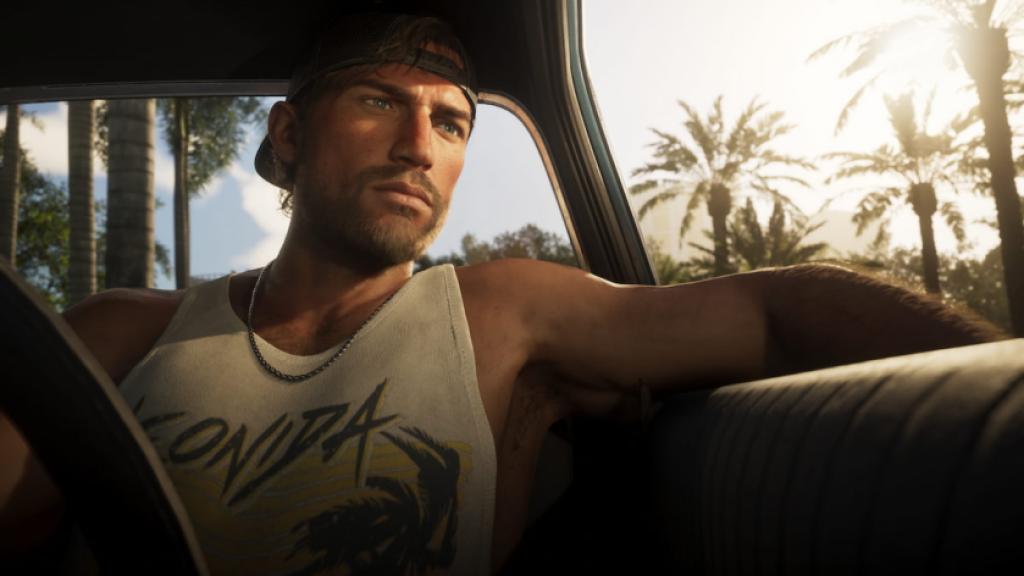
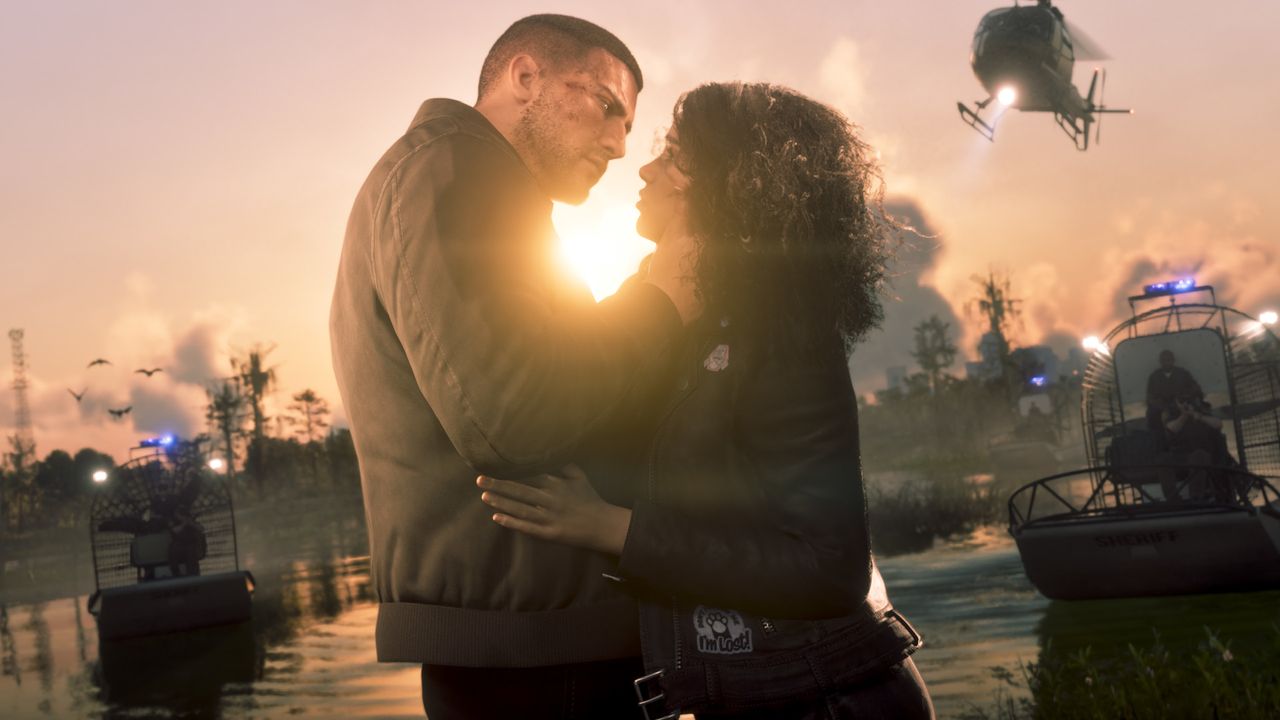
The choice of two main protagonists — Jason Duval and Lucia Caminos, the latter being the first playable female protagonist in the main series — gives Rockstar a major satirical opportunity independent of temporal contingencies. Gender dynamics, organized crime in the social media age, personal aspirations and failures: these are themes Rockstar can explore without fear they'll become obsolete.
Confirmed: Lucia Caminos is the first playable female protagonist in the main Grand Theft Auto series (spin-off games had previously featured female protagonists, but never in the numbered entries).
Lucia's presence naturally creates a satirical opportunity: satire of gender expectations, criminal stereotypes, power dynamics within organized crime. These themes remain current regardless of what's happening on the world political stage.
Radio Stations as Updatable Satire Vehicles
Rockstar has always used fictional radio stations — V-Rock is confirmed for GTA 6 — as a satire platform. Radio hosts, absurd advertisements, parodies of real stations: this format offers unique flexibility. Unlike the main story or NPC dialogue, radio content can be satire-dense but also more "disposable" — a player can ignore it if they find it irrelevant.
This modularity is strategic. Rockstar can satisfy hardcore fans expecting sharp satire while offering casual players a less politically charged experience if they want it.
Comparison: GTA 6 vs Its Predecessors in Terms of Satirical Caution
Game Launch Year Development Time Dominant Satirical Approach Dating Risk GTA III 2001 ~2-3 years Generic satire, criminal clichés Very low — universal Vice City 2002 ~2-3 years Retro 1980s satire, archetypes Very low — intentionally nostalgic GTA IV 2008 ~5-6 years Sharp political satire, financial crisis Medium — historical context needed GTA V 2013 ~5-6 years Media, cinema, consumerism satire Low-medium — more structural GTA 6 2026 ~11 years Archetypes + systemic (planned) Low-medium (if strategy holds)Implications for Gameplay Experience and Longevity
Rockstar's caution about dating satire isn't just a creative detail. It directly affects the game's longevity. GTA 6 launches November 19, 2026 on PlayStation 5 and Xbox Series X|S in Standard ($79.99) and Ultimate ($99.99) editions. Rockstar clearly expects the game to remain played — and replayed — for years, even decades.
Satire too tied to 2026's current events risks becoming incomprehensible by 2030 or 2035. Conversely, satire that's too generalized risks seeming apathetic or evasive. The balance Rockstar seeks — targeting permanent structures of human society while resisting the temptation of easy topical jokes — is crucial for GTA 6 to become a timeless classic rather than a dated historical curiosity.
This is also why the return to Vice City / Leonida is so strategically sound. This fictional city, inspired by Florida but clearly non-real, creates a space where Rockstar can satirize urban archetypes without being imprisoned by actual political contingencies.
Sources & Official
- Rockstar Newswire (official Rockstar Games site): GTA 6 announcements, trailers, official timeline
- Official @RockstarGames X account: confirmations of dates and key information
- Take-Two Interactive (publisher): financial statements and GTA 6 commercial strategy
- Published interviews with Rockstar Games creative team: statements on narrative and satirical approach
- Official GTA 6 trailers (December 2023 and 2025): primary source for visual and narrative information
FAQ
Why is Rockstar concerned that GTA 6's satire could become "dated"?
With 11 years of development, social phenomena targeted early in the project could be radically transformed, forgotten, or irrelevant by November 2026. A political joke from 2015 might feel out of place in 2026. Rockstar therefore seeks to prioritize timeless, structural satire rather than targeting current events.
Will satire disappear from GTA 6 compared to previous games?
No. Rockstar has explicitly stated that "there will always be things to satirize" — it's core to the franchise's DNA. But the approach will be more cautious: fewer throwaway jokes about moment-to-moment scandals, more critiques of permanent systems (bureaucracy, corporate greed, etc.).
How does Vice City / Leonida help manage this problem?
By placing the action in a fictional version inspired by Florida rather than a real city, Rockstar creates distance between the game's satire and actual political current events. Players perceive the content as urban allegory rather than direct critique, which preserves it from rapid contextual shifts.
Will GTA 6 have less aggressive or more "safe" satirical content?
Nothing confirms this. Rockstar speaks of "caution" in selecting targets, not self-censorship. The studio seeks to maintain satirical bite while anchoring it in timeless structures. GTA 6's satire will probably be just as cutting, but directed differently.