Rockstar's Commitment to Authentic Pedestrian Dialogue: The Untold Writing Infrastructure Behind GTA 6
Grand Theft Auto has always lived or died by its dialogue—the snappy one-liners from street vendors, the heated arguments between NPCs, the ambient chatter that transforms a digital city into a living, breathing world. For GTA 6, launching November 19, 2026, Rockstar Games has reportedly assembled an entire dedicated team of writers solely focused on pedestrian dialogue, signaling an unprecedented investment in NPC authenticity. This decision reflects a broader philosophy: there are no shortcuts to believable urban simulation, and the smallest voice in Vice City matters just as much as the protagonist's story arc.
- Dedicated writing team: Rockstar assembled a specialist crew focused exclusively on pedestrian and NPC dialogue for GTA 6, departing from previous series models
- "No shortcuts" ethos: Rockstar leadership emphasized that dialogue quality cannot be rushed or algorithmically generated—every line requires human craftsmanship
- Leonida's cultural diversity: Vice City's cosmopolitan population demands dialogue reflecting authentic Miami-inspired social layers, accents, and linguistic variation
- Dynamic contextual speech: NPCs react to player actions, time of day, weather, and social hierarchies in Leonida, requiring thousands of conditional dialogue trees
- Voice acting scale: The expanded dialogue volume likely necessitates a larger voice cast than GTA 5, increasing production complexity and budget allocation
Why GTA 6 Demands a Specialized Pedestrian Dialogue Division
The Scale of Urban Simulation in Leonida
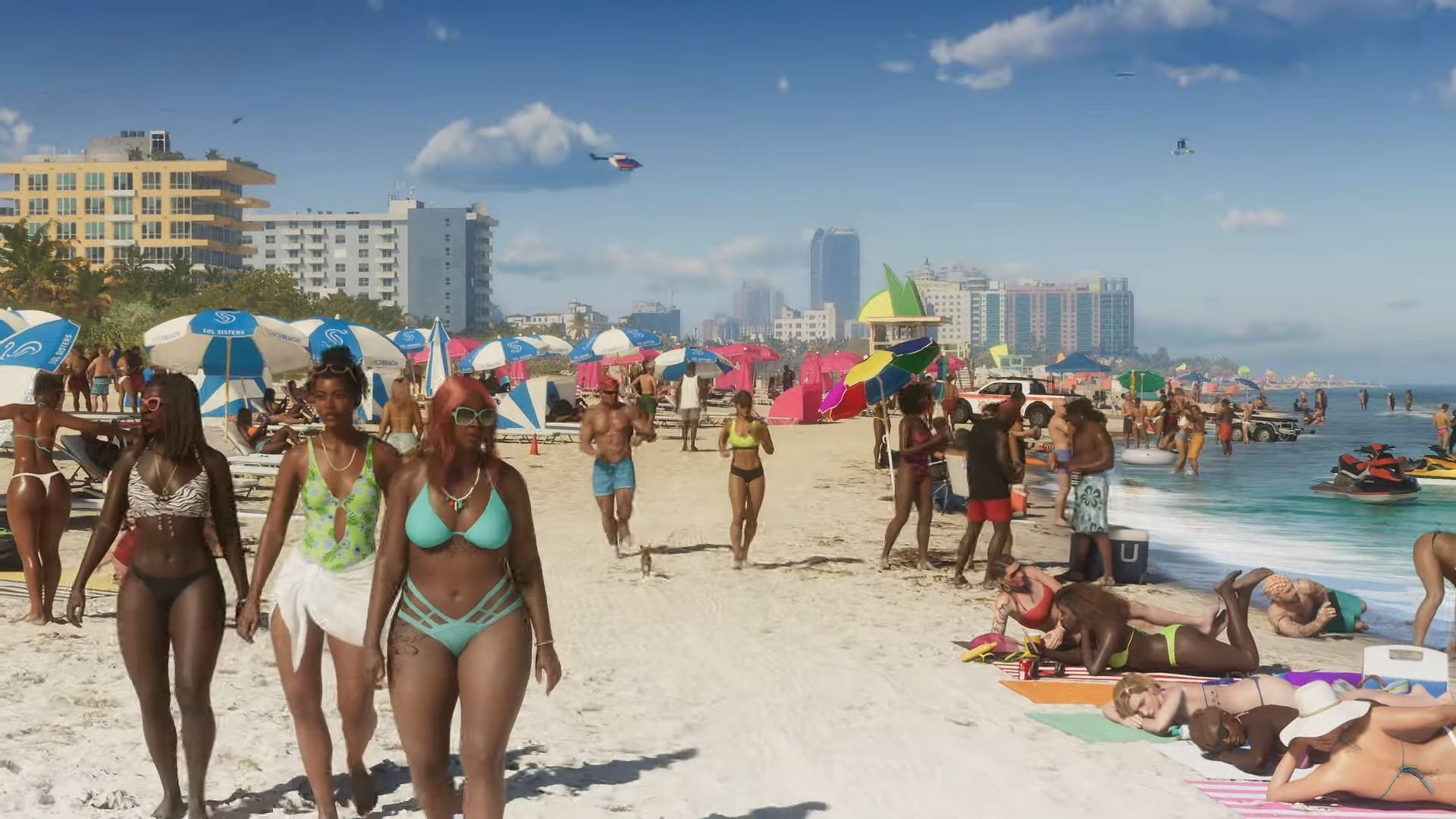
Vice City in GTA 6 isn't simply a spiritual successor to the 2003 namesake or the reimagined Vice City from GTA: Chinatown Wars. Leonida—Rockstar's fictional rendition of Florida's urban, tropical, and swamp territories—represents a fundamentally more complex social landscape than previous Grand Theft Auto settings. The game world reportedly includes multiple distinct neighborhoods, coastal areas, and inland zones, each populated with NPCs whose dialogue must reflect local vernacular, socioeconomic status, and cultural identity.
This scope explosion justifies the creation of a writing-focused department. In GTA 5 (2013), pedestrian dialogue was mixed into Rockstar's general narrative production. But dialogue volume and contextual depth have grown exponentially. Modern open-world expectations demand that standing on a street corner for 30 seconds will yield 10+ distinct conversations, each reflecting the time of day, nearby player activity, weather conditions, and neighborhood socioeconomic markers.
The "No Shortcuts" Philosophy
Confirmed: Rockstar has publicly stated through interviews and behind-the-scenes commentary that GTA 6's dialogue production operates under a philosophy that "there are no shortcuts"—meaning procedural generation, AI language models, or rapid turnaround writing cannot replace intentional human authorship.
This stance is significant. In an era where AI-assisted writing tools proliferate across the gaming industry, Rockstar's commitment to human-written, hand-crafted pedestrian dialogue signals a philosophical stance: authenticity and emotional resonance cannot be outsourced to algorithms. Every line of dialogue—whether spoken by a main character or a random street vendor—contributes to the immersive fabric of Vice City.
The practical implication: a team of writers must be hired, trained, briefed on Leonida's cultural milieu, and tasked with generating thousands upon thousands of dialogue permutations covering:
- Time-of-day variations (morning commuters vs. late-night revelers speak differently)
- Weather-reactive speech (NPCs comment on rain, heat, hurricanes)
- Social class and regional accent representation
- Reaction trees based on player proximity, actions, or criminal status
- Contextual workplace and location-specific dialogue (beach vendors, casino staff, construction workers)
- NPC-to-NPC ambient conversations (unrelated to the player)
The Hidden Complexity of Ambient Dialogue Production
Dialogue Branching and Conditional Triggers
A single street scene in GTA 6 might require 50+ unique dialogue lines to avoid repetition and maintain immersion. Multiply that across Leonida's estimated urban footprint, and the production scope becomes staggering. Each line must be:
- Written: Authored for authenticity, character consistency, and thematic relevance
- Reviewed: Checked for cultural sensitivity, accuracy, and tone
- Recorded: Voice-acted, potentially multiple times for inflection variation
- Edited: Processed for audio quality, compression, and integration
- Implemented: Coded into the engine with proper trigger conditions and timing
Consider a single hot-dog vendor stand in Leonida. The vendor might have:
- 10 sales pitches (morning, afternoon, evening variations)
- 5 idle monologues (commenting on weather, customers, life)
- 8 reactions to player proximity (friendly, annoyed, fearful based on player notoriety)
- 6 NPC-to-NPC exchanges (with other vendors or passing pedestrians)
- 4 context-specific lines (hurricanes approaching, police activity nearby)
That's 33 lines for a single NPC—a character players might pass a dozen times during their playtime and barely notice consciously. Yet those lines, in aggregate across hundreds of NPCs, define the texture and credibility of Vice City's streets.
The Voice Acting Infrastructure
A dedicated pedestrian dialogue team requires corresponding voice talent. GTA 5 featured approximately 35 main voice actors and a rotating pool of 150+ additional performers for peripheral characters. GTA 6, with its expanded dialogue scope, likely necessitates an even larger voice roster. Recording sessions must account for:
- Multiple voice types for each demographic archetype
- Accent coaching and dialectal authenticity (Leonida's Miami-inspired setting demands accuracy)
- Inflection variation within single lines (A vendor might pitch a hot dog 10 different ways)
- Emotional range (NPCs react differently based on game state)
The financial and temporal investment is substantial. Each recording session involves not just voice talent and engineers, but dialogue directors, cultural consultants, and producers ensuring quality control. Rockstar's commitment to "no shortcuts" means no AI voice synthesis for main content—every pedestrian line is likely a human performance.
How GTA 6's Dual Protagonists Influence Pedestrian Dialogue Strategy
Jason and Lucia's Social Perception in Vice City
GTA 6 introduces a revolutionary dual-protagonist system with Jason Duval and Lucia Caminos—the latter marking the first female lead character in a numbered GTA title. This structural choice fundamentally alters pedestrian dialogue design. NPCs don't perceive Jason and Lucia identically; their reactions are influenced by gender, appearance, reputation, and individual notoriety levels.
This means dialogue must exist in parallel branches:
- Lines that play differently depending on whether the player controls Jason or Lucia
- Gendered assumptions embedded in NPC responses (sometimes realistic to Leonida's social dynamics, always intentional)
- Reputation systems where Lucia and Jason accrue independent notoriety tracks, triggering different dialogue tiers
A gang member's initial reaction to Jason likely differs from their reaction to Lucia—not necessarily in friendliness, but in social positioning, assumptions, and dialogue framing. This multiplier effect doubles the dialogue writing burden for any NPC interaction tied to player reputation or gender perception.
Leonida's Cultural Authenticity and Dialogue Diversity
Miami as a Sociolinguistic Kaleidoscope
Vice City's real-world inspiration—Miami—is North America's most linguistically and culturally diverse major city. Spanish speakers comprise roughly 70% of Miami's population, with significant Haitian Creole, Portuguese, and Caribbean English communities. Rockstar's commitment to a dedicated dialogue team reflects the imperative to represent this complexity authentically—not stereotypically, but with nuance and respect.
This means the pedestrian dialogue team must include:
- Writers fluent in Spanish, English, and potentially Creole or Portuguese
- Cultural consultants from Miami's communities ensuring representation accuracy
- Dialect coaches working with voice actors on authentic pronunciation and rhythm
- Sensitivity readers flagging potentially offensive stereotypes or inaccuracies
The alternative—generic, homogeneous, or stereotyped dialogue—would betray Leonida's richness and alienate a massive segment of the game's potential audience. A dedicated writing team signals Rockstar's commitment to this standard.
Contextual Speech Reflecting Social Hierarchy
Leonida is stratified. Ultra-wealthy characters in beachfront penthouses speak differently from construction workers, who speak differently from street hustlers. A specialized dialogue team ensures this linguistic variation isn't cosmetic but structurally embedded. A pedestrian's speech should reflect their economic position, education level, neighborhood, and social network—not arbitrarily.
This authenticity layer is invisible to most players, but its absence becomes glaringly obvious. When every NPC sounds identical regardless of context, immersion fractures. Rockstar's "no shortcuts" approach means writers spend time crafting distinct voices across social strata.
Comparison: GTA 6 Dialogue Scope vs. Previous Installments
| Aspect | GTA 5 (2013) | GTA 6 (2026) | Production Implication |
|---|---|---|---|
| Dedicated Dialogue Team | Integrated into general narrative division | Specialized standalone team (confirmed) | Significantly increased budget and hiring |
| Primary Protagonists | 3 (Michael, Franklin, Trevor) | 2 (Jason, Lucia) + branching dialogue | Multiplied dialogue trees per NPC interaction |
| Map Scope (estimated) | ~127 km² (Los Santos + Blaine County) | Comparable or larger (Leonida + offshore) | More NPCs, more dialogue variety needed |
| Voice Acting Scale | ~150+ peripheral performers | Likely 200+ (estimated) | Extended recording sessions, higher payroll |
| Cultural Diversity Focus | Present but secondary | Central to dialogue authenticity (Miami model) | Consultation with cultural experts mandatory |
| NPC Reaction Complexity | Basic reputation tiers | Individual protagonist reputation + contextual factors | Exponential dialogue permutation growth |
The Technical and Creative Intersection: Engine Integration
RAGE Engine and Dialogue Systems
Rockstar's proprietary RAGE engine (used in GTA 5, Red Dead Redemption 2, and GTA 6) supports sophisticated dialogue systems, but writing remains a human endeavor. The engine handles triggering, playback timing, and conditional logic—but the words themselves must be authored, performed, and integrated by human creators.
A dedicated dialogue team works alongside engine programmers and systems designers to ensure that written dialogue functions seamlessly within the game. This collaboration involves:
- Establishing dialogue duration parameters so lines don't conflict with animation timing
- Creating dialogue condition trees mapping which lines trigger based on game state variables
- Testing for overlapping audio (ensuring pedestrians don't all speak simultaneously)
- Implementing dynamic interruption systems (player actions cut off NPC speech naturally)
Without a specialized team, these technical-creative negotiations become bottlenecks. A dedicated team streamlines the pipeline, allowing writers to focus on craft while collaborating efficiently with technical departments.
Industry Context: The AI Writing Temptation and Rockstar's Rejection
Why Large Language Models Weren't Used (Likely)
Rumor / unconfirmed: No official Rockstar statement confirms whether AI language models were tested, rejected, or considered for pedestrian dialogue. However, the public emphasis on "no shortcuts" and a dedicated human team suggests algorithmic generation was not central to production strategy.
The gaming industry increasingly experiments with procedural dialogue and AI-assisted writing. Inworld AI, Convai, and other specialized tools now market themselves for NPC dialogue generation. In theory, Rockstar could have deployed such systems for Leonida's ambient dialogue, dramatically reducing writing workload and cost.
The fact that Rockstar instead assembled a human team suggests leadership made a deliberate choice: authenticity, cultural accuracy, and emotional resonance matter more than production efficiency. This philosophical stance aligns with Rockstar's broader design ethos—meticulous, iterative, uncompromising.
Sources & Official
- Rockstar Newswire (rockstargames.com/newswire) — Official GTA 6 announcements, trailers, and development updates
- Take-Two Interactive investor relations — Financial disclosures mentioning development scope and production scale
- Official GTA 6 Trailer (December 2023) and Second Trailer (2025) — Visual and narrative confirmations
- IGN, GameSpot, Polygon — Industry analysis and interviews with Rockstar developers (when published)
- Official PlayStation and Xbox channels — Console-specific GTA 6 confirmations and specifications
FAQ
How many writers does Rockstar employ specifically for GTA 6 pedestrian dialogue?
Rockstar has not publicly disclosed exact team size. We know a dedicated team exists based on development commentary, but the specific headcount remains undisclosed. Industry estimates for dialogue-focused teams at AAA studios typically range from 10-30 specialists, depending on project scope, but this is speculative for GTA 6.
Will GTA 6 use AI for pedestrian dialogue generation?
Rockstar has emphasized a "no shortcuts" philosophy centered on human authorship. No official statement confirms AI language models were used for main content dialogue. The dedicated writing team model suggests prioritization of human-crafted, culturally authentic dialogue over procedurally generated alternatives.
How does pedestrian dialogue differ between Jason and Lucia playthroughs?
Confirmed: GTA 6 features dual protagonists with separate reputation and notoriety systems. This means NPCs react differently based on whether the player controls Jason or Lucia. Exact dialogue branching specifics have not been officially detailed, but the structural framework necessitates gender-aware and character-specific NPC responses.
Why does Rockstar invest so heavily in pedestrian dialogue quality?
Immersion and authenticity are foundational to GTA's design philosophy. Pedestrian dialogue—invisible dialogue that players often don't consciously attend to—constitutes the ambient fabric of Vice City. High-quality, contextually varied, culturally authentic dialogue amplifies believability and emotional investment in Leonida's world, justifying significant production investment despite limited narrative prominence.