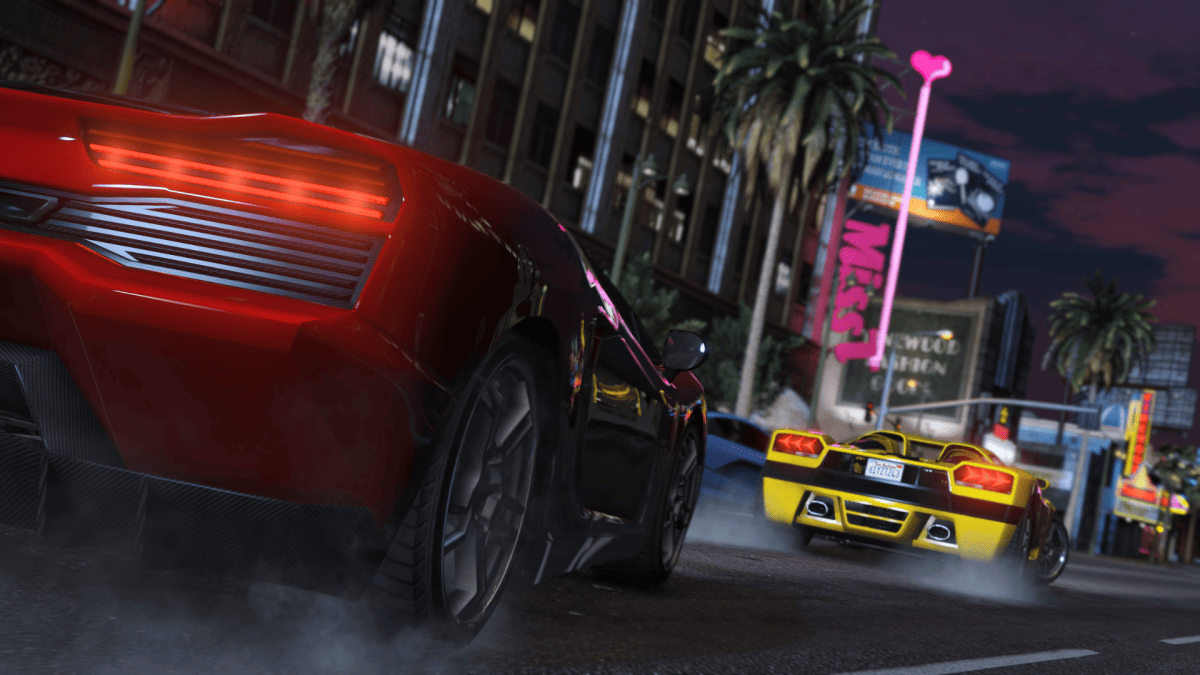
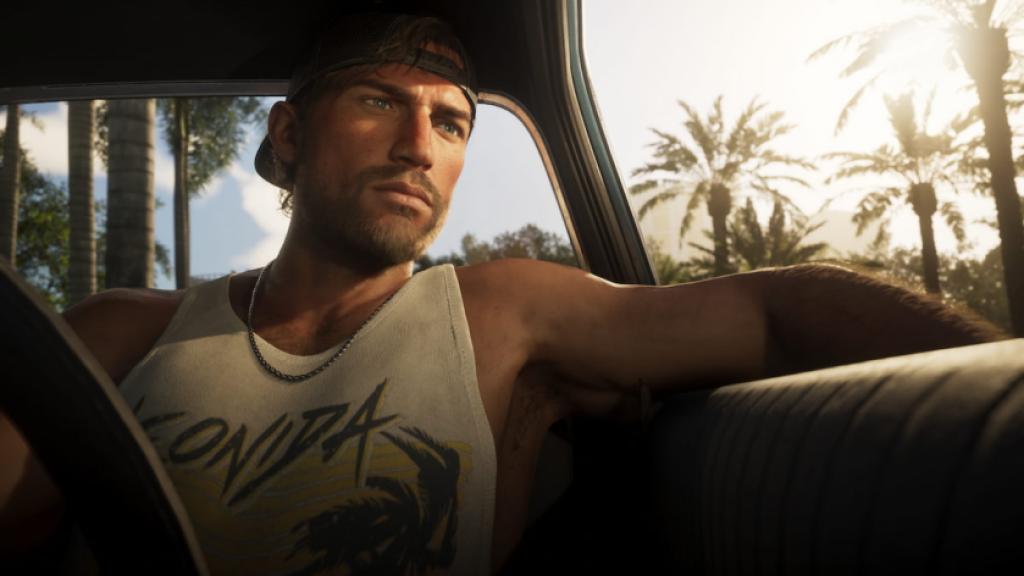
A revolution that began in 1997: when Grand Theft Auto invented urban chaos
Nearly thirty years ago, on October 21, 1997, Rockstar Games launched the first Grand Theft Auto on PlayStation 1 and Windows 95 PC. Back then, nobody imagined creating a universe of criminal freedom with a top-down view and a handful of colored polygons. Yet this revolutionary title laid the foundations for a saga that would transcend entire console generations.
The game offered something unprecedented: steal vehicles, commit crimes, evade police—all within an interactive 3D urban space. Critics were divided—some called it violent and anarchic—but players had discovered an addictive concept. The three fictional cities (Liberty City, Vice City, San Andreas) were graphically minimal, yet bursting with personality and absurd missions.
What would change the industry forever wasn't advanced physics or stunning graphics: it was narrative freedom. You weren't a righteous hero. You were a criminal who could ignore main missions and explore however you wanted. This game design philosophy remains, thirty years later, the beating heart of every GTA.
GTA III (2001): the 3D explosion and birth of the modern open-world
If GTA 1 and GTA 2 (1999) were prototypes, GTA III (December 2001, PlayStation 2) was the explosion that redefined everything. Rockstar abandoned the top-down view for a dynamic 3D camera behind the vehicle. Liberty City became a living metropolis, explorable in 360 degrees, populated with routine NPCs, multiple FM radio stations, and hundreds of missions.
The RAGE engine (direct successor to GTA III's technology) began taking shape here. Vehicle physics, character animations, dealer AI—everything had an urban grain of reality. The radio stations featured varied musical styles (rock, funk, reggae, classical) with convincing hosts.
GTA III reached 10 million copies sold on PS2 and became a cultural phenomenon. Its success allowed Rockstar to fund even more ambitious sequels.
GTA: Vice City (2002-2006): the golden age of retro-futuristic nostalgia
A year later, GTA: Vice City (October 2002) transported players to Florida's synthwave 1980s. The era of pastels, synthetics, yachts, and cocaine. Rockstar didn't just create a city; it built an immersive temporal experience.
The soundtrack became as famous as the game itself. Radio stations entirely composed of authentic 1980s tracks (Michael Jackson, Blondie, Lionel Richie, and Dua Lipa in 2024 for remasters). Each station told a story: V-Rock broadcast hard rock, Emotion 98.3 played melancholic pop, and Talk Radio offered brilliant social satire.
Vice City generated 17 million copies sold and captured a nostalgia nobody knew they had. The pair Jason and Lucia from GTA VI, in 2026, will return to Leonida (the fictional state containing Vice City completely recreated). This decision isn't trivial: Rockstar acknowledges that Vice City remains the golden age of GTA imagination.
GTA: San Andreas (2004) and the PS2's graphic zenith
GTA: San Andreas (October 2004) demonstrated that the saga could evolve without leaving its console generation. Three massive cities (Los Santos, San Fierro, Las Venturas) connected by highways, rural regions, mountains, and a "respect" system that tied mechanical progression to narrative.
The character, Carl "CJ" Johnson, was a new-generation gangster. Social themes (inequality, urban trauma, systemic racism) found legitimate space in the story. San Andreas sold 21 million copies and would remain the best-selling GTA game for years.
Graphically, San Andreas pushed the PS2 to its limits. Draw distances extended across several kilometers (fog effect respecting hardware power). Vehicles sustained visible damage. Characters had more nuanced expressions. It was the PS2's apex.
GTA IV (2008) and GTA V (2013): the era of realistic graphics and motion capture
After portable sequels and spin-offs (GTA Chinatown Wars and GTA: Episodes from Liberty City), GTA IV arrived in 2008 on PS3 and Xbox 360. Rockstar abandoned colorful satire for gritty urban realism. Niko Bellic, an Eastern European migrant, explored a Liberty City bigger and more detailed than ever.
3D graphics reached a new threshold. Buildings had interiors. Ragdoll physics were visceral. Motorcycles and cars reacted to every road surface imperfection. GTA IV sold 25 million copies but divided fans: some loved its introspective tone; others found the game too slow.
GTA V (September 2013, PS3/Xbox 360; successive ports to PS4, Xbox One, PC, next-gen) was the apotheosis. Three interchangeable protagonists (Michael, Trevor, Franklin), an ultra-dense Los Santos covering 127 km² with real scanned architectural details, and a refined RAGE engine capable of managing hundreds of vehicles, NPCs, and simultaneous interactions.
GTA V became the most profitable video game ever created, with over 200 million cumulative copies sold. Its spectacular longevity—released in 2013, still played in 2025—proves Rockstar had built a timeless universe. The online mode, GTA Online, became a virtual cash cow generating billions of dollars.
GTA VI and the generational leap: Leonida, Jason, Lucia, and a renewed RAGE engine
After 12 years of GTA V, Rockstar announced GTA VI via official trailer in December 2023. The first trailer showed stunning graphics: precise water reflections, clothing fabric simulating water and wind, foliage animated by real-time physics, and rich color grading reminiscent of Vice City but in high definition.
Confirmed facts are as follows:
- Confirmed releases: PlayStation 5 and Xbox Series X|S, November 19, 2026
- Price tiers: Standard ($79.99) and Ultimate ($99.99)—US pricing
- Protagonists: Jason Duval and Lucia Caminos, a criminal couple. Lucia is the first female protagonist in the main GTA series
- Location: Fictional state of Leonida (inspired by Florida) including Vice City completely recreated
- Engine: Evolving RAGE engine, promising ultra-realistic physics, revolutionary NPC AI, and native ray tracing
- Confirmed radio stations: V-Rock makes its return, alongside other stations yet to be revealed
Unlike GTA V, which focused on critical satire of Californian culture, GTA VI returns to Vice City's more visceral themes: organized crime, smuggling, cartels, corruption, and the ostentatious luxury of the 1980s recreated in 2026. The trailers show Jason and Lucia committing heists, racing cars, executing maritime missions, and navigating dangerous alliances.
A second official trailer is scheduled for 2025, promising to reveal more gameplay, confirmed vehicles, and possibly new mechanics.
Technological innovations: from pixel art to photorealistic worlds
GTA's technical progression over 29 years is staggering:
- 1997-2002 (GTA I-Vice City): 2D sprites, limited palettes, compressed sound, 320x240 resolutions. Despite limitations, the enormous narrative freedom compensated for basic graphics.
- 2001-2006 (GTA III-Vice City): Shift to 3D, complex polygon models, detailed textures, first traffic AI, massive maps (several km²).
- 2004-2008 (San Andreas-GTA IV): Extended draw distances, motion-capture animation, dynamic reflections, richer introspective scenarios.
- 2013-2025 (GTA V-online): Optional ray tracing, 4K resolutions, 60 fps on current-gen, dense crowds, destructible vehicles with removable parts, persistent economic systems.
- 2026+ (GTA VI): Native ray tracing expected, conversational NPC AI (unconfirmed rumor), real-time fluid physics (water, smoke, foliage), 300+ km² maps, stable 60 fps on PS5/Series X
The RAGE engine, Rockstar's technological core since GTA III, has been constantly reinvented. GTA VI will use an entirely rebuilt iteration capable of exploiting current GPU capabilities (NVIDIA RTX 4000-5000 PC, ultra-fast SSDs in PS5/Series X for seamless streaming).
Narrative themes and cultural evolution: from satire to introspective portrait
Beyond technology, the saga evolved narratively:
GTA I-II (1997-1999): Pure anarchy. No complex storyline, just absurd missions and dark punchlines.
GTA III (2001): Introduction of linear narrative: a mute immigrant, Tommy Vercetti, caught in complex mafia conflicts.
Vice City (2002): Retro-futuristic nostalgia and satire of the corrupted American dream. Music, aesthetics, and dialogue become as important as missions.
San Andreas (2004): Social themes. CJ navigates poverty, systemic racism, and personal revenge. Narrative gains depth.
GTA IV (2008): Raw realism. Niko Bellic is a broken character, hunted by his past. The tone becomes introspective, less comedic.
GTA V (2013): Return to satire, but more sophisticated. Three characters represent three corrupted American dream archetypes: financial fraud (Michael), criminal freedom (Trevor), and ghetto ascension (Franklin).
GTA VI (2026): Jason and Lucia are a criminal couple, opening new narrative dynamics. Intimacy, betrayal, loyalty, and escape become central. Rockstar suggests a darker, more personal tone than GTA V.
The return to Vice City: strategic nostalgia or creative choice?
Why does Rockstar choose to return to Leonida and Vice City in 2026, when GTA V dominated Los Santos for 13 years?
Vice City (2002) remains iconic for one simple reason: it embodies an era, an atmosphere, a style no other game has equaled. The 1980s represented the cult of absolute luxury, unbridled consumption, and flamboyant illegality. GTA VI's trailers intentionally recreate this synthwave aesthetic, with warm colors, skyscrapers with pink and blue reflections, and a yacht club and casino culture.
But it's also a creative reset. After 12 years of GTA V, players expect a change of scenery. Vice City is familiar enough to be comfortable, different enough from Los Santos to feel fresh. It's marketing genius doubled with an authentic choice.
The presence of Lucia Caminos, the first playable female protagonist in a main GTA campaign, also signals a desire to modernize the series. GTA VI doesn't tell the story of a single man; it tells the story of a couple, with power dynamics, dependency, and emotional complexity that a single protagonist would have explored poorly.
The wait until November 19, 2026: one last year of speculation
Since the December 2023 trailer, the fan community has worked to decode every frame. Confirmed details are rare; rumors and leaks proliferate:
Unconfirmed gameplay rumors: improved hacking system, pilotable aerial vehicles (drones, helicopters), underwater diving, fishing, underground fight clubs, investable real estate, persistent stock market economy, and advanced wanted level police pursuits. None of these mechanics have been officially confirmed by Rockstar.
Content rumors: According to unverified leaks circulating on Reddit and YouTube, GTA Online would launch a few months after campaign mode, with exclusive vehicles, epic heists, and themed updates. Here too, Rockstar has confirmed nothing.
PC release: GTA V launched first on console (2013), then PC (2015). GTA VI should follow a similar schedule. A PC release in 2027-2028 is likely but unannounced.
Game Pass: With Microsoft integrating major third-party titles into Game Pass, it's conceivable (but not certain) that GTA VI arrives on Game Pass after 6-12 months. Take-Two (the publisher) has never confirmed this.
Fans experience mixed anticipation. Excitement: it's GTA, finally. Apprehension: what if Rockstar, after 12 years of profitable GTA Online, decides to monetize GTA VI Online even more aggressively? Fan micro-transaction aversion is real.
FAQ: Key questions about GTA's evolution and GTA VI
When exactly will GTA VI release?
GTA VI will release on November 19, 2026 on PlayStation 5 and Xbox Series X|S. This is the official date announced by Rockstar Games. No other platform (PC, Switch, PS4, Xbox One) has been officially confirmed for simultaneous launch. A later PC release (2027-2028) is probable based on GTA V's precedent, but unconfirmed.
How much will GTA VI cost and what are the edition differences?
GTA VI will cost $79.99 for the Standard Edition and $99.99 for the Ultimate Edition (US pricing). Rockstar hasn't precisely detailed the Ultimate Edition's exclusive contents, but traditionally it includes bonus GTA Online vehicles, in-game currency, and possibly a premium mission pass. The exact price gaps and Ultimate Edition content remain to be clarified.
Are Jason and Lucia the only playable protagonists?
According to official trailers and Rockstar statements, Jason Duval and Lucia Caminos are confirmed protagonists. The game will allow switching between them during the campaign (like GTA V with Michael, Trevor, Franklin). No other playable protagonist has been confirmed. Lucia is historically the first woman as a main protagonist in a standard GTA campaign.