THE TIMELESS DNA OF VICE CITY
Vice City remains one of the most iconic creations in the Grand Theft Auto franchise. Launched in October 2002 on PlayStation 2, this installment defined an aesthetic and narrative standard that endures today: 1980s Miami, omnipresent synthesizers, neon decay, and an urban structure obsessed with luxury and criminality. More than two decades have passed since we first discovered the pink and electric blue pixels of Port Royal, and we're about to step foot in Leonida, a fictional state inspired by Florida, when GTA VI launches on November 19, 2026.
This wait is far from trivial. Vice City embedded in popular culture a specific vision of urban organized crime: one where synthwave aesthetics brush shoulders with drug empires, where music defines an era as much as violence does. Rockstar Games likely understood that bringing this universe back in 2026 represented a major narrative opportunity—not to mindlessly repeat past success, but to profoundly transform it through revolutionary technology and a refined understanding of what made the original Vice City a masterpiece.
THE TECHNOLOGICAL REVOLUTIONS SEPARATING THE TWO ERAS
From the III Engine to the RAGE Engine
In 2002, Rockstar's proprietary engine (then called RAGE) was still in its infancy. Tommy Vercetti's polygons numbered in the thousands, textures looked like plastic wallpaper, and the map's depth felt like a technical miracle for the time. Vice City covered roughly 130 square kilometers—a phenomenal figure for 2002—but structurally linear: environments were compartmentalized, optimized pixel-by-pixel, with audacious building pop-in and brutal level-of-detail transitions.
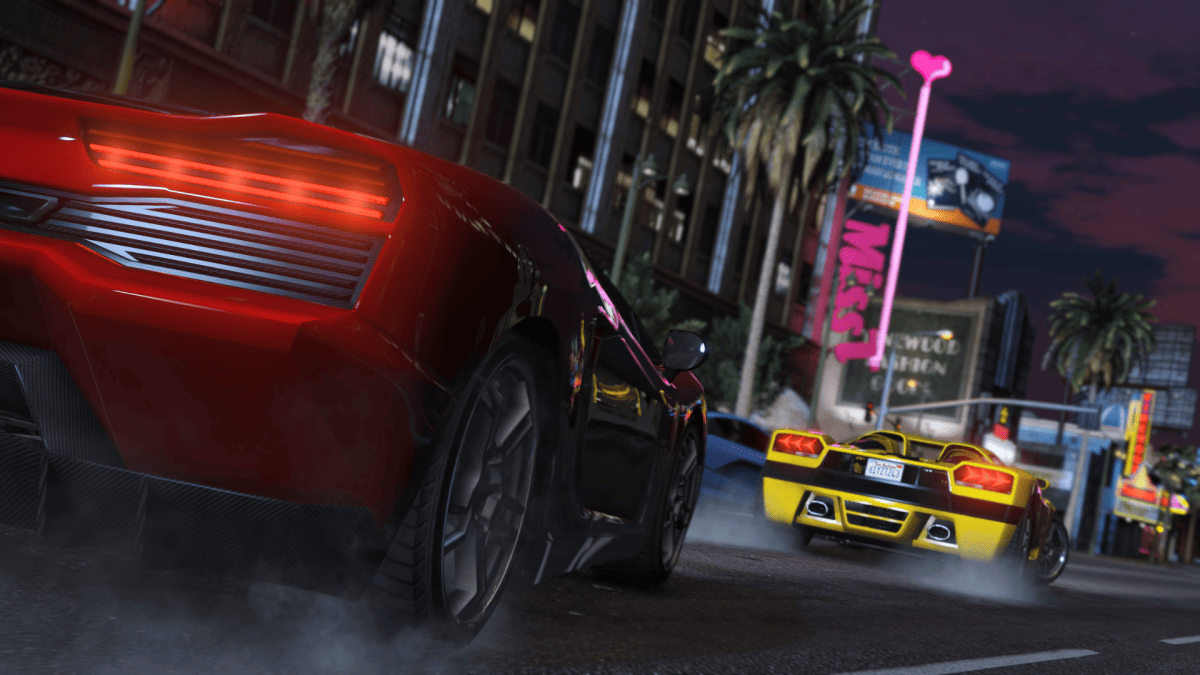
GTA VI's RAGE engine, by contrast, builds on 24 years of successive iterations. The engine now boasts confirmed ray-tracing, graphical fidelity indistinguishable from a photograph according to Rockstar, and tenfold density of interactive objects. Where Vice City displayed empty streets between missions, Leonida offers constant urban simulation: dynamic economy, individualized NPC routines, real-time world reactions to player actions.
This evolution isn't merely about pixels. It's a complete mutation of design philosophy. Vice City was a simulation of Miami; Leonida aspires to be a living replica of a fictional state created with anthropological precision.
PS5 and Xbox Series X|S Hardware Capabilities
The consoles running GTA VI (PS5 and Xbox Series X|S, officially confirmed) offer raw power roughly 40 times greater than the original PlayStation 2. This theoretical power translates to:
- Visual density multiplied by 100: where Vice City displayed 10 parked cars on a street, Leonida offers 100, each with its own physics, visual degradation, and damage history.
- Infinite draw distance: Vice City forced players to see the world within a radius of a few hundred meters. Leonida theoretically displays its entire state without loading.
- Omnipresent physical simulation: every urban element (banners, clothing, hair) responds to weather, explosions, and dynamic impacts.
- 60 fps confirmed on PS5: unlike Vice City, which ran at 30 fps with frequent slowdowns, GTA VI operates at 60 frames per second according to official specs.
GEOGRAPHY AND MAPPING: FROM PORT ROYAL TO LEONIDA
The Size of Leonida
Rockstar hasn't officially disclosed Leonida's exact map size. However, leaked data (unconfirmed by the publisher) suggests Leonida would be approximately 5 to 6 times larger than Vice City. If this rumor proves accurate, we'd be talking about a map spanning hundreds of square kilometers, including not just the Miami-inspired urban core but also rural zones, coastal archipelagos, marshlands, and wilderness territories.
Vice City itself was divided into four main islands: Vice Point (the tourist hub), Ocean Beach (declining coastline), Downtown (criminal affairs), and Little Haiti (poor enclave). Leonida appears to draw from this structure but with far greater density: hyper-detailed urban zones alternating with tropical wilderness and archipelagos.
Port Gellhorn and the Keys
According to official trailers and Rockstar statements, Leonida includes Port Gellhorn, a major urban hub inspired by Miami Beach and Downtown Miami. The Keys (fictional Florida Keys) form a distinctive component: small islands, mangroves, coastal homes, and havens for fugitive criminals. Mount Kalaga, though its exact existence as an explorable zone isn't confirmed, would represent the state's wilder interior territories.
This three-part geography (dense urban, coastal archipelago, wilderness) offers narrative and gameplay diversity radically superior to Vice City, whose world was essentially urban or urban-coastal.
NARRATIVE EVOLUTION AND PROTAGONISTS
Tommy Vercetti vs Jason Duval & Lucia Caminos
Vice City hinged on a single protagonist: Tommy Vercetti, a former Forelli lieutenant returning to Vice City after 15 years in prison to build his criminal empire. His narrative arc was classic: revenge, power accumulation, betrayal, and triumph. One man against a corrupt urban world.
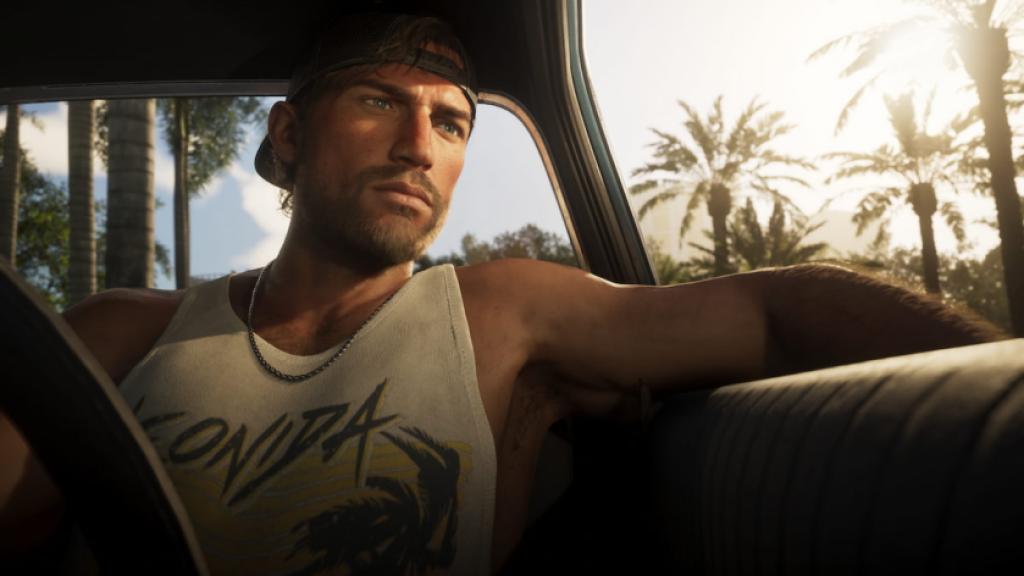
GTA VI presents a completely different narrative architecture. The two officially confirmed protagonists are Jason Duval and Lucia Caminos. Lucia Caminos holds major historical significance: she's the first playable female protagonist in the main GTA series (unlike previous installments where heroines remained secondary). This narrative choice reflects profound evolution in gaming culture and Rockstar's desire to diversify its criminal stories.
The Duval/Caminos duo suggests dynamics radically different from the solitary Vercetti. A relationship between two criminals, likely marked by internal tensions, fragile alliances, and heightened psychological complexity. This dual-protagonist approach already proved effective in GTA V (Franklin, Trevor, Michael), and its evolution toward a criminal couple potentially united by love or mutual necessity promises unprecedented narrative richness.
Narrative Progression and Dialogue Systems
Vice City offered roughly 100 main missions, with rudimentary in-engine cinematics and respectable voice acting for 2002. Narrative context was straightforward: build an empire against superhuman rivals.
GTA VI, based on clues from trailers and Rockstar statements, offers multiplied narrative depth. Dialogue systems likely rely on advanced AI engines enabling dynamic contextual conversations. Lucia and Jason possess complex emotional reactions to world events. NPCs themselves remember player actions and adapt their behavior accordingly.
Though precise details aren't confirmed, this technological evolution allows narrative immersion exponentially superior to Vice City, where every dialogue was linear, pre-recorded, and without real branching.
GAMEPLAY, CONFIRMED SYSTEMS AND MECHANICS
Secondary Activities and Entertainment
Vice City offered a catalog of side entertainment: vehicle races, boxing matches, golf and pool competitions, taxi car destruction, nurse escort missions, and a few casino mini-games. These activities remained isolated from the main story and represented roughly 20 hours of optional content.
GTA VI promises radical integration of these systems. Secondary activities would no longer be gameplay asides but components of the criminal economy itself. According to rumors from leaks (unconfirmed officially), we'd expect:
- Dynamic casinos integrated into Leonida's economy
- Underground competitions (fight clubs, illegal races) with narrative consequences
- Aquatic activities (diving, fishing, spearfishing) tied to coastal geography
- Complex heists combining strategic planning and physical execution
None of these specific details have been officially confirmed by Rockstar for GTA VI, but the gameplay trend suggests complexity surpassing Vice City.
Transportation Systems and Vehicles
Vice City offered roughly 50 vehicles, including civilian cars, motorcycles, helicopters, boats, and even a Dodo (mini-plane). The physics system was basic: solid collisions, minor cosmetic damage, little behavioral variation based on speed or type.
GTA VI displays (based on data discovered in trailers and community analysis, not fully officially confirmed) considerably expanded vehicle diversity. Each category (luxury sedans, rural pickups, racing bikes, high-end boats, civilian and military helicopters) offers sub-variants with distinct physical behaviors. The degradation system is dynamic: visible damage actually affects performance and maneuverability.
The difference isn't quantitative but qualitative. Where Vice City was content having many vehicles, GTA VI seeks to make each category a unique and memorable piloting experience.
SONIC UNIVERSE AND RADIO: SYNTHWAVE REINVENTED
Vice City: Hymn to 1980s Music
One of Vice City's greatest strengths was its musical selection. Twelve radio stations offered a catalog of 150+ songs, from pure synthesizer (Jan Hammer, Giorgio Moroder, Tangerine Dream) to synth-pop (Blondie, The Cars, Duran Duran). Music wasn't merely background: it was Vice City's feeling. Experiencing Vice City in sound meant hearing the 1980s incarnate digitally.
V-Rock, one of the most memorable radio stations, offered 1980s rock (The Police, Rush, Motörhead) and became a generational anthem for players.
GTA VI and Leonida's Sonic Evolution
Rockstar officially confirmed that V-Rock returns in GTA VI, specifically in Leonida. This presence isn't mere nostalgia: it's a direct narrative link to Vice City. However, available data suggests the musical selection would be considerably enriched.
Unlike Vice City, GTA VI would likely explore a genre synthesis: retro-futuristic synthwave would mingle with modern synthpop, vaporwave, contemporary electronic beats, and probably new original compositions. Leonida's sonic universe wouldn't simply recreate 2002 but reinterpret the 1980s through 2026's aesthetic lens.
This distinction matters: Vice City sought to authentically recreate the 1980s. Leonida likely claims aesthetic hybridity, where retro synthwave coexists with modern electronic influences, reflecting a philosophy Rockstar seems to explore: nostalgia can coexist with innovation.
CRIMINAL SYSTEMS, ECONOMY AND POWER
Vice City Model: Brute Empire Building
Vice City offered linear progression: you started with nothing, completed missions for rival criminals (Sonny Forelli, Diaz, Les), accumulated money, and gradually built your empire. Economic dynamics were rudimentary: money was abstract reward, spent buying property, vehicles, and weapons, but without true integration into a living urban economy.
Leonida: Dynamic Criminal Economy
Rumors about GTA VI suggest a completely opposite system. Leonida's criminal economy would supposedly be living, reactive to player actions. Monopolizing a neighborhood's drug trade increases periodic revenue but attracts rival attention. Investing in casinos generates passive income but demands active management.
This information remains unconfirmed, but reflects gaming's general evolution toward simulated economic systems. Vice City was linear progression; Leonida could be criminal management with emergent progression.
POLICE, NOTORIETY SYSTEMS AND COMBAT
Vice City: Wanted Stars and Basic Escape
Vice City used the "wanted stars" system, which became franchise-emblematic. At 1 star, cops pursued you. At 4 or 5 stars, the FBI and military intervened. The escape system was chaotic but fun: entering a closed garage reset your wanted level, or you could hide minutes to naturally reduce it.
GTA VI: Reactive Police System and Advanced AI
Rockstar emphasized GTA VI's police system benefits from radically improved AI. Though precise details aren't shared, architectural logic suggests law enforcement wouldn't be scripted entities following predetermined paths. They'd actively explore, remember your previous tactics, and adapt to your combat style.
A cop pursued by car in Vice City remained predictable. A cop in Leonida could anticipate your trajectories, call strategically positioned reinforcements, and create organically unpredictable chases.
No technical detail has been officially confirmed, but this direction matches gaming's general evolution toward adaptive antagonistic systems.
POST-LAUNCH CONTENT AND MULTIPLAYER
Vice City and the Absence of Post-Launch Content
In 2002, the concept of "live service" didn't exist. Vice City was a finished product, and post-launch content relied on PC community mods. Rockstar published no DLC, no substantial updates.
GTA VI and the Live Gaming Era
GTA VI launches November 19, 2026 on PlayStation 5 and Xbox Series X|S (officially confirmed). No PC date announced. Regarding post-launch content, Rockstar historically adopted continuous expansion strategy (see GTA Online since 2013), suggesting Leonida would likely receive missions, vehicles, zones, and events throughout following months.
No official post-launch details revealed. However, edition structure (Standard at $79.99 and Ultimate at $99.99, confirmed) suggests exclusive or early additional content for premium buyers.
FAQ: ESSENTIAL QUESTIONS ABOUT LEONIDA VS VICE CITY
Are Vice City and Leonida the Same Place?
No. Leonida is the fictional state where GTA VI unfolds. Vice City was a specific city within that state (or a parallel universe depending on Rockstar continuity). Returning to Leonida suggests a thematic and geographic return to Vice City's universe, but Leonida itself represents a vaster, modernized space. Vice City (the city) could theoretically reappear as a Leonida district, but this hasn't been confirmed.