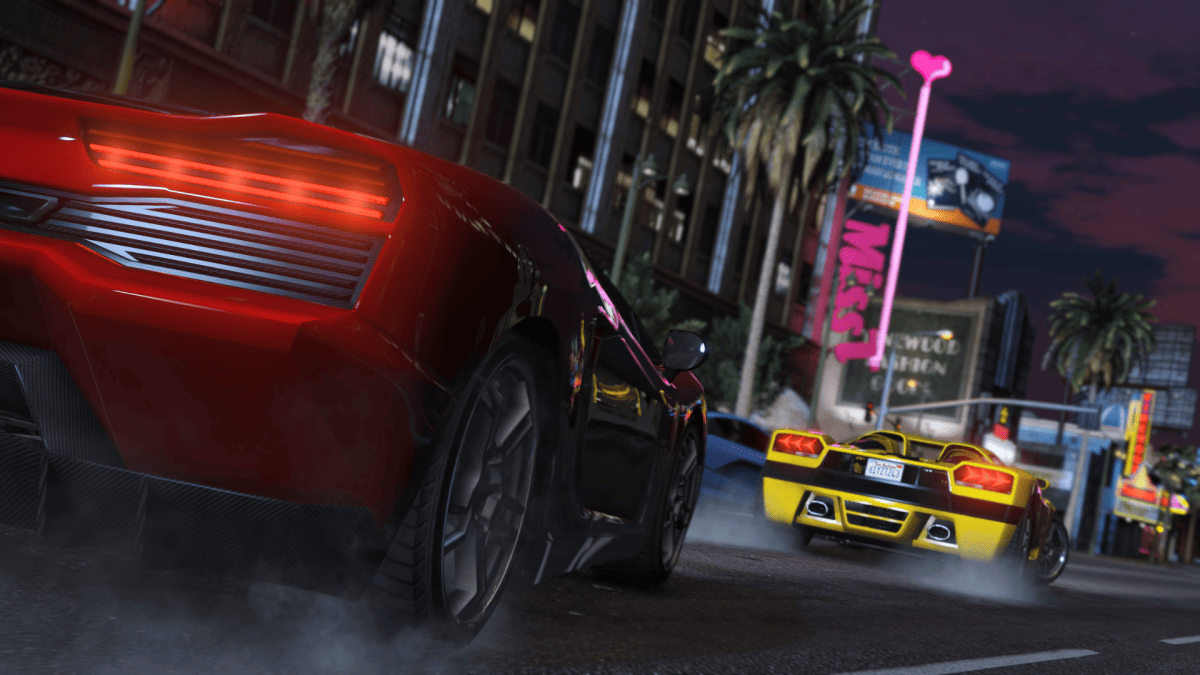
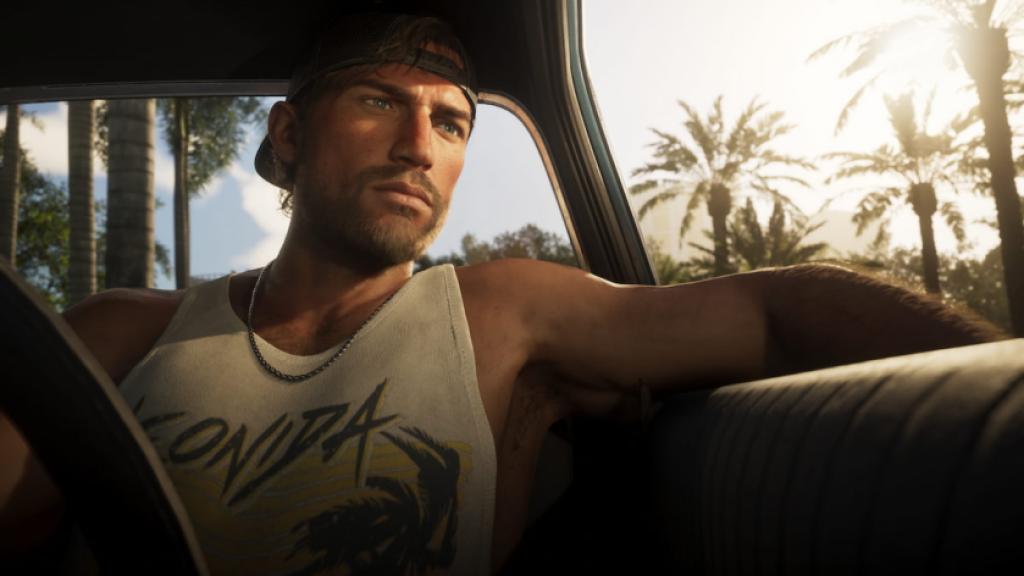
Vice City, released in 2002 for PlayStation 2, remains far more than just a video game: it's a watershed moment in the history of the medium, a crossroads between satire, criminality, and urban freedom. Two decades later, as GTA 6 and its fictional state of Leonida prepare to return to Florida, the nostalgia for this 2002 masterpiece pulses through the global gaming community. How did Vice City define the GTA saga? Why does its imprint remain indelible? And how does GTA 6 Leonida (confirmed release date November 19, 2026 on PS5 and Xbox Series X|S) perpetuate this legacy? That's what we unpack in this historical and emotional deep dive.
- Vice City (2002) revolutionized GTA storytelling: the first game with a dual mobile protagonist, sophisticated mission design, and major cinematic narration, it elevated the series beyond a simple sandbox.
- Miami's 1980s aesthetic has never been matched: synthesizer music, Art Deco skyscrapers, pastel nights, and the moral polarization embodied by Tommy Vercetti remain unrivaled touchstones even in 2024.
- Vice City captured a real economic and criminal moment: Florida's emergence as a cocaine trafficking hub, Latin American gang networks, and urban social crisis, all treated with groundbreaking narrative sophistication.
- Leonida 2026 explicitly builds on this legacy: the return to a fictional state inspired by Florida, the dual protagonists (Jason Duval and Lucia Caminos, the franchise's first female lead), and the announcement of the optimized RAGE engine confirm deliberate continuity.
- Vice City nostalgia creates outsized expectations for GTA 6: viral trailer phenomena (December 2023 and 2025), 7 billion cumulative views, and an electrified community reflect an insatiable hunger to recreate that 2002 magic.
Vice City 2002: The Narrative Turning Point That Transformed GTA
Before Vice City, the Grand Theft Auto series navigated between raw charm and brilliant but naive mechanics. GTA III (2001) had set the stage: an open 3D world, cascading missions, a hostile city to explore. But it was Vice City that grafted a genuine epic narrative onto this action-game skeleton.
Tommy Vercetti, the protagonist, wasn't an anonymous avatar: he was a betrayed man, released after fifteen years in prison, sent to Vice City for a job that becomes a nightmare. His narrative arc unfolds across eighty missions, each fueling personal vendetta. What seems like a real estate heist becomes a gang war, a power grab, a quest for revenge. The urban property mechanic (houses, businesses, massage parlors) transforms the game into a criminal empire builder, anticipating the economic systems confirmed for GTA 6 Leonida.
The supporting cast was as rich as the main campaign. Courtney Cox as Candy Suxxx, Faizon Love as Lance Vance, and a full Hollywood ensemble gave Vice City a cinematic depth that today's AAA productions struggle to replicate. Rockstar had grasped a timeless truth: great video games aren't games with stories, but stories that happen to be games.
The Technical Innovations That Enabled This Narrative
Vice City featured the optimized GTA III engine, but with crucial improvements. The city loaded more smoothly, characters had faces (rudimentary but recognizable 3D models), and in-engine cinematics were more fluid and expressive. For 2002, it was revolutionary.
The soundtrack remains a unique technical and artistic achievement. Eleven radio stations, each with its own musical identity, broadcast a cohesive soundtrack of 150+ songs. V-Rock (alternative rock), VCPR (political talk show), Wave 103 (retro synthpop): each station was its own sonic universe. It set a standard that GTA 6 Leonida faithfully respects, with confirmed stations including V-Rock.
The 1980s Aesthetic and Florida as Central Character
Vice City didn't merely set the game in Florida. It embodied 1980s Florida: a metropolis caught between surface glamour and underground criminality, between massive Latino immigration and Anglo-Saxon institutional racism, between gleaming skyscrapers and abandoned neighborhoods.
Art Deco aesthetics dominated the skyline. Pastel pink and turquoise buildings weren't gratuitous kitsch: they reflected the authentic architecture of Miami Beach and South Beach from the 1920s-1930s, reinvented in the 1980s with a synthetic sheen. Palm trees lining every avenue, crescent-shaped beaches, marinas filled with yachts: all this created a hedonistic atmosphere masking permanent criminal tension.
Each district had its own identity. Ocean Beach embodied bohemian decay (shabby motels, trucker bars, prostitutes). Vice Point was the upscale neighborhood (five-star hotels, fine dining, mob villas). Little Havana thrummed with Latino energy, complete with bodegas, street vendors, and visceral gang presence. Washington Beach, Downtown, and the Port rounded out an urban geography that felt real, even if stylized.
The Real Criminal Influences That Shaped Vice City
Vice City didn't emerge from nowhere. In 1980, Miami experienced the Mariel Boatlift: Fidel Castro emptied his prisons and asylums by sending 125,000 Cubans to Florida. Simultaneously, Colombia became the global epicenter of cocaine trafficking, with the Medellín and Cali cartels moving tons weekly through Miami. Violent crime exploded: murders, turf wars, money laundering.
Tommy Vercetti arrives in Vice City as a representative of a Texas cartel, ready to seize control of the local market. The historical gangs he encounters (the Forelli family, the Cuban mob) reflect the real ethnic and criminal tensions of 1986 Miami. Rockstar had read crime journalists, studied documentaries, and translated that reality into narrative mechanics.
This gave Vice City a sociological depth rare for a 2002 video game. You weren't simply playing an anonymous hired killer: you were playing a symbol of criminal imperialism, reproducing real power dynamics, resolving community conflicts through violence. Vice City didn't judge this reality; it reflected it with chilling honesty.
Vice City in GTA's DNA: The Narrative and Gameplay Legacy
Vice City established a narrative template that every subsequent GTA entry has honored or subverted. Tommy Vercetti proved that a protagonist could be morally ambiguous yet emotionally compelling. He was neither a classical antihero nor a one-note criminal: he was a man betrayed by his allies, seeking to build an empire in a hostile city, with moments of tenderness (his relationship with his mother) and pangs of conscience (his dynamic with Lance Vance).
This duality influenced every GTA protagonist that followed. CJ (GTA San Andreas, 2004) would find this same complexity. Niko Bellic (GTA IV, 2008) would amplify it with profound guilt. Michael De Santa (GTA V, 2013) would explore fatherhood within criminality. And now, Jason Duval and Lucia Caminos for GTA 6 Leonida (2026) promise a new emotional palette: a criminal couple where, for the first time, a woman (Lucia) is an equal co-protagonist.
Vice City also popularized sophisticated mission design. Not just "kill X enemies" or "read this text." Every Vice City mission was a mini-scenario: driving an ambulance to save someone, piloting a plane to drop flyers, psychologically dismantling a rival. Side missions (escort, taxi, vigilante) enriched the experience without burdening it. This framework remains the foundation of GTA 6 Leonida's missions.
Urban Property: The First Economic Progression System
Vice City revolutionized progression by letting players own buildings. You could purchase a hotel, massage salon, arcade, restaurant, or shop. Each generated passive income, creating a tangible and progressive in-game economy.
This mechanic had narrative implications: the wealthier you became, the higher your standing. NPCs recognized and respected you. More expensive clothes unlocked new districts. It was brilliant intuition: criminal capitalism wasn't an abstraction but a psychological progression.
GTA 6 Leonida, according to unconfirmed leak rumors, will implement far more advanced real estate and business systems. Official details remain sparse, but Rockstar indicated that Leonida's economy would be "central to the progression experience." Vice City's philosophy (property = power = respect) endures.
Vice City Nostalgia in 2024-2025: Why a 22-Year-Old Game Still Captivates
Vice City had the fortune of being timeless by design. Its aesthetic references (80s, synthé, neon, urban chaos) were never completely dated. Worse yet: they've cycled through three or four waves of coolness since 2002. The 2000s-2010s dismissed the 80s as kitsch. The 2015-2025 period rehabilitated them as symbols of pre-digital freedom.
Vice City represents a moment of technological innocence: no smartphones, no social media, no mass surveillance (within the fiction). Just a city, a gun, and personal ambition. Modern mega-studios miss this narrative simplicity. GTA V (2013) had grown complicated with three protagonists, a stock market, social media satire. The game was brilliant but labyrinthine.
The announced return to Vice City (disguised as Leonida) for GTA 6 deliberately reignites this nostalgia. Rockstar knows Vice City = comforting iconography for a weary global community. The trailers (December 2023 and 2025) confirmed it: pastel colors, synthesizer music, Jason and Lucia navigating a recognizable Leonida as an evolution of Vice City, not a departure.
The Numbers Behind the Nostalgia: GTA 6 Trailers as Social Phenomenon
The first GTA 6 trailer (December 2023) accumulated over 90 million views in two weeks, a record for a game announcement video. The second trailer (2025) surpassed 200 million views in three weeks, cementing GTA 6 as the video game event of the decade.
These figures reflect a sociological phenomenon: GTA VI won't be just a game launching November 19, 2026. It will be a global cultural event. Memes proliferate, analysts dissect every frame, content creators build careers anticipating Leonida. All this because Vice City established an urban mythology that popular culture never forgot.
Leonida 2026: Vice City's Legacy Recreated and Reinvented
Rockstar Games has never explicitly confirmed that Leonida is a "Vice City reboot." Official statements describe a "fictional state inspired by Florida" and a Leonida that represents "the embodiment of a new era of Vice City." Here's the message: recognizable, but evolved.
The confirmed parallels are striking. Jason Duval and Lucia Caminos arrive in Leonida as criminal protagonists. The state features coastal cities, distinct districts, and recognizable urban aesthetics. V-Rock, the alternative rock station that resonated in 2002, is confirmed for GTA 6. Art Deco influences, palm trees, and pastels appear throughout the trailers.
Confirmed: Leonida is GTA 6's primary fictional state, inspired by Florida. Jason Duval and Lucia Caminos are the confirmed protagonists. Standard (79.99$) and Ultimate (99.99$) editions available November 19, 2026 on PS5 and Xbox Series X|S.
But Leonida isn't a simple copy-paste. Rockstar leverages the optimized RAGE engine for PS5 and Xbox Series X|S, meaning graphical fidelity incomparable to 2002. Weather cycles (tropical storms, hurricanes, torrential rains according to unconfirmed rumors) would add a climate dynamic that technology-limited Vice City couldn't offer.
Rumor / Unconfirmed: Advanced weather systems (hurricanes, dynamic storms) for Leonida. No official Rockstar confirmation, though leaks suggest sophisticated climate AI.
The dual-protagonist setup marks a symbolic break. Vice City featured Tommy Vercetti solo. GTA 6 Leonida, with Jason and Lucia as co-protagonists, explores couple dynamics, criminal partnership, and (confirmed) introduces the franchise's first female lead protagonist in a main saga entry. It's narrative evolution that honors Vice City while transcending it.
The Leonida Economy and Vice City's System Legacy
Real estate and business systems are confirmed as central to GTA 6 Leonida, according to Rockstar communications. Precise details remain murky (what property types? how do revenues calculate?), but Vice City's philosophy (property = progression) persists.
Aspect Vice City (2002) GTA 6 Leonida (2026) — Confirmed/Rumor Protagonist(s) Tommy Vercetti (solo) Jason Duval & Lucia Caminos (duo) — Confirmed Urban Setting Vice City (Miami-inspired, 1980s) Leonida, Fictional Florida-Inspired State — Confirmed Real Estate Ownership Yes (hotels, salons, restaurants) Yes, "central to progression" — Confirmed Radio Stations 11 stations (V-Rock, Wave 103, VCPR, etc.) V-Rock confirmed; total count TBD — Partially Confirmed Dynamic Weather Systems None (tech limitations) Tropical storms, hurricanes rumored — Rumor Graphics Engine Modified GTA III Optimized RAGE Engine PS5/Xbox Series X|S — ConfirmedThe Community Facing Nostalgia: Expectations and Risks
An undercurrent anxiety weighs on GTA 6: the trap of astronomical expectations. Vice City has become an object of veneration, almost mythic. Any attempt to recreate it risks disappointing a community that's had 24 years to idealize it.
GTA forums and social media prove it. Content creators build hypothetical Leonida videos exceeding what Rockstar confirmed. Fans dream of revolutionary AI systems, endless missions, maps three times larger than GTA V. Rockstar confirmed GTA 6 Leonida will be "the biggest and most detailed GTA ever made," but will that close the gap between reality and accumulated fantasy?
There's also a paradoxical risk: Vice City nostalgia might create an atmosphere where Leonida 2026 is judged solely against 2002, rather than on its own merits. GTA 6 shouldn't be Vice City-2, but a natural evolution enriching that legacy.
Rockstar seems aware of this balance. The trailers intentionally blend Vice City-reminiscent visuals (pastel aesthetics, retro vehicles, urban criminality) with forward-looking elements (PS5/Xbox Series X graphics, new mechanics). It's subtle communication: "We honor what you love, while pushing forward."
Conclusion: Vice City as Timeless Narrative Megastructure
Vice City, launched in 2002 on PlayStation 2, has spanned two decades without losing resonance. It didn't merely define the GTA saga; it posed narrative questions every subsequent entry has confronted: How do you craft an attachable criminal protagonist? How does a city become a character? How do you simulate real urban economies? How do you marry social satire with gameplay?
Leonida 2026 doesn't aim to answer these questions again. It aims to deepen them. With Jason and Lucia as a criminal couple, with Leonida as reinvented Florida, with the optimized RAGE engine capable of rendering sophisticated urban AI, GTA 6 perpetuates Vice City's legacy while transcending it.
The nostalgia surrounding Vice City will never fade. It will fuel every debate about Leonida until November 19, 2026 and beyond. But maybe that's exactly what Rockstar wants: a community loving the past enough to appreciate the future, imaginative enough to see how a 2002 game can inspire a 2026 phenomenon.
Timeline: Vice City to GTA 6 Leonida, 24 Years of Evolution
- October 2002 — Vice City launches on PlayStation 2 in North America. 150+ songs across 11 radio stations. Tommy Vercetti becomes an icon of video game storytelling.
- December 2023 — Rockstar Games officially announces GTA 6. First trailer reveals Jason and Lucia in Leonida. 90+ million views in two weeks.
- January-December 2024 — Massive GTA 6 leaks circulate online. Rockstar states Leonida is Florida-inspired and Vice City aesthetics will be respected. Standard (79.99$) and Ultimate (99.99$) editions announced.
- 2025 — Second GTA 6 trailer released. Confirms V-Rock and Leonida's Art Deco architecture. Over 200 million views. Community in nostalgic fervor.
- January-October 2026 — GTA 6 marketing intensifies. Brand collaborations, viral campaigns. Vice City nostalgia peaks before launch.
- November 19, 2026 — GTA 6 launches on PS5 and Xbox Series X|S. Leonida and Jason & Lucia welcomed by the global community.