Vice City rises again in GTA 6: Rockstar's love affair with neon 80s
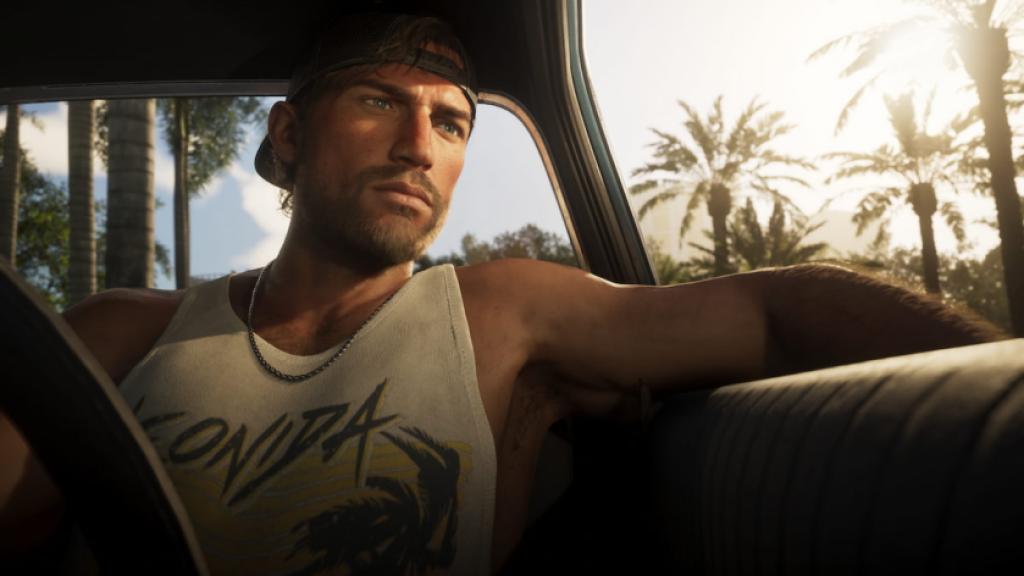
Vice City is so much more than a video game. It's a state of mind. Since 2002, this fictional district awash in fluorescent colors and funk groove has captivated millions of players. Now Rockstar Games brings that magic back with GTA 6, confirmed for release on November 19, 2026 on PS5 and Xbox Series X|S. But this time, Vice City doesn't stand alone: it's part of Leonida, a fictional state inspired by Florida that becomes the playground for protagonists Jason Duval and Lucia Caminos.
Why does Vice City captivate us so? Because its neons, synthesizers, chrome-plated cars, and Art Deco architecture embody an era when excess was philosophy. GTA 6 inherits that DNA. But here's the catch: this isn't mere nostalgic window dressing. The 80s aesthetic returns because it remains viscerally alive, because it speaks to freedom, rebellion, and pushing boundaries. That's exactly what a crime game should deliver.
The legacy of the 80s: why Vice City remains timeless
The year 2002. Gaming held its breath. Rockstar dropped Grand Theft Auto: Vice City, and nobody had ever seen anything like it. A living, pulsating city drenched in aggressive primary colors—bubble gum pink, electric cyan, burning orange—slammed against a lavender-blue sky. The radios blasted synthesizers at full volume. NPCs wore extravagant pastel suits. And the player, unleashed into this urban chaos, felt truly alive.
But why the 80s specifically? Because that decade represents a crucial moment in history where technology, ambition, and excess converged almost pathologically. 1980s Miami meant rising cocaine trafficking, sky-high millionaires fighting for dominance, architects constructing ridiculous towers, and people not giving a damn about the consequences. It's the perfect backdrop for a crime story.
Vice City the game captured that almost palpable frenzy. No need for moral tutorials: the city itself was the message. You arrive in a rotten paradise, climb the ranks, realize everyone's lying, and eventually understand that it's the game that matters, not winning.
Confirmed visual elements of Leonida's neon aesthetic in GTA 6
Rockstar has unofficially confirmed, through both released trailers, that Vice City is indeed back as a major urban hub in Leonida. And the aesthetic? It stays true to its roots, with minor evolutions. Here's what we know and what we can reasonably assume based on official imagery.
Colors and luminous signage
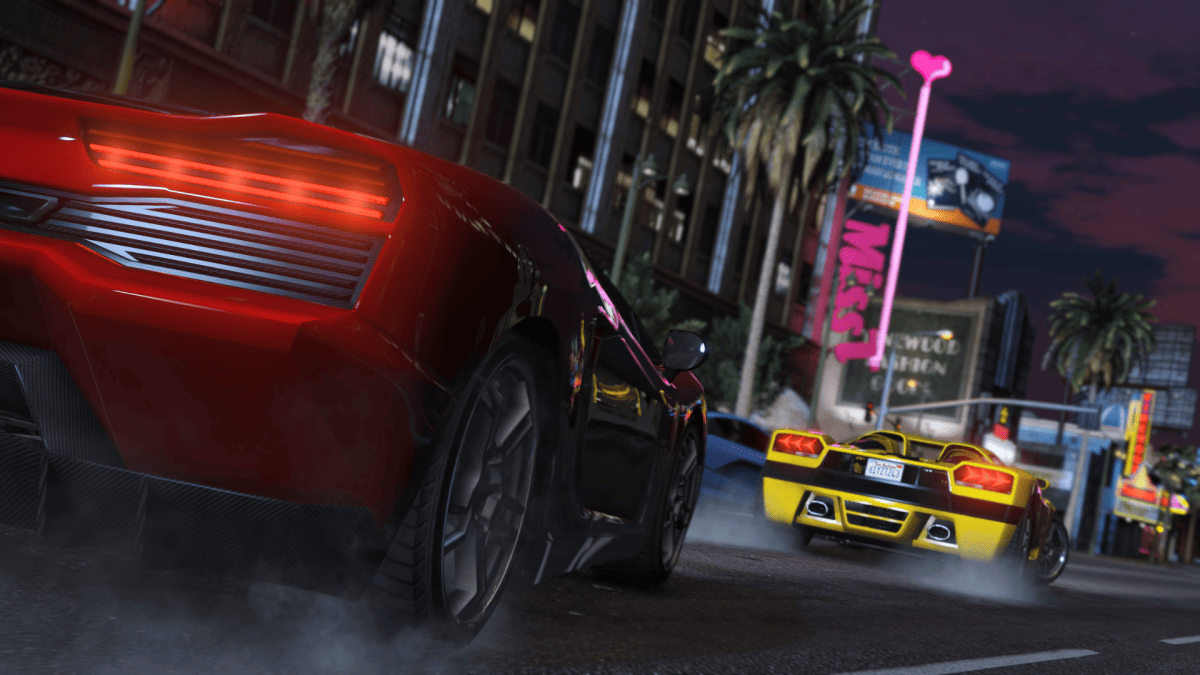
- Confirmed neon palettes: the trailers showcase explosive facades in pink, cyan, turquoise, and bright yellow. Buildings sport giant signs, massive letters that flicker at the speed of frustration itself.
- Optimized RAGE engine: the rendering of light sources benefits from confirmed improvements. Neons are no longer flat; they create halos, reflections on wet surfaces, dynamic shadows that shift in real-time.
- Intensified day/night cycle: daytime in Vice City is off-white and soulless. Nighttime? It's an explosion. Vice City only truly exists when the sun sets and the neons take over.
Art Deco architecture and urban design
- 80s-era buildings: geometric glazing, pastel facades, zigzag roofs, chrome metal elements. Pure Miami Beach hyperbolized to the max.
- Wet streets and reflections: Leonida, like real Florida, endures humidity and rain. Gleaming pavement, neon reflections on wet asphalt—it's a crucial visual element fans have demanded for 20 years.
- Stylized palm trees: everywhere, always too tall, too thin, too cinematic. They reinforce the impression of artificial yet carefully controlled exoticism.
Radio and synthwave: when sound creates atmosphere
Vice City had a legendary radio. Rockstar has officially confirmed the return of V-Rock, one of the most iconic stations in any GTA game. But why is music so crucial to the aesthetic?
Because you don't experience Vice City, you hear it first. The pulsing synthesizer from a station, the bass resonating through empty streets, the smooth voice of a DJ announcing today's criminal news—that's the city's heartbeat. Without these sounds, Vice City is just a collection of pastel buildings.
Synthwave isn't just a music genre: it's a complete aesthetic philosophy. It blends 80s nostalgia, futuristic technology, urban dystopia, and saturated colors. Artists like Kavinsky, Perturbator, and The Midnight have resurrected this sound since the 2010s, and Rockstar knows it perfectly. GTA 6 rides this wave, not by accident, but because it aligns flawlessly with the game's universe.
Vice City without its radios is like Miami without sunshine: technically possible, but you wonder why you'd stay.
Lucia Caminos and the modernity of urban vice
Here's a decisive point: Lucia Caminos is the first female protagonist in the main GTA series. And she doesn't represent victimization or awkward overcorrection. She's the reflection of a modern Vice City, where vice is no longer reserved for men in pastel suits. She and Jason Duval form a contemporary criminal duo, rejuvenating the Bonnie and Clyde myth.
This detail matters enormously for the overall atmosphere. The 80s aesthetic returns, yes, but filtered through contemporary consciousness. Lucia probably wears clothing that blends retro with hyper-modern. Vice City doesn't become a museum; it becomes a space where past and present collide violently.
And that's precisely why GTA 6 will be phenomenal: it doesn't glorify the 80s in some naïve way. It acknowledges that Vice City was inhuman chaos, a place where people sacrificed themselves for money and prestige, and it invites Lucia to show how that chaos evolves, how women play this game too.
Leonida: contrasting environments between urban jungle and wild nature
Here's an element not confirmed in detail, but visible in the trailers: Leonida doesn't boil down to Vice City. The fictional state apparently includes Keys (according to rumors), bayous, wilderness, and rural zones. This diversity paradoxically strengthens Vice City's neon aesthetic.
Why? Because contrast creates impact. When you leave Vice City to find yourself under black mangrove trees, sweating through your shirt, surrounded by alligators, you realize Vice City wasn't just a city—it was an exception, an air-conditioned hallucination in the heart of a brutal swamp.
- Vice City: the technology island – concrete structures, glass, steel, neons
- Rural Leonida: the air-conditioned forgotten – harsh nature, no rules, no neons, just survival
This contrast amplifies the neon atmosphere. Vice City feels even more extreme, even more artificial, when you approach it knowing that 20 minutes' drive away is unfiltered natural chaos.
Expected visual details vs. rumors: what we actually know
It's vital to distinguish what's confirmed from what's pure speculation. Here's the breakdown.
Officially confirmed by Rockstar
- GTA 6 releases November 19, 2026 on PS5 and Xbox Series X|S
- Vice City returns within Leonida
- Optimized RAGE engine with graphics improvements
- Jason Duval and Lucia Caminos as protagonists
- V-Rock radio confirmed
- Standard Edition ($79.99) and Ultimate Edition ($99.99)
Rumors and speculation (unconfirmed)
- Complete list of Vice City neighborhoods
- Specific vehicles and their retro rarity
- Exact PC release date (Rockstar said nothing)
- Detailed multiplayer content
- Exact number of radio stations and songs
Why does this distinction matter? Because rumors, even from credited sources, carry zero guarantees. And peddling rumors as facts destroys your credibility.
The cinematic atmosphere: how Rockstar builds neon immersion
The neon aesthetic is never just visual. It's cinematic. Rockstar doesn't design its cities like ordinary video games: it designs them like interactive films. Vice City is the ultimate example.
Picture a typical scene:
You're driving a stolen car with tinted windows at midnight. Pink and cyan neons reflect off your paint job. A heavy synthesizer track pulses from the radio. The streets glisten with recent rain. Pedestrians in glitzy outfits cross intersections without a care for traffic laws. In the distance, helicopters sweep the sky with searchlights. It's beautiful, it's chaotic, it's Vice City.
This effect only works if every visual layer functions together:
- Global coloration – Vice City's blue-pink-yellow tone
- Dynamic lighting – flickering neons, car headlights, searchlights
- Environmental physics – rain, reflections, moving shadows
- Sound design – radio that adapts to your driving, city noises
- Population and behavior – NPCs living their lives, indifferent or hostile
Rockstar has 20 years of experience layering these elements. With the improved RAGE engine and PS5/Xbox Series X capabilities, GTA 6 can push this urban cinema far beyond anything we've seen before.
FAQ: Your questions about GTA 6's neon atmosphere
Will Vice City in GTA 6 have exactly the same aesthetic as the 2002 game?
No, and that's intentional. Vice City 2002 operated under its generation's graphics constraints. GTA 6 recaptures the aesthetic soul—neons, synthwave, saturated colors, Art Deco architecture—but with confirmed RAGE engine improvements: realistic reflections on wet surfaces, dynamic light halos, more drastic day/night cycles, far denser population and animation. This is Vice City grown up, not Vice City restyled.
What role will V-Rock play in GTA 6?
Rockstar has confirmed V-Rock's return. Given how music has evolved since 2002 and synthwave's resurrection as a genre, expect a mix of authentic retro 80s music and modern synthwave artists playing in that style. The exact song list has never been disclosed. What we know: radio is CENTRAL to the Vice City experience. Without it, you're just an apathetic criminal rolling through silence.
Are there other places to explore besides Vice City in GTA 6?
Yes, Leonida is an entire state. According to trailers and unconfirmed rumors, there would be Keys, bayous, coastal areas, and rural zones. However, precise geographical details aren't official yet. What we know: Vice City isn't isolated. Leonida offers contrast and variety, making Vice City even more spectacular when you return to it.
Will the game run properly on PS5 and Xbox Series X to capture this aesthetic?
Rockstar hasn't provided detailed technical specs (resolution, framerate, settings). However, PS5 and Xbox Series X official capabilities include ray-tracing, high resolution, possible 60fps framerates, and ultra-fast SSDs for zero-friction loading. It's safe to assume GTA 6 will leverage these capabilities to render the neon aesthetic as dazzling as possible. PC rumors remain speculation: no official date has been announced.